

Fix Dealership Profit Leaks with an AI Workflow That Connects Acquisition to Sale
Your used car department just took in a clean trade. The appraiser ran a quick car value estimator, penciled a number, and sent the unit to recon. Three weeks later, it's still not online. When it finally hits your VDP, the photos are inconsistent, half the specs are missing, and the price is already stale.
You just lost money at every stage, and you didn't see it happen.
Most dealers know margin compression is real. What they don't realize is how much profit evaporates between the moment a vehicle hits your lot and the moment it goes live online. Holding costs, recon delays, poor merchandising, and disconnected systems create a silent bleed that adds up to tens of thousands per month.
The fix isn't another point solution. It's a unified AI workflow that connects every step from acquisition to frontline ready, turning operational chaos into a predictable profit engine.
The Real Cost of Invisible Inefficiency in Your Dealership
Profit leaks don't announce themselves. They hide in the gaps between departments, in manual handoffs, and in the lag between recon and listing. Here's what that invisibility costs you:
Holding costs compound daily. Every vehicle sitting in recon or waiting for photos costs you money. Insurance, flooring interest, depreciation, and opportunity cost add up fast. Even at conservative estimates, each unit can cost $30 to $50 per day in holding expenses. A 21-day time-to-market instead of 7 days means an extra $420 to $700 per vehicle in pure waste.
Inaccurate appraisals at trade-in leave money on the table. When your appraiser uses a basic car value estimator without enriched market data, you either overpay for junk or underbid on retail-ready units. Both scenarios hurt gross. The first inflates your cost basis. The second sends profitable trades to your competitor down the street.
Slow time-to-market kills velocity. The longer a unit sits before it's online, the staler your pricing becomes and the fewer days you have to sell it at peak value. Vehicles depreciate fastest in the first 30 days on your lot. If you're taking three weeks just to get a car photographed and listed, you've already burned through your best selling window.
Poor online merchandising directly impacts conversion. Shoppers make snap judgments. Inconsistent lighting, missing angles, dirty interiors, and incomplete vehicle data all signal "this dealer doesn't care." Low VDP engagement and weak lead-to-appointment ratios aren't marketing problems. They're operational failures that start in recon and photo bays.
The problem isn't that your team is lazy. It's that your workflow is invisible. Without a system that tracks every vehicle from appraisal to VDP, you can't see where time and money disappear.
Pinpointing Your Dealership's Five Biggest Profit Leaks
Before you can fix the bleed, you need to know where it's happening. These five operational gaps are where most dealers lose the most money:
Manual reconditioning tracking and delays. Most dealerships still use whiteboards, spreadsheets, or verbal handoffs to manage recon. A tech writes up a work order. The service advisor adds it to the queue. The detailer doesn't know the car is priority. Photos get scheduled whenever someone remembers. This lack of visibility creates bottlenecks, miscommunication, and vehicles that sit for weeks with no clear owner.
Inconsistent photo and video production. Your photographer shoots 40 cars on Monday, but lighting changes throughout the day. Some units get 25 photos, others get 12. Interiors are dark. Exteriors are washed out. Video walkarounds are shaky or missing entirely. Inconsistent visual merchandising makes your inventory look unprofessional and reduces shopper trust, even when the vehicles themselves are solid.
Poor data enrichment from VIN lookup. When you rely on basic vin lookup tools or manual data entry, you end up with incomplete specs, missing features, and generic descriptions. Shoppers expect detailed, accurate information. If your VDP says "leather seats" but doesn't mention heated and ventilated, adaptive cruise, or the premium sound system, you're underselling the unit and giving buyers a reason to keep scrolling.
Using a robust vin lookup free tool or integrated nhtsa vin decoder can pull factory specs, but most dealers stop there. They don't enrich that data with market context, local demand signals, or merchandising hooks that help the vehicle sell faster.
Disconnected inventory and marketing systems. Your DMS holds vehicle data. Your CRM tracks leads. Your website vendor manages VDPs. Your photo tool lives in a separate login. Your pricing tool is another tab. Every time you need to update a price, add photos, or push a unit live, someone has to manually sync data across platforms. That friction slows you down and introduces errors.
Lack of accountability and task ownership. When recon, photos, and listing are handled by different people with no shared workflow, nobody owns the outcome. The service department thinks they're done when the car is mechanically sound. The lot porter thinks they're done when it's washed. The photographer thinks they're done when images are uploaded. Meanwhile, the unit still isn't online, and the used car manager has no idea why.
These leaks aren't isolated. They compound. A delay in recon pushes back photos. Missing photos delay listing. A poor listing generates weak leads. Weak leads mean longer days-to-sale and lower gross. The entire chain suffers because the workflow is broken.
The AI-Powered Workflow: From Acquisition to Frontline Ready
An AI-driven workflow doesn't replace your team. It gives them a system that connects every step, automates repetitive tasks, and surfaces bottlenecks before they cost you money.
Here's what a unified AI workflow looks like in practice:
Centralizing vehicle data via VIN lookup. The moment a vehicle is appraised or acquired, the system runs a comprehensive vin lookup to pull factory specs, options, recall status, and market data. That information flows into every downstream process automatically. Your photographer knows the trim level. Your copywriter knows the key features. Your pricer knows local comps. No one has to ask, "What's on this car?"
Platforms that integrate nhtsa vin decoder data with third-party market intelligence give you a complete picture in seconds. You're not just pulling a build sheet. You're enriching every unit with the context your team needs to merchandise it correctly.
Automating reconditioning task management. Instead of whiteboards or verbal handoffs, an AI workflow assigns tasks based on vehicle condition, priority, and team capacity. When a trade comes in, the system generates a recon checklist, routes it to the right techs, and tracks progress in real time. Managers see which units are stuck, who's behind, and where to intervene.
Automated alerts notify the next person in the chain when their step is ready. The detailer gets pinged when service is done. The photographer gets pinged when detail is done. No one waits. No one guesses.
Standardizing merchandising with an AI photo editor. Consistency is the difference between professional and amateur. An ai photo editor can automatically correct lighting, remove backgrounds, enhance colors, and apply your brand's visual standards to every image. Whether your photographer shoots at 9 a.m. or 4 p.m., the final output looks uniform.
Some AI tools go further, generating synthetic backgrounds, adding lifestyle scenes, or even applying virtual paint corrections for minor blemishes. The goal isn't to deceive shoppers. It's to present every vehicle in its best, most accurate light without requiring a $50,000 photo studio and a full-time editor.
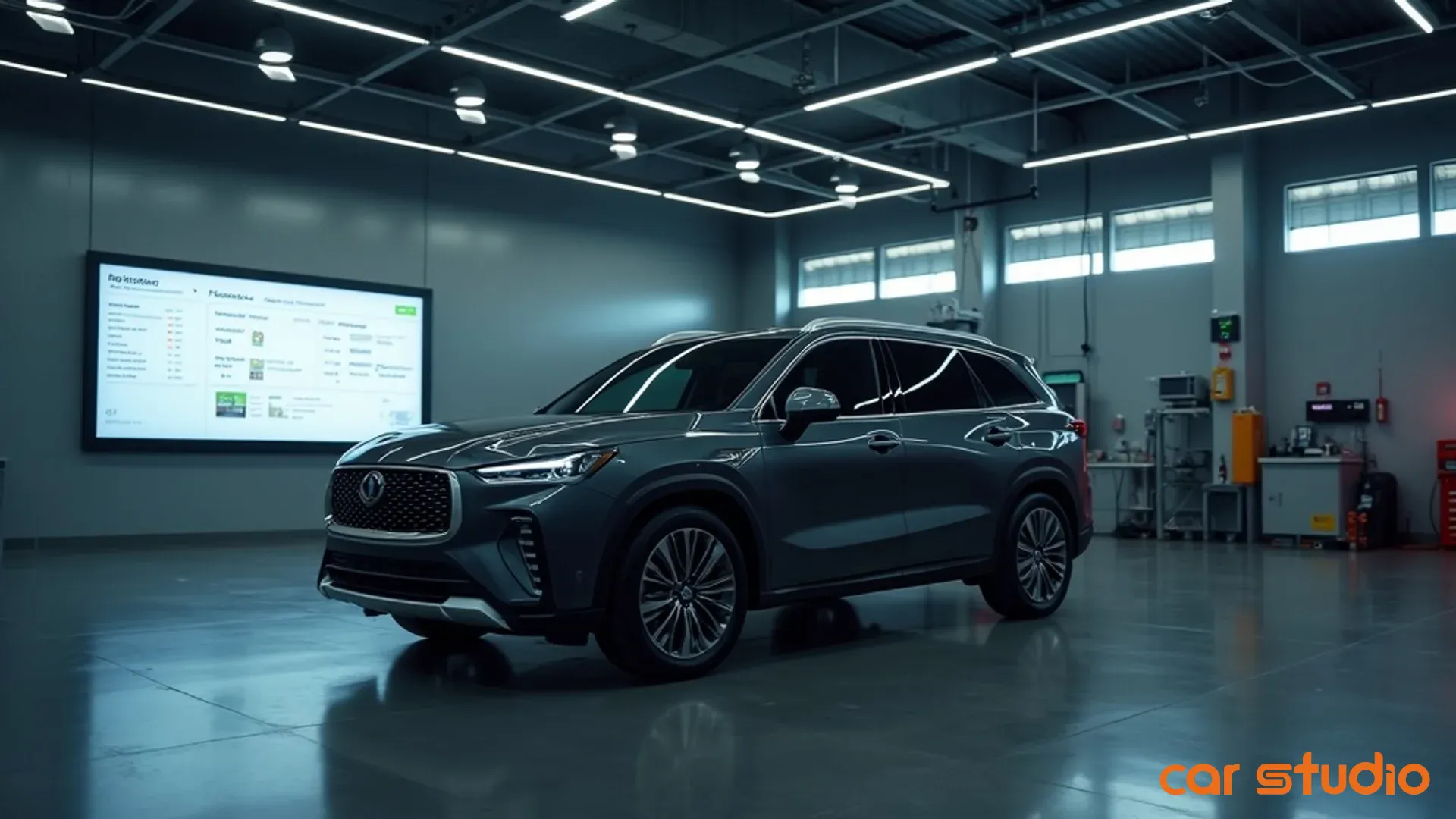
Platforms like Car Studio AI use ai photo editor technology to streamline this process, allowing dealers to produce high-quality, consistent imagery at scale without adding headcount or equipment.
Syncing live data across all platforms. The workflow doesn't stop at photos. Once a vehicle is ready, the system pushes enriched data, images, pricing, and descriptions to your DMS, website, third-party listings, and CRM simultaneously. One update propagates everywhere. No duplicate entry. No version control issues. No stale listings.
This synchronization also enables real-time reporting. You can see which vehicles are moving through the workflow, which are stalled, and how long each stage takes. That visibility turns gut-feel management into data-driven operations.
The result is a system where every vehicle has a clear path, every task has an owner, and every delay is visible. You're not managing chaos. You're managing a process.
Implementation Playbook: Building Your AI Workflow
Knowing what an AI workflow looks like is one thing. Building it is another. Here's a step-by-step plan to get it done without disrupting your operation.
Step 1: Audit current process bottlenecks. Before you implement anything, map your existing workflow. Start with 10 recent acquisitions and document every touchpoint: appraisal, recon assignment, service completion, detail, photos, data entry, pricing, and listing. Measure the time between each step.
You'll find patterns. Maybe recon takes two days, but vehicles sit for five days waiting for photos. Maybe photos happen fast, but data entry takes another three days. Identify the slowest stage. That's where you'll see the biggest ROI from automation.
Involve your team in this audit. Ask your service advisor, photographer, and inventory manager where they feel stuck. They know the pain points better than anyone.
Step 2: Integrate key data sources. Your AI workflow needs to pull from and push to your core systems: DMS, CRM, website, and any third-party listing platforms. Most modern workflow tools offer API integrations or pre-built connectors for major providers.
Start with your DMS. That's your source of truth for inventory. Make sure the workflow can read vehicle records, update statuses, and trigger tasks based on changes. Then connect your CRM so leads generated from newly listed vehicles flow directly to your sales team with full context.
A unified platform simplifies this step. Instead of stitching together five point solutions, look for a system that handles data enrichment, task management, and merchandising in one place. Car Studio AI, for example, integrates data, photos, and workflow into a single interface, reducing the number of logins and handoffs your team has to manage.
Step 3: Configure AI rules for recon and merchandising. Once your data sources are connected, set up automation rules. Define what happens when a vehicle enters inventory: automatic vin lookup, recon checklist generation, photo scheduling, and listing preparation.
Configure your ai photo editor settings to match your brand standards. Choose background styles, lighting corrections, and image formats. Set thresholds for quality control so images that don't meet your standards get flagged for manual review.
Build task dependencies. Photos shouldn't be scheduled until detail is complete. Listing shouldn't go live until photos and data are approved. The system enforces the sequence so nothing falls through the cracks.
Step 4: Train teams on the new workflow. Technology only works if your team uses it. Schedule hands-on training sessions for every role: appraisers, service advisors, photographers, inventory managers, and sales.
Show them how the workflow reduces their workload. The photographer doesn't have to chase down vehicle specs. The inventory manager doesn't have to manually update listings. The sales team gets better leads because merchandising is faster and more consistent.
Address concerns early. Some team members will resist change. Frame the workflow as a tool that makes their job easier, not a surveillance system. Highlight quick wins: faster time-to-market, fewer miscommunications, and less time spent on repetitive tasks.
Implementation doesn't happen overnight. Plan for a 30 to 60-day rollout. Start with a pilot group of 20 to 30 vehicles. Measure results. Adjust rules and integrations. Then scale to your full inventory.
Quick Wins in 14 Days
You don't have to wait months to see results. Here are three high-impact actions you can take in the next two weeks to start plugging profit leaks:
Use VIN lookup for one department. Pick your highest-volume acquisition source, whether that's trade-ins, auctions, or off-lease returns. Implement automated vin lookup for every vehicle in that channel. Enrich the data with market context and feature lists. Measure how much time your team saves on data entry and how much more complete your listings become.
Even a basic vin lookup free tool can deliver value if you use it consistently. The goal is to eliminate manual spec lookups and reduce listing errors. Track how many units go live with complete data in week one versus week two. You'll see improvement immediately.
Process 10 vehicles with an AI photo editor. Choose 10 units currently in recon or waiting for photos. Run them through an ai photo editor to standardize lighting, backgrounds, and composition. Compare the final images to your typical output. Show the results to your sales team and ask if they'd feel more confident presenting these vehicles to shoppers.
If the answer is yes, you've found a lever. Consistent, high-quality photos increase VDP engagement, reduce bounce rates, and improve lead quality. That's measurable ROI in less than a week.
Track time-to-market for those units. For the same 10 vehicles, measure how long it takes from acquisition to live listing. Break it down by stage: recon, detail, photos, data entry, pricing, and publishing. Compare that to your historical average.
If your new workflow shaves even three days off time-to-market, calculate the holding cost savings. Multiply that by your monthly acquisition volume. You'll see the financial impact in real numbers, not theoretical projections.
These quick wins prove the concept without requiring a massive upfront investment. You're testing the workflow on a small scale, learning what works, and building confidence before you roll it out across your entire operation.
Objections & Pitfalls: Preparing for a Smooth Transition
Every dealership that implements a new workflow faces resistance and roadblocks. Here's how to navigate the most common ones:
Overcoming team resistance to new technology. Change is hard, especially for team members who've done things the same way for years. They'll say the old system works fine, or that they don't have time to learn something new.
The key is to involve them early. Don't announce the workflow as a top-down mandate. Instead, frame it as a solution to problems they've been complaining about. Ask for their input during the audit phase. Show them how the workflow eliminates the frustrations they already feel.
Highlight individual benefits. The photographer spends less time editing. The inventory manager spends less time updating listings. The sales team gets better leads. When people see how the workflow makes their job easier, resistance drops.
Avoiding data integration issues. The biggest technical pitfall is poor integration between your workflow platform and your existing systems. If data doesn't sync cleanly, you'll end up with duplicate records, missing information, and manual workarounds that defeat the purpose.
Before you commit to a platform, test the integrations. Run a pilot with real data. Make sure vehicle records flow correctly from your DMS to the workflow tool and back. Verify that photos, pricing, and descriptions push to your website and third-party listings without errors.
Work closely with your vendor's support team during setup. Most integration issues are configuration problems, not fundamental incompatibilities. A good vendor will help you troubleshoot and optimize the data flow.
Choosing scalable solutions over point tools. It's tempting to buy a standalone ai photo editor, a separate recon tracker, and a third-party car value estimator. But stitching together multiple point solutions creates new silos and handoffs.
Look for platforms that handle multiple stages of the workflow in one system. You want data enrichment, task management, photo editing, and listing syndication to happen in a unified environment. That reduces complexity, lowers training overhead, and makes it easier to see the full picture.
Scalability matters too. A tool that works for 50 units per month might break at 200. Choose a platform that can grow with your volume without requiring a complete rebuild.
Anticipating these pitfalls doesn't mean you'll avoid them entirely. But it does mean you'll recognize them early and have a plan to address them before they derail your implementation.
Measuring Success: The KPIs That Matter Most
An AI workflow is only valuable if it improves your bottom line. Here are the metrics that prove ROI:
Reduced time-to-market. This is the most direct indicator of workflow efficiency. Measure the average number of days from acquisition to live listing. Break it down by stage so you know where improvements are happening.
A reduction from 21 days to 10 days means you're selling vehicles faster, reducing holding costs, and capturing more of the depreciation curve. Track this monthly and by acquisition source. You'll see which channels benefit most from the workflow.
Increased gross profit per unit. Faster time-to-market and better merchandising both contribute to higher gross. When vehicles hit the market sooner, you can price more aggressively. When listings are complete and visually appealing, shoppers are more willing to pay your asking price.
Compare gross profit per unit before and after workflow implementation. Control for market conditions and acquisition cost. If your gross improves by even $200 per unit, that's significant at scale.
Improved inventory turn rate. Turn rate measures how quickly you sell through your inventory. A faster workflow means vehicles spend less time on your lot, which improves turn and frees up capital for new acquisitions.
Calculate turn rate monthly: units sold divided by average inventory. A workflow that reduces time-to-market and improves merchandising should increase your turn rate by 10 to 20 percent within 90 days.
Higher VDP conversion rates. Better photos, complete data, and accurate descriptions all improve VDP engagement. Track how many shoppers view your VDPs, how long they stay, and how many submit leads or call.
If your VDP-to-lead conversion rate increases from 2 percent to 3 percent, that's a 50 percent improvement in lead generation without spending more on advertising. That's the power of operational excellence.
These metrics aren't vanity numbers. They're direct indicators of profitability. When time-to-market drops, gross improves, turn accelerates, and conversion increases, your dealership makes more money. That's the ROI of a unified AI workflow.
Take Control of Your Profit Leaks
Margin compression isn't going away. Neither is inventory volatility or shopper expectations for fast, accurate, professional listings. The dealers who thrive in this environment are the ones who treat operations as a competitive advantage, not a cost center.
An AI workflow that connects acquisition to frontline ready gives you that advantage. It turns invisible inefficiencies into measurable improvements. It replaces chaos with clarity. And it transforms your used car department from a reactive scramble into a predictable profit engine.
You don't need to overhaul your entire operation overnight. Start with the audit. Identify your biggest bottleneck. Implement one piece of the workflow. Measure the results. Then scale.
Download our free Profit Leak Checklist to audit your operations and identify where you're losing money. Or use our TTM calculator to see how your merchandising speed compares to top-performing dealers.
Ready to plug your profit leaks and take control of your workflow? Book a demo to see how an AI-driven system can work on your inventory. We'll walk you through the entire process, from vin lookup and recon tracking to ai photo editor output and live listing syndication. You'll see exactly how much time and money you can save in the first 30 days.
The profit is already in your inventory. You just need a system that helps you capture it.