
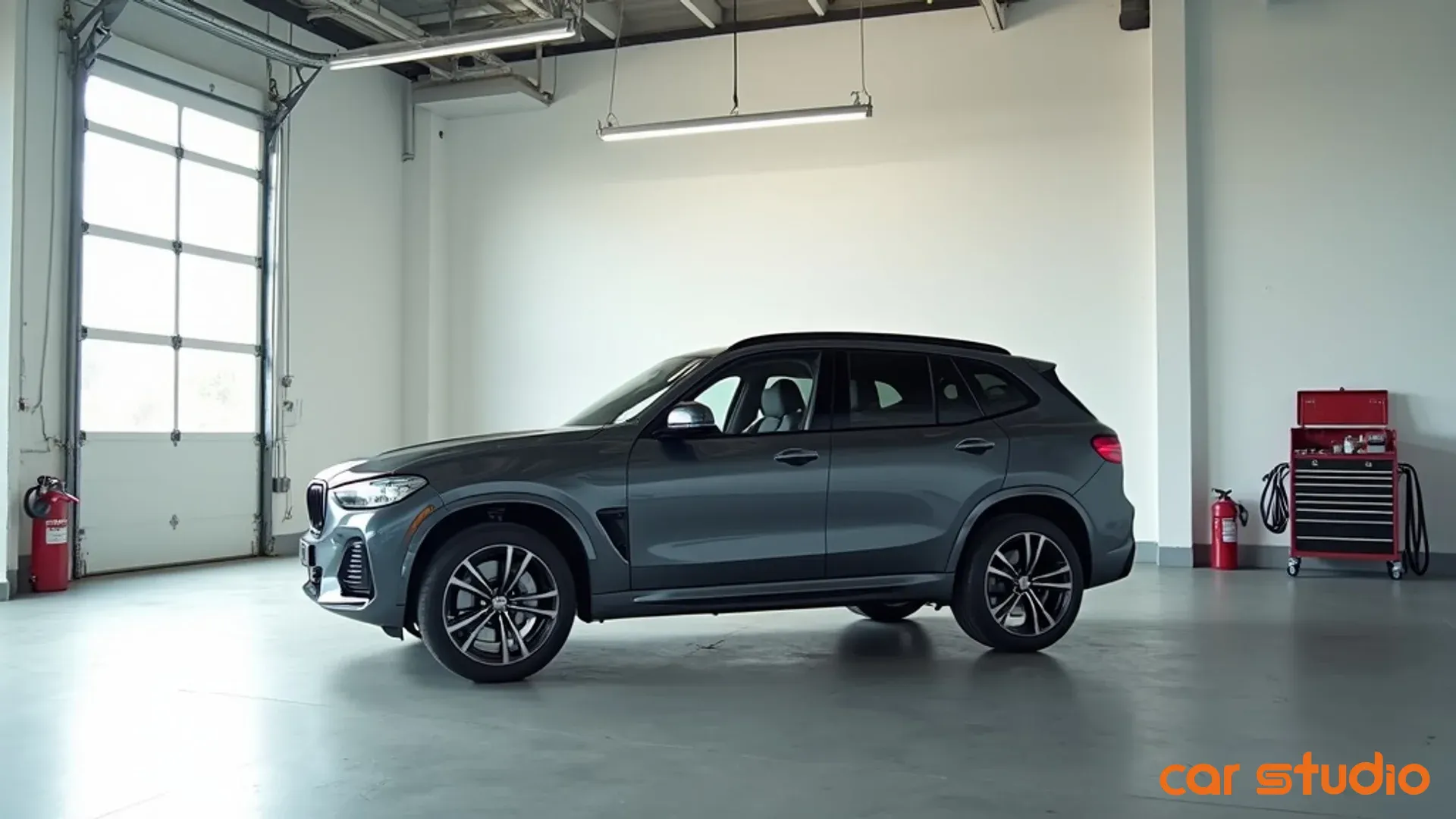

Éditeur de photos de voitures IA pour concessionnaires — Meilleurs visuels, ventes plus rapides | Car Studio AI
Votre meilleure unité est restée sur le terrain pendant 47 jours. Les photos semblent avoir été prises dans un parking sous la pluie. L'arrière-plan montre une benne à ordures. Trois images sont floues. Les photos intérieures sont si sombres que vous ne pouvez pas voir les sièges en cuir. Pendant ce temps, un concurrent propose une unité similaire avec des images nettes de qualité studio. Fond blanc impeccable. Éclairage parfait. Chaque angle est couvert. Leur voiture se vend en 22 jours.
Ce n'est pas un problème de photographie. C'est un problème de profit — et un éditeur de photos de voitures IA est la solution la plus rapide disponible.
Des visuels de véhicules médiocres ont un impact direct sur l'engagement VDP, la vitesse des ventes et la marge brute par unité. Chaque jour où une voiture reste parce que les acheteurs ignorent des photos médiocres, vous perdez 25 à 50 $ en coûts de possession. La solution n'est pas d'embaucher plus de photographes ou d'acheter des équipements coûteux. C'est d'utiliser l'IA d'édition de photos de voitures pour transformer des images incohérentes en actifs prêts à la vente — à grande échelle, en quelques minutes, pour tout votre inventaire.
Pourquoi vos photos VDP vous coûtent de la marge brute
Sortez cinq VDP aléatoires sur votre téléphone dès maintenant. Regardez les photos honnêtement.
Éclairage incohérent. Arrière-plans encombrés avec des camions de service ou d'autres inventaires visibles. Ombres traversant le capot. Photos floues parce que quelqu'un a précipité la prise. Angles critiques manquants comme la zone de chargement ou la troisième rangée.
Ce ne sont pas des problèmes esthétiques mineurs. Ce sont des tueurs de conversion.
L'engagement VDP raconte l'histoire. Les acheteurs passent 3 à 5 minutes sur une annonce bien présentée avec des visuels de haute qualité. Des photos médiocres? Ils sont partis en 30 secondes. Un temps de page plus faible signale aux plateformes tierces que votre annonce n'est pas pertinente, ce qui nuit à votre classement de recherche organique.
L'impact se répercute sur l'ensemble de votre entonnoir de vente. Moins de vues VDP → moins de prospects → des délais de rotation plus longs → des coûts de possession plus élevés → des réductions de prix plus agressives. Tout cela remonte aux photos.
La vitesse des ventes est directement corrélée à la qualité visuelle. Les unités avec des photos de qualité professionnelle se vendent constamment plus rapidement que des unités identiques avec des images de qualité inférieure. Les concessionnaires qui priorisent le merchandising visuel signalent des améliorations de 15 % à 25 % du temps de rotation par rapport à leur référence précédente.
Les problèmes de photo les plus courants sont entièrement évitables avec le bon éditeur de photos IA :
Un mauvais éclairage crée des intérieurs sombres et des extérieurs délavés. Photographier au mauvais moment de la journée ou dans des zones couvertes sans éclairage supplémentaire produit des images qui donnent même à un inventaire haut de gamme un aspect bon marché.
Les arrière-plans désordonnés détournent l'attention du véhicule. D'autres voitures, des baies de service, des clôtures et des poubelles signalent tous "we don't care about presentation." Shoppers associate visual sloppiness with operational sloppiness.
Les angles manquants laissent des lacunes dans le modèle mental de l'acheteur. Si vous ignorez le compartiment moteur d'un camion ou la troisième rangée d'un SUV, les acheteurs supposent que vous cachez quelque chose. La confiance diminue, l'engagement diminue.
Les images floues ou de faible résolution rendent impossible l'inspection des détails. Les acheteurs zooment. Si l'image pixellise, ils passent à autre chose.
Chacun de ces problèmes vous coûte de l'argent quotidiennement. Un éditeur de photos de voitures IA les résout tous sans ajouter de personnel ni d'équipement coûteux.
Conseil de pro: Auditez vos 10 unités les plus anciennes dès maintenant. Si les photos sont pires que celles de vos concurrents pour un inventaire similaire, vous avez trouvé votre première fuite de profit.
Ce que fait réellement l'édition de photos de voitures IA
Un éditeur de photos de voitures IA spécialement conçu n'est pas un outil unique — c'est une suite de capacités qui transforme automatiquement les photos brutes de véhicules en actifs prêts à la vente.
Voici ce que l'IA moderne d'édition de photos de voitures offre :
Suppression et remplacement de l'arrière-plan par IA
C'est la plus grande amélioration visuelle pour la plupart des concessionnaires. Vous photographiez la voiture où qu'elle se trouve sur votre terrain. L'éditeur de photos IA identifie le véhicule, supprime l'arrière-plan réel et le remplace par un environnement de studio propre — fond blanc, showroom dégradé ou cadre de marque personnalisé.
Chaque véhicule semble avoir été photographié dans le même studio professionnel, quelles que soient la météo, l'heure de la journée ou l'endroit où il a été photographié sur le terrain. Fini les arrière-plans encombrés. Fini l'incohérence visuelle entre les unités.
Car Studio AI applique cela automatiquement à grande échelle, traitant des centaines de photos avec des normes de marque cohérentes en quelques minutes.
Correction de l'éclairage et amélioration des couleurs
L'éditeur de photos IA analyse chaque image et corrige automatiquement l'éclairage, les ombres et la balance des couleurs — un travail qui prendrait à un éditeur qualifié 10 à 15 minutes par photo manuellement.
Les intérieurs sombres sont éclaircis sans paraître surexposés. Les ombres dures sont adoucies. Les couleurs sont équilibrées pour que la peinture semble précise dans toutes les conditions d'éclairage. Le résultat est une imagerie de qualité professionnelle sans les coûts de main-d'œuvre professionnels.
Mise à l'échelle d'image pour des VDP haute résolution
Les acheteurs zooment. Ils inspectent l'état de la peinture, les détails des roues et la qualité intérieure. Les images basse résolution signalent une faible qualité même lorsque le véhicule lui-même est impeccable.
La technologie de mise à l'échelle d'image de Car Studio AI reconstruit des versions plus nettes et de plus haute résolution de vos photos sans la pénalité de taille de fichier. Vos annonces ont l'air haut de gamme. Votre DMS et vos plateformes d'annonces restent rapides.
Ceci est particulièrement précieux pour les photos prises avec un équipement plus ancien ou dans des conditions suboptimales. Vous n'avez souvent pas besoin de refaire les prises de vue — l'IA améliore ce que vous avez déjà.
Déflouter et accentuer les prises de vue problématiques
Le flou de mouvement dû à une main tremblante ou les problèmes de mise au point dus à une prise de vue trop rapide peuvent être corrigés avec une IA entraînée sur des millions d'images de véhicules. Cela ne fait pas de miracles sur les photos gravement dégradées, mais cela sauve des prises de vue limites qui nécessiteraient autrement une nouvelle prise de vue — ce qui permet de gagner du temps et de mettre les unités en ligne plus rapidement.
L'avantage clé n'est pas seulement la qualité. C'est la vitesse et la cohérence à grande échelle. Un photographe qualifié produit 30 à 40 photos prêtes à la vente par heure, y compris le temps de configuration et d'édition. Un flux de travail d'édition de photos de voitures IA traite 200 à 300 photos par heure avec une variance de qualité nulle. Une personne peut commercialiser tout votre volume d'acquisition hebdomadaire dans le temps qu'il fallait auparavant pour traiter cinq voitures.
Conseil de pro: Commencez par le remplacement de l'arrière-plan et la correction de l'éclairage. Ces deux améliorations offrent le plus grand impact visuel pour le moindre effort et améliorent immédiatement l'engagement VDP.
Des photos brutes aux photos prêtes à la vente : le flux de travail IA en 4 étapes
Vous n'avez pas besoin de réorganiser toute votre opération. Vous avez besoin d'un processus reproductible que votre équipe peut exécuter de manière cohérente.
Étape 1 — Capture avec une liste de prises de vue standardisée
Créez une simple liste de contrôle : trois quarts avant, trois quarts arrière, avant et arrière de face, les deux côtés, sièges conducteur et passager, siège arrière, zone de chargement, compartiment moteur, tableau de bord, écran d'infodivertissement et toutes les caractéristiques clés. Imprimez-la. Plastifiez-la. Donnez-en une à chaque personne qui touche un appareil photo sur votre terrain.
Votre équipe n'a plus à se soucier de l'éclairage ou des arrière-plans. L'IA s'en charge. Ils ont juste besoin d'une couverture complète sous les bons angles.
Étape 2 — Téléchargement par lots sur la plateforme IA
À la fin de chaque journée ou après chaque cycle de reconnaissance, téléchargez toutes les photos brutes sur votre éditeur de photos de voitures IA. La plupart des outils acceptent les téléchargements en masse par glisser-déposer ou par intégration directe au DMS. Traitez par groupes de 10 à 20 unités minimum — télécharger une voiture à la fois annule l'avantage d'efficacité.
Étape 3 — L'IA applique automatiquement les améliorations
C'est là que l'IA d'édition de photos de voitures fait le gros du travail. Le remplacement de l'arrière-plan, la correction de l'éclairage, la balance des couleurs, la suppression des ombres et les éléments de marque personnalisés sont tous appliqués en fonction de vos préréglages enregistrés. Pas d'édition manuelle. Pas de décisions subjectives. Un résultat cohérent et conforme à la marque à chaque fois.
Un rapide contrôle qualité humain — 60 à 90 secondes par véhicule — détecte les cas limites occasionnels avant que quoi que ce soit ne soit mis en ligne.
Étape 4 — Syndiquer aux VDP et aux sites tiers
Poussez les photos améliorées vers votre site web et vos plateformes d'annonces. De nombreuses plateformes IA, y compris Car Studio AI, s'intègrent directement aux principaux réseaux d'annonces automobiles, de sorte que la syndication se fait automatiquement.
Temps total du flux de travail, de la capture à l'annonce en ligne : 15 à 30 minutes par véhicule. Comparez cela aux 45 à 90 minutes traditionnelles par unité.
Conseil de pro: Désignez une personne pour gérer le flux de travail IA lors du déploiement initial. Une fois qu'elle a affiné et documenté le processus, formez le reste de l'équipe. Une propriété centralisée empêche une exécution incohérente.
Plan de déploiement : Implémenter le merchandising visuel IA à grande échelle
Le déploiement de l'édition de photos de voitures IA dans votre concession nécessite plus que l'inscription à un outil.
Définissez d'abord votre norme de marque visuelle. Fond blanc ou showroom de marque ? Angles requis pour chaque type de véhicule ? Emplacement du filigrane ? Documentez cela dans un guide de marque visuelle d'une page avec des exemples de photos. Configurez vos préréglages de plateforme IA pour qu'ils correspondent une fois, et chaque photo se conformera automatiquement à partir de ce moment.
Formez votre personnel de terrain aux bases de la capture. Une session de 30 minutes couvrant les angles requis, les règles de composition de base et quand refaire une prise de vue est tout ce qu'il faut. Soulignez qu'ils n'ont plus à se soucier de l'éclairage ou des arrière-plans — l'éditeur de photos IA s'en charge.
Choisissez une plateforme plutôt que des outils individuels en fonction du volume. Vous pouvez assembler des outils IA distincts pour la suppression de l'arrière-plan, la correction de l'éclairage et l'amélioration d'image. Ou utiliser une plateforme intégrée qui gère l'ensemble du flux de travail en un seul endroit. Pour moins de 50 unités par mois, les outils individuels peuvent fonctionner. Au-delà, une plateforme se rentabilise en gain de temps et en réduction de la complexité.
Établissez un contrôle qualité avant la syndication. Cinq questions par véhicule : tous les angles sont-ils présents ? les arrière-plans sont-ils correctement remplacés ? pas d'artefacts visibles ? les couleurs sont-elles précises ? la marque est-elle appliquée ? Cela prend 90 secondes et protège votre réputation auprès des acheteurs.
Répondre aux objections courantes
"Cela va-t-il remplacer mon photographe ?" Non. L'IA gère le travail d'édition en volume afin que votre photographe puisse se concentrer sur des projets créatifs à forte valeur ajoutée — photos de héros, contenu personnalisé, inventaire spécial. Considérez cela comme donner des super-pouvoirs à votre équipe, pas la remplacer.
"Est-ce trop cher ?" Calculez d'abord le retour sur investissement. La plupart des plateformes facturent 10 à 30 $ par véhicule. Si l'édition de photos de voitures IA réduit votre temps de rotation moyen de seulement 5 jours sur une unité de 30 000 $, les économies de financement à elles seules — environ 150 à 250 $ par véhicule — couvrent le coût. La plupart des concessionnaires atteignent un retour sur investissement positif en 30 à 60 jours.
"Nous n'avons pas les compétences techniques." Les plateformes modernes d'édition de photos IA sont conçues pour les utilisateurs non techniques. Téléchargements par glisser-déposer, préréglages automatiques, aucune expérience Photoshop n'est nécessaire. La courbe d'apprentissage est de quelques heures, pas de quelques semaines.
"Les photos auront-elles l'air fausses ?" Seulement si vos paramètres sont mal configurés. Réglez les niveaux d'amélioration de manière conservatrice — visez "photographié professionnellement", pas "rendu CGI". Le remplacement de l'arrière-plan doit paraître naturel. Les couleurs doivent être précises. Réduisez tout paramètre qui rend l'inventaire irréaliste. Shoppers see the real car eventually; your photos should set accurate expectations while presenting the vehicle at its best.
Conseil de pro: Montrez à votre équipe de vente des exemples avant et après avant le déploiement. Ils repéreront un "trop" d'édition plus rapidement que quiconque — et leur adhésion est importante pour l'adoption.
Victoires rapides : Plan d'action de 14 jours
Jours 1-3 : Identifiez vos 10 VDP les moins performants en termes de vues, de temps passé sur la page ou de volume de prospects. Examinez leurs photos honnêtement. Documentez les métriques de performance actuelles comme référence.
Jours 4-7 : Inscrivez-vous pour un essai d'éditeur de photos IA. Téléchargez les photos brutes de ces 10 unités. Appliquez le remplacement de l'arrière-plan et l'amélioration de l'éclairage. Mettez à jour vos VDP avec les images améliorées.
Jours 8-14 : Suivez les mêmes métriques par rapport à votre référence. Recherchez des augmentations des vues VDP, du temps passé sur la page, des prospects et des sauvegardes sur les sites tiers.
La plupart des concessionnaires constatent une amélioration de 20 % à 40 % de l'engagement VDP dans les 7 à 10 jours suivant la mise à niveau de visuels de mauvaise qualité vers des visuels améliorés par l'IA. Ces données rendent le déploiement complet de l'inventaire simple.
Conseil de pro: Choisissez des unités qui sont sur le terrain depuis plus de 30 jours pour votre test. Des métriques de référence établies rendent l'amélioration mesurable et convaincante.
Mesurer le retour sur investissement : relier de meilleures photos au profit
Suivez ces métriques pour quantifier l'impact de l'édition de photos de voitures IA sur votre entreprise :
Taux de clics VDP et temps passé sur la page — vos indicateurs avancés. Comparez avant et après. Une augmentation de 25 % à 50 % de l'engagement VDP est courante lors de la mise à niveau de visuels de mauvaise qualité vers des visuels améliorés par l'IA.
Nombre moyen de jours de rotation — segmentez par type de véhicule et par gamme de prix pour une comparaison nette. Even a 5-day reduction in average turn time translates to $150 to $250 in direct savings per vehicle on carrying costs alone.
Coût de la photographie par véhicule — calculez le coût actuel de la main-d'œuvre, du temps d'édition et du logiciel par rapport aux frais de la plateforme IA plus le temps de main-d'œuvre réduit. La plupart des concessionnaires constatent une réduction de 50 % à 70 % des coûts totaux de photographie après la mise en œuvre de l'édition de photos de voitures IA. Les gains de temps atteignent souvent 60 % à 80 % par véhicule.
Le calcul du retour sur investissement est simple : la plupart des concessionnaires atteignent 200 % à 400 % de retour sur investissement au cours des 90 premiers jours.
Documentez-les mensuellement. Partagez-les avec votre équipe. Lorsque tout le monde voit le lien direct entre de meilleurs visuels et de meilleurs résultats commerciaux, l'adoption devient auto-entretenue.
L'avantage du merchandising visuel
Votre inventaire est votre actif le plus précieux. La façon dont vous le présentez en ligne détermine la rapidité de sa vente et la marge brute que vous protégez.
Les photos de véhicules médiocres sont une fuite de profit quotidienne qui s'aggrave avec le temps. Chaque unité qui reste une semaine de plus parce que les acheteurs ont ignoré des visuels médiocres vous coûte de l'argent en financement, en dépréciation et en marge brute manquée.
L'édition de photos de voitures IA résout ce problème à grande échelle. La suppression de l'arrière-plan crée de la cohérence. La correction de l'éclairage met chaque véhicule en valeur. Les flux de travail automatisés traitent des centaines de photos dans le temps qu'il fallait auparavant pour en gérer une douzaine.
La technologie est éprouvée, accessible et abordable. Les concessionnaires qui l'adoptent maintenant obtiennent un avantage mesurable en termes d'engagement VDP, de vitesse de vente et de rentabilité. Le chemin de la mise en œuvre est clair : définissez votre norme visuelle, formez votre équipe aux bases de la capture, choisissez une plateforme adaptée à votre volume et lancez un projet pilote de 14 jours pour prouver le concept.
Les métriques parleront d'elles-mêmes.
Prêt à voir ce que le merchandising visuel alimenté par l'IA peut faire pour votre concession ? Planifiez une démonstration de 15 minutes avec Car Studio AI pour voir comment les principaux groupes de concessionnaires automatisent l'ensemble de leur flux de travail de merchandising visuel et calculez votre retour sur investissement spécifique en fonction du volume de votre inventaire.