
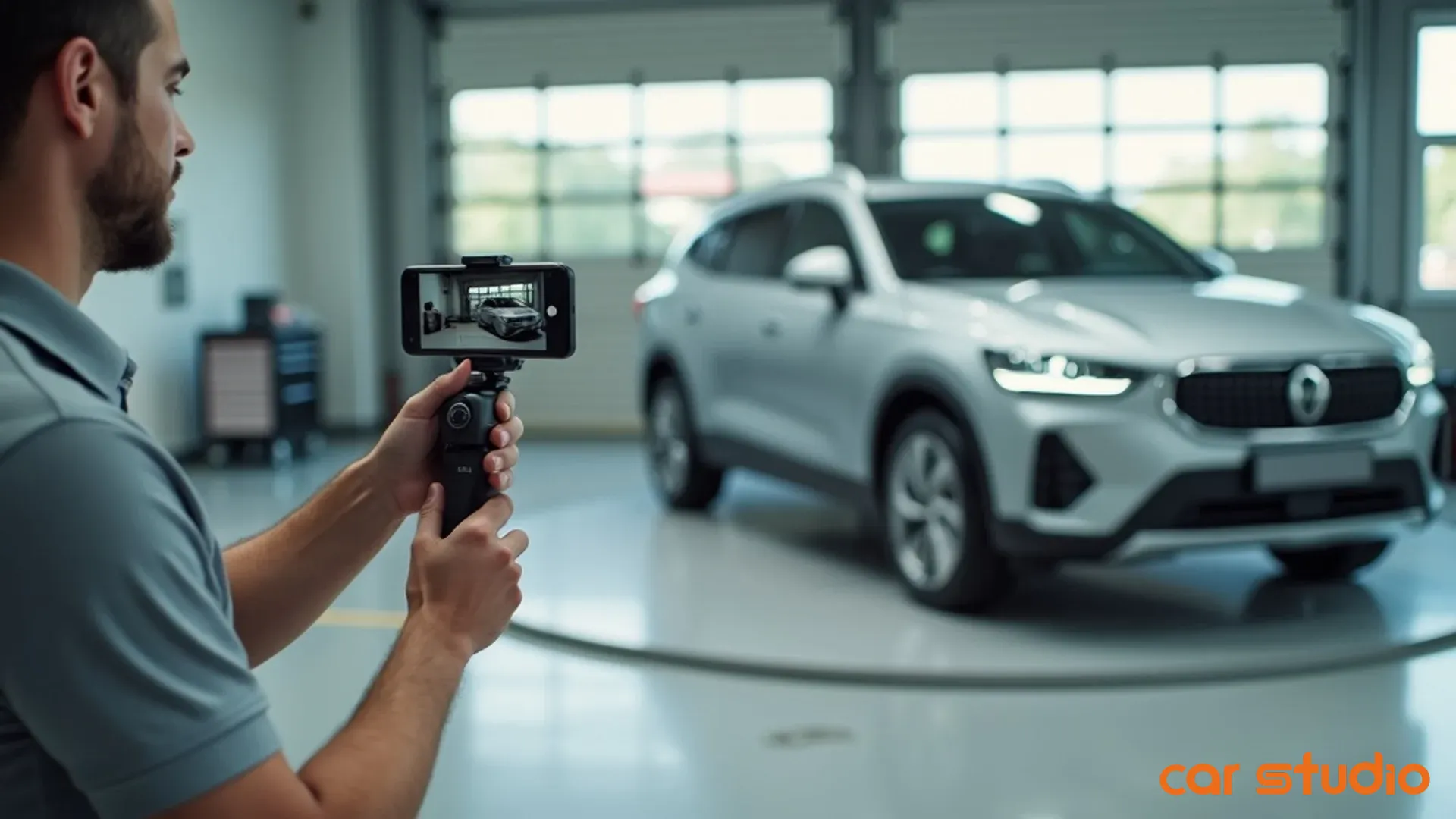

The 360 Advantage: Boost Used Car Sales with Spin Photography
Your top competitor just posted another 360 spin. Your best unit has been sitting on the lot for 23 days with static photos that look like they were shot in 2014. The buyer who could have driven three hours to see it just scheduled a test drive at the dealership with better visuals.
You already know photos matter. What you might not know is that the gap between dealers who treat spin photography as a nice-to-have and those who've built it into a repeatable system is widening fast. The difference isn't just image quality. It's inventory velocity, lead quality, and gross profit per unit.
This isn't about buying another tool and hoping your lot porter figures it out. It's about building a scalable merchandising system that turns every vehicle into a high-converting digital asset before it ever hits your website.
Here's how to do it.
From Clicks to Customers: Why Spins Build Trust
Buyers don't trust you yet. They don't trust any dealer. They've been burned, they've read the reviews, and they're coming to your vehicle detail page with their guard up.
Static photos don't fix that. A few exterior shots and a dashboard pic tell them you're hiding something. Maybe it's curb rash. Maybe it's a cigarette burn in the back seat. Maybe it's nothing, but they'll assume the worst and move on to the next listing.
360 spins remove the guesswork. They let buyers inspect the vehicle on their terms, at their pace, without a salesperson hovering. That sense of control builds trust faster than any copy you can write.
Modern buyers expect transparency. They've spent the last decade shopping on platforms that let them zoom, rotate, and explore products from every angle. Amazon does it for a $30 blender. Zillow does it for homes. If your used car listing doesn't offer the same level of detail, you're not competing with the dealer down the street. You're competing with every other digital shopping experience they've had this week.
Immersive vehicle detail pages keep people engaged longer. When a shopper can interact with a spin, click through interior details, and explore the vehicle without leaving the page, time on site goes up. Bounce rate goes down. Those aren't vanity metrics. They're leading indicators of intent.
Higher engagement correlates with faster decisions. A buyer who spends four minutes exploring your VDP is further down the funnel than one who glances at three photos and leaves. They're building a mental picture of ownership. They're imagining their commute, their weekend trip, their kid's car seat in the back. That emotional connection shortens the path to purchase.
Trust accelerates everything. It turns cold leads into warm appointments. It reduces the number of tire kickers who show up, take one look, and leave. It gives your sales team a better starting point because the buyer already knows what they're getting.
When you remove friction from the research phase, you compress the sales cycle. Buyers who've already seen every angle of the vehicle online spend less time on the lot doing their own inspection. They're ready to talk numbers, not play detective.
The ideal VDP isn't just about spins. It's a complete digital merchandising package. You need high-resolution exterior and interior photos, a clean 360 spin, detailed condition notes, and transparent pricing. Each element reinforces the others.
Spins work best when they're part of a system. If your spin looks great but your interior shots are grainy and your description is generic, you're still losing deals. Buyers notice inconsistency. It makes them wonder what else you're cutting corners on.
The dealers winning right now aren't just using better tools. They're treating every vehicle like a product launch. They're asking, "What does this buyer need to see to feel confident enough to drive here?" Then they're delivering it, every time, on every unit.
The Spin Photography Implementation Playbook
Most dealerships fail at spin photography because they treat it like a one-time project instead of an operational system. Someone buys a turntable, shoots five cars, realizes it's harder than they thought, and the equipment ends up in a corner collecting dust.
Building a scalable spin system starts with defining roles. Who shoots? Who edits? Who publishes? If the answer is "whoever has time," you've already lost.
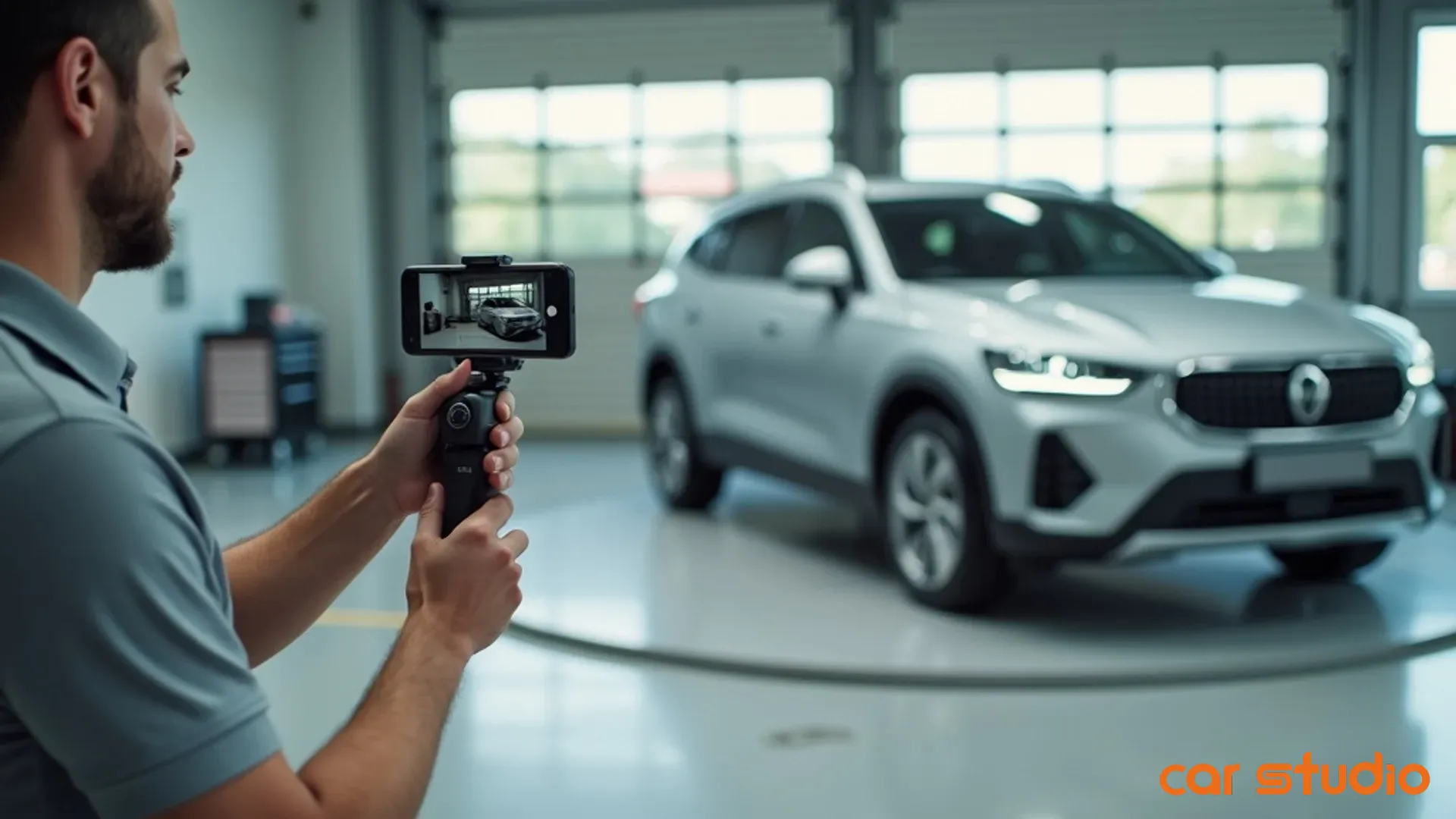
Assign a primary photographer. This is usually a lot porter, BDC rep, or dedicated merchandising specialist. It doesn't matter who, as long as they own the process and have protected time to execute it. Shooting spins can't be something they do "when it's slow" because it's never slow.
Your photographer needs a backup. When they're off, sick, or slammed, someone else has to step in without the whole system collapsing. Cross-train at least one other person and document the workflow so it's repeatable.
Editing and quality control should sit with someone who understands your brand standards. This could be your marketing director, a dedicated merchandising manager, or an outsourced partner. The key is consistency. Every spin should look like it came from the same dealership, not a different photographer every week.
Publishing is where most dealerships create unnecessary bottlenecks. If your photographer has to email files to marketing, who then uploads them to the DMS, who then syncs them to your website, you've added days to your time-to-line. Automate as much of this as possible.
The Lot-to-Live workflow is your backbone. Here's what it should look like:
Step one: Vehicle arrival and intake. As soon as a trade or auction purchase hits your lot, it enters the merchandising queue. Tag it in your DMS, assign a priority level based on turn potential, and schedule the photo shoot within 24 hours.
Step two: Pre-shoot prep. Clean the vehicle. Remove personal items, floor mats if they're ratty, and anything that distracts from the car itself. Check for glare-prone surfaces and plan your shoot time accordingly. Early morning or late afternoon light works best if you're shooting outdoors.
Step three: Capture the spin. Position the vehicle on your turntable or shoot it manually with consistent framing. Aim for 24 to 36 frames per rotation. More frames mean smoother spins but longer upload times. Find the balance that works for your bandwidth and buyer experience.
Step four: Edit and enhance. This is where AI-driven platforms like Car Studio AI can automate background replacement and quality checks. Instead of spending 20 minutes per vehicle in Photoshop, you're batch-processing spins with consistent backgrounds, lighting corrections, and automatic cropping.
Step five: Publish and promote. Push the spin to your VDP, syndication partners, and social channels. Don't just upload it and hope someone notices. Feature it in your email campaigns, retargeting ads, and organic posts. Make the spin the hero of your merchandising, not an afterthought.
Integration with your existing tools is non-negotiable. If your spin photography workflow doesn't talk to your DMS, inventory management system, and website CMS, you're creating manual work that will kill adoption.
Most modern inventory tools offer API integrations or direct uploads. Use them. The goal is to shoot a spin, run it through your editing process, and have it live on your VDP without touching three different platforms.
Choosing your tech stack matters, but not as much as you think. You can build a functional spin system with a $300 turntable, a smartphone, and free editing software. You can also spend $10,000 on a professional rig with studio lighting and automated capture. Both can work.
The question isn't what's best. It's what fits your volume, budget, and quality standards. If you're a high-volume store turning 200 used units a month, invest in speed and automation. If you're a smaller independent lot, start lean and scale as you prove ROI.
Hardware options range from manual turntables to fully automated 360 photo booths. Manual systems are cheaper and more flexible but require more operator skill. Automated booths are faster and more consistent but cost significantly more upfront.
Software is where the real leverage lives. Basic spin software stitches your photos together and embeds them on your VDP. Advanced platforms add AI-powered editing, background replacement, and automatic quality checks. The latter category is where you start to see real time savings and consistency improvements.
Your workflow should be documented, timed, and optimized. If it takes 45 minutes to shoot and publish one spin, you need to find the bottleneck. Is it the shooting process? The editing? The upload speed? Fix it before you scale.
The best systems are boring. They're repeatable, predictable, and require minimal decision-making. Your photographer should be able to walk through the process on autopilot because every step is the same, every time.
Objections & Pitfalls: Overcoming Common Hurdles
Every dealer who's tried spin photography and quit has the same story. It took too long. It cost too much. The quality was inconsistent. The staff didn't buy in.
These aren't unsolvable problems. They're symptoms of poor planning and unrealistic expectations.
"It takes too long" is the most common objection. And it's true if you're doing it wrong. If your process involves setting up a turntable every time, manually rotating the vehicle, shooting with a DSLR, transferring files to a computer, editing in Photoshop, and uploading one by one, you're looking at an hour per car.
But that's not the only way to do it. Automated turntables cut shooting time to under 10 minutes. AI-powered editing tools reduce post-production to seconds. Direct DMS integrations eliminate manual uploads. Suddenly, your hour-per-car process is 15 minutes, and the objection disappears.
The real question isn't whether it takes time. It's whether the time investment accelerates your turn rate enough to justify it. If a spin helps you sell a car three days faster, you've just saved three days of floorplan interest. On a $25,000 unit, that's real money.
"It's too expensive" is the second most common excuse. Let's break down the math. A basic turntable and smartphone setup costs around $500. An advanced AI photo editor subscription might run $200 a month. If you're turning 50 used cars a month, that's $4 per vehicle in fixed costs.
Now compare that to the cost of an extra week on the lot. Floorplan interest, depreciation, and opportunity cost add up fast. If spins help you turn inventory even 10% faster, the ROI is a no-brainer.
The expensive part isn't the tools. It's the cost of not using them. Every day a car sits is a day you're paying to own it. Anything that shortens days supply pays for itself.
Inconsistent quality is a training problem, not a technology problem. If your spins look great one week and terrible the next, it's because your process isn't standardized.
Create a shot list. Define your angles, your lighting conditions, and your editing standards. Make it a checklist your photographer follows every time. Remove the guesswork.
Handling staff resistance starts with showing them the why. Your lot porter doesn't care about VDP engagement metrics. They care about whether this new task makes their day harder or easier. Frame it in terms they understand.
If shooting spins means fewer customers showing up, kicking tires, and wasting everyone's time because they didn't know the car had a scratch, that's a win for your sales team. If it means cars move faster and there's less old inventory cluttering the lot, that's a win for your porter.
Get buy-in by involving your team in the process. Let them test the tools, give feedback, and suggest improvements. People support what they help create.
Avoiding common background and lighting mistakes is easier than fixing them later. Busy backgrounds distract from the vehicle. Shoot in front of a clean wall, a neutral backdrop, or use AI-powered background replacement to create a consistent studio look.
Glare is the enemy of good car photography. Windshields, chrome, and glossy paint all reflect light in ways that ruin shots. Shoot in diffused light, avoid direct overhead sun, and use polarizing filters if you're working with a camera.
If you're shooting indoors, invest in basic softbox lighting. It doesn't have to be expensive. Consistent, even light is more important than high-end gear.
The biggest pitfall is treating spin photography as a marketing initiative instead of an operations initiative. Marketing can't fix a broken workflow. If your recon process is slow, your lot is disorganized, and your inventory management is a mess, adding spins won't help.
Fix the foundation first. Get your time-to-line under control. Build a consistent recon process. Then layer in spin photography as part of a complete merchandising system.
Quick Wins in 14 Days: A Momentum-Building Plan
You don't need to overhaul your entire operation to see results. You need a focused pilot that proves the concept and builds internal momentum.
Here's how to do it in two weeks.
Days one through three: Pilot on five high-priority vehicles. Pick your best units. The ones with the highest gross potential, the fastest expected turn, or the most online interest. These are your proof-of-concept cars.
Shoot spins on all five. Edit them to your quality standard. Publish them to your VDP and promote them across your digital channels. Don't change anything else. Just add the spins and watch what happens.
Track your baseline metrics before you start. What's the average time on VDP for similar vehicles without spins? What's your lead-to-appointment conversion rate? What's your average days to sale? You need a before picture to measure the after.
Days four through seven: Train one champion and refine the workflow. Your pilot will surface problems. Maybe the lighting was inconsistent. Maybe the upload process was clunky. Maybe your photographer struggled with the turntable.
Fix those issues now, while the scope is small. Adjust your process, update your documentation, and train one person to own it going forward. This is your spin photography champion. They'll be the internal expert who trains others and troubleshoots problems.
Refine your workflow until it's repeatable. Time each step. Identify bottlenecks. Eliminate unnecessary handoffs. The goal is to get your lot-to-live time as short as possible without sacrificing quality.
Days eight through 14: Measure VDP lift and lead quality. By the end of week two, you should have enough data to see trends. Are people spending more time on VDPs with spins? Are you getting more leads? Are those leads higher quality?
Compare your pilot vehicles to a control group of similar units without spins. Look at time on page, bounce rate, lead volume, appointment show rate, and close rate. If the numbers move in the right direction, you've got your business case.
Lead quality matters more than lead volume. If spins attract more tire kickers, that's not a win. But if they attract more qualified buyers who've already done their research and are ready to move, that's gold.
Track your sales team's feedback. Are buyers showing up more informed? Are they spending less time inspecting the vehicle and more time talking deal structure? Those qualitative signals matter as much as the quantitative data.
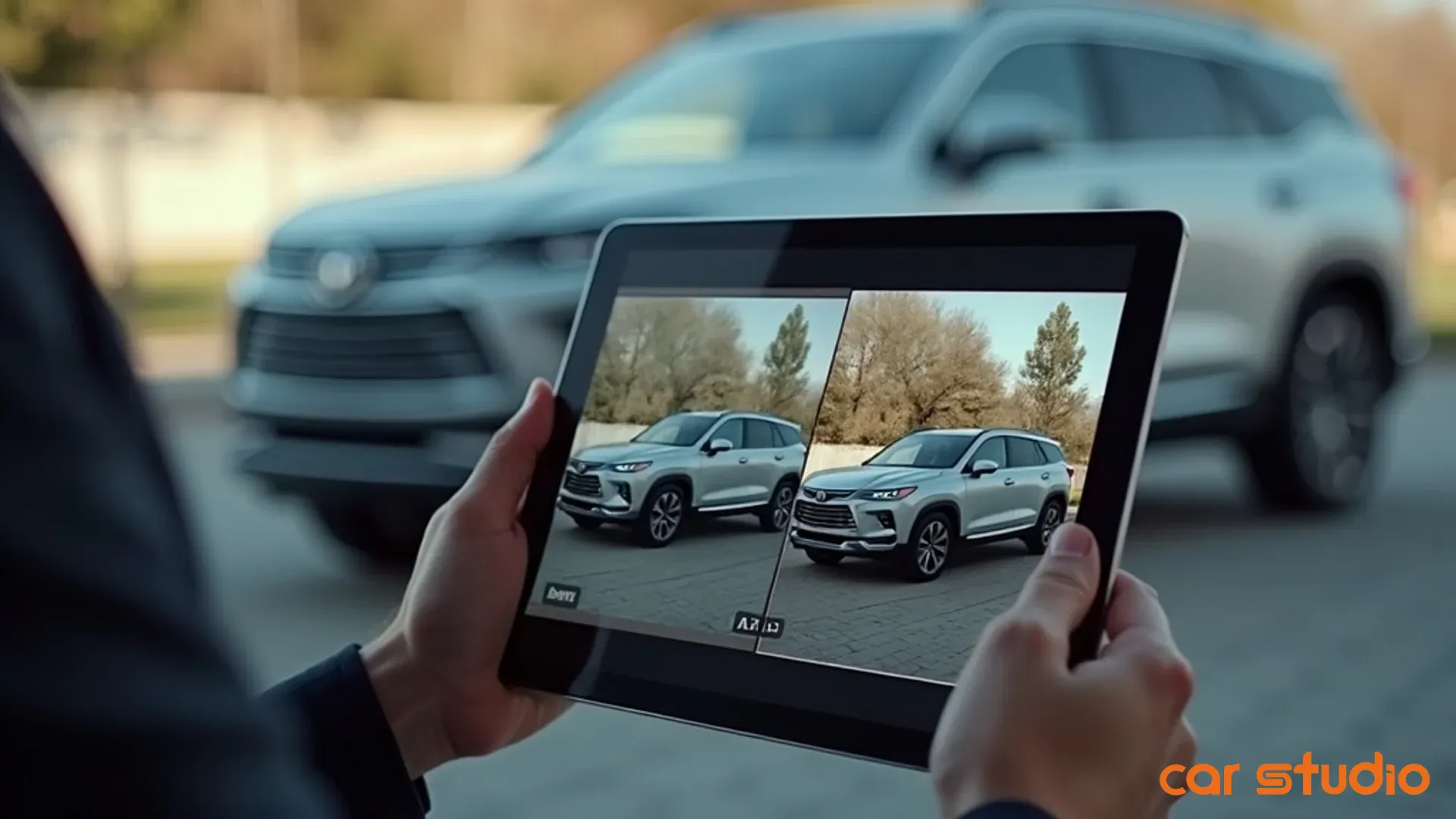
After 14 days, you'll know whether this is worth scaling. If the answer is yes, expand to your next 20 vehicles. Then 50. Then your entire inventory. Build the habit before you build the infrastructure.
If the answer is no, figure out why. Was it the workflow? The quality? The promotion? Most failed pilots fail because of execution, not because the concept doesn't work. Fix the process and try again.
The goal of this two-week sprint isn't perfection. It's proof. Proof that spins move the needle. Proof that your team can execute. Proof that the investment is worth scaling.
The Next Frontier: AI-Enhanced Merchandising
Spin photography is table stakes. The next competitive advantage is using artificial intelligence to automate, enhance, and scale your entire merchandising operation.
An AI photo editor doesn't just save time. It creates consistency that's impossible to achieve manually. Every background is the same. Every lighting correction follows the same logic. Every image meets the same quality standard.
Platforms like Car Studio AI are turning what used to be a 20-minute Photoshop job into a 20-second automated process. You upload your raw spin, the AI removes the background, corrects the lighting, and outputs a studio-quality result ready for your VDP.
Background replacement is the most obvious use case. Your lot is messy. There are cars in the background, cones, trash cans, and whatever else happens to be there when you shoot. A clean, neutral background makes every vehicle look more premium and keeps the focus where it belongs.
Manual background replacement is tedious and expensive. You're either paying a designer hourly or spending your own time cloning out distractions in Photoshop. AI does it instantly, and the results are often better because the algorithm doesn't get tired or sloppy.
Lighting correction is harder to see but just as important. AI can analyze your image, detect underexposed areas, and adjust brightness and contrast to bring out detail without making the photo look over-processed. It's like having a professional retoucher on staff, working 24/7, for a fraction of the cost.
The ability to upscale image quality automatically is a game changer for older inventory photos. Maybe you have a great unit that was photographed two years ago with a lower-resolution camera. Instead of re-shooting it, an artificial intelligence image editor can upscale the resolution, sharpen details, and make it look current.
This matters for syndication. Third-party listing sites often have minimum resolution requirements. If your photos don't meet the spec, they get rejected or displayed poorly. AI upscaling fixes that without reshooting.
Consistency is the hidden ROI of AI-enhanced merchandising. When every photo on your lot looks like it came from the same professional studio, your brand looks more premium. Buyers notice. It signals that you care about details, and if you care about how the car looks online, you probably care about how it's maintained.
AI is also starting to power smarter merchandising decisions. Some platforms can analyze your photos, identify damage or condition issues, and flag them for disclosure. Others can suggest optimal pricing based on visual condition compared to similar listings.
We're moving toward a future where your merchandising system doesn't just display your inventory. It actively helps you price it, promote it, and present it in the way most likely to convert.
The dealers who adopt these tools early will have a two- to three-year head start on competitors who wait. That's enough time to build a reputation for having the best online inventory experience in your market. Once you own that perception, it's hard to lose.
Future-proofing your merchandising stack means choosing platforms that integrate AI as a core feature, not a bolt-on. Look for tools that are actively investing in machine learning, computer vision, and automation. Those are the ones that will keep getting better without requiring you to switch vendors every two years.
The next frontier isn't just better photos. It's a fully automated merchandising pipeline where a vehicle arrives on your lot, gets photographed, edited, priced, and published without a human touching it. We're not there yet, but the technology is closer than you think.
Ready to automate your merchandising? See how Car Studio AI uses an advanced AI photo editor to create perfect spins in minutes, not hours. Schedule a demo now and discover how to implement a scalable, high-quality spin photography system that turns inventory faster and builds buyer trust from the first click.
Stop losing time to manual editing. Discover how Car Studio AI can help you implement a scalable, high-quality spin photography system. Get your personalized demo and see how AI-enhanced merchandising can become your competitive advantage in 2024 and beyond.