
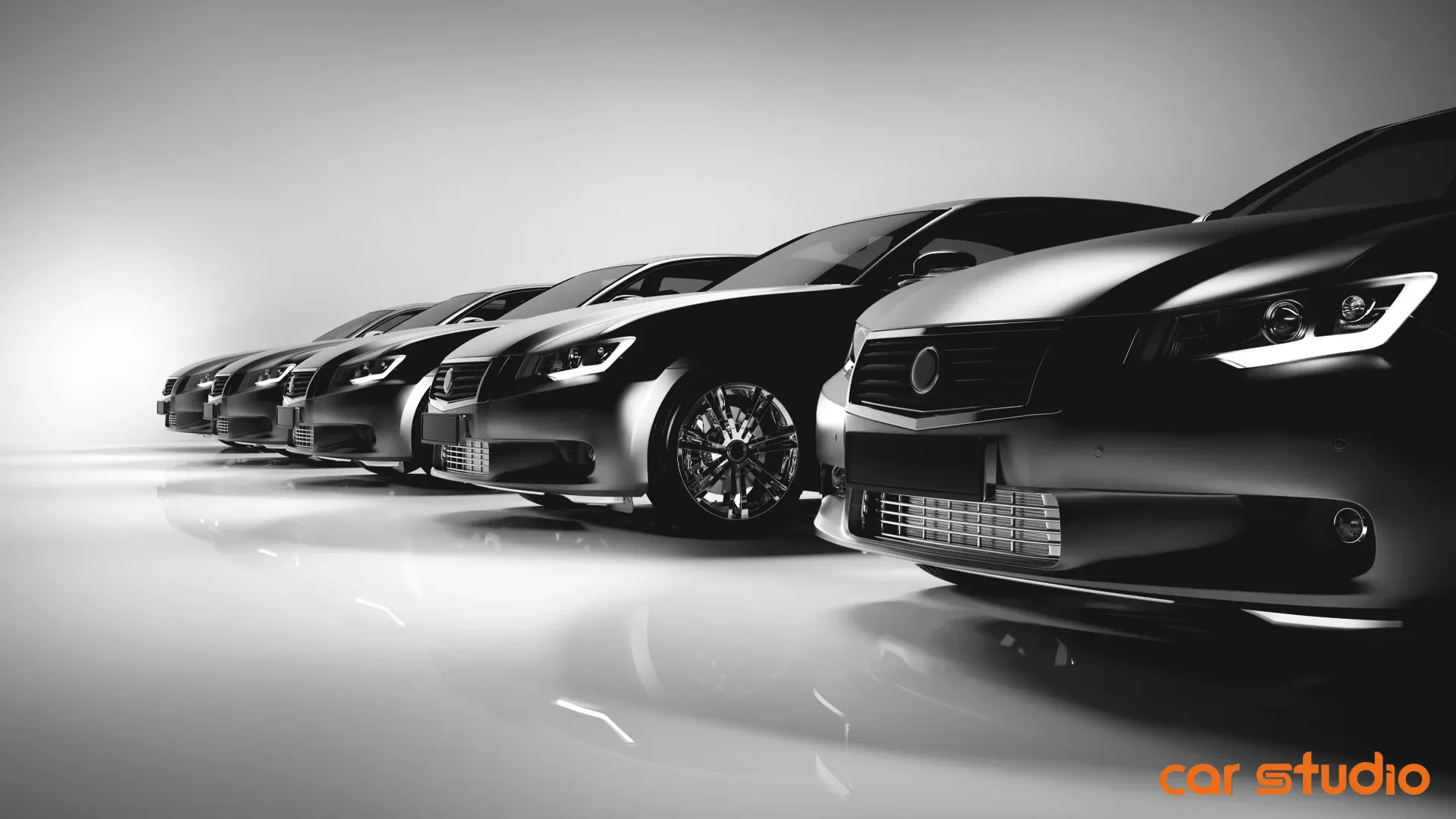

The Definitive Guide to Car Background Removal: Transforming Dealership Inventory with AI
In the modern automotive landscape, the dealership lot is no longer the primary showroom. The real showroom is a 6-inch screen in a potential buyer’s pocket.
We are living in the era of "Visual-First Retailing." According to recent industry data, over 90% of vehicle purchases begin online, and the vast majority of shoppers make a "keep or discard" decision on a vehicle within milliseconds of seeing the primary photo.
For dealerships, this shifts the battleground. It is no longer enough to have the best price or the lowest mileage. To win the click, you must have the best image.
This guide explores the transformative power of AI Car Background Removal. We will dive deep into why background chaos kills conversions, the operational economics of AI versus manual editing, and how leveraging tools like Car Studio AI can standardize your brand and accelerate your sales velocity.
The Psychology of the VDP (Vehicle Detail Page)
Before we discuss the technology, we must understand the psychology of the digital car buyer. When a customer lands on a Vehicle Detail Page (VDP), they are looking for two things: Information and Trust.
The Problem of "Visual Noise"
Imagine walking into a physical dealership. The floor is polished, the lighting is bright, and the cars are spaced out elegantly. Now, imagine a dealership where cars are parked haphazardly next to dumpsters, surrounded by weeds, or blocked by other vehicles. Which one would you buy from?
Online, "background noise" is the digital equivalent of a messy lot.
Distraction: Power lines, passersby, other inventory, and unsightly buildings steal focus from the hero of the image: the car.
Perceived Value: A car photographed in a chaotic environment is subconsciously perceived as lower value than the exact same car photographed in a pristine, neutral studio.
Trust Signals: Inconsistency breeds suspicion. If one car is shot on grass, another on pavement, and a third in a wash bay, the dealership appears disorganized.
The "Clean Canvas" Effect
Removing the background creates a "Clean Canvas." It forces the buyer’s eye to focus strictly on the vehicle's lines, condition, and features. It removes the cognitive load of processing the environment, allowing the brain to move faster toward the decision-making phase.
Strategic Insight: High-quality visuals don't just look nice; they are a direct lever for revenue. To understand how professional visuals directly impact the bottom line, read our deep dive on AI Car Background Removal: Changing Professional Photos.
The Evolution of Automotive Merchandising
To appreciate where we are, we have to look at where we came from. Automotive merchandising has gone through three distinct eras.
Era 1: The "As-Is" Era (Pre-2015)
Dealers would snap a photo of the car exactly where it sat. If it was raining, the photo was wet. If there was a rival dealer’s sign in the background, it stayed there. Speed was the only metric; quality was an afterthought.
Era 2: The Outsourcing Era (2015-2022)
As internet speeds increased and screens got better, dealers realized they needed better photos. The solution was manual editing.
The Process: Photographers would shoot the cars, upload images to an FTP server, and send them to editing teams (often overseas).
The Lag: Dealers would wait 24 to 48 hours for the images to be clipped, masked, and returned.
The Cost: Dealers paid a per-image or per-VIN fee that added up to thousands of dollars a month for large inventory lots.
Era 3: The AI Era (Present Day)
We have now entered the age of automation. Artificial Intelligence has rendered manual clipping obsolete.
The Comparison: Man vs. Machine
The battle between human editors and AI is no longer a contest. AI wins on speed, cost, and scalability.
Speed: Manual editing creates a bottleneck. AI processes images in seconds. This means a car can be photographed and listed online within minutes, not days.
Consistency: Human editors have "off days." Maybe the shadow looks different, or the crop is slightly off. AI applies the exact same algorithm to every single pixel, ensuring 100% uniformity across 1,000 cars.
Cost: Manual editing scales linearly (more cars = more cost). AI scales efficiently (software subscriptions offer vast volume at a fraction of the per-unit cost).
Deep Dive: Are you still paying for manual clipping services? You might be bleeding budget unnecessarily. We break down the full cost-benefit analysis in our article: AI vs. Manual Editing: Car Background Removal.
How AI Background Removal Actually Works

For many General Managers and Dealer Principals, "AI" can feel like a buzzword. But understanding the mechanics helps in realizing the value.
It is not magic; it is Computer Vision.
1. Object Detection and Segmentation
When you upload a photo to Car Studio AI, the neural network analyzes the image. It doesn't just "see" pixels; it identifies shapes. It distinguishes the metal of the car body from the asphalt, the glass of the windshield from the clouds behind it, and the rubber of the tires from the shadow underneath.
2. The "Masking" Challenge
The hardest part of background removal is the edges.
The Greenhouse: Through the car windows, you can see the background. A bad editor makes the windows opaque (which looks fake). Advanced AI keeps the glass transparent but replaces the background behind the glass.
The Reflections: Cars are mirrors. If you put a car on a white background, but the door panel is reflecting a green tree, it looks fake. Modern AI can adjust these reflections to match the new environment.
3. Contextual Shadow Generation
A car without a shadow looks like it is floating in space. This is the hallmark of cheap software. Top-tier AI generates a realistic "drop shadow" and "contact shadow" (where the tires touch the ground) based on the perspective of the camera. This "grounds" the vehicle, making the new background look indistinguishable from reality.
Building a "Digital Studio" Without the Real Estate Cost
One of the biggest capital expenditures for a dealership is building a physical photo booth.
Construction: $50,000 - $100,000 for a turntable, specialized lighting truss, and seamless walls.
Space: It eats up valuable square footage that could be used for service bays or showroom space.
Logistics: Porters have to drive every single car from the lot to the booth, creating a traffic jam and wasting labor hours.
The Virtual Solution
AI Background Removal allows you to turn any spot on your lot into a studio.
You can photograph the car in a parking spot, against a fence, or in the service drive. The AI strips away the environment and replaces it with a premium backdrop.
Branding Consistency
You can choose a background that matches your brand identity.
Luxury Dealers: Often prefer dark, moody minimalist backgrounds or architectural renders.
Volume Dealers: Often prefer clean white or light grey backgrounds to emphasize transparency and cleanliness.
Branded Plates: AI can also automatically detect the license plate and overlay your dealership’s logo, ensuring every photo serves as a marketing banner for your store.
Speed is the New Currency
In automotive retail, "Time-to-Market" (TTM) is a critical KPI.
Every day a vehicle sits on your lot without photos, it is invisible to the digital buyer. It is incurring holding costs (floorplan interest, insurance, depreciation) without generating leads.
The "Holding Cost" Calculator
If your manual photography process takes 3 days (1 day to shoot, 2 days for editing), and you sell 100 cars a month, that is 300 days of lost visibility every single month.
By switching to AI tools, you reduce that lag to nearly zero.
Process: Snap photos $\rightarrow$ Upload to App $\rightarrow$ AI Processes Instantly $\rightarrow$ Sync to Website.
Result: The car is online and shoppable the same hour it comes off the truck.
Industry Trend: Speed doesn't just save money; it makes money. Faster listing means faster turn rates. Learn more about how the best dealers are using these tools to accelerate inventory turn in our post: AI Tools Car Dealers Love: Background Removal, 360 Views, and Faster Sales.
Beyond 2D – The Rise of 360 Spin
Background removal is not limited to static images. The next frontier, which is rapidly becoming the standard, is the 360-degree Interactive Spin.
Static photos leave room for doubt. "What does the other side look like?" "Is there a dent on that door?"
A 360-spin gives the user control. They can rotate the car, zoom in, and inspect it from every angle.
The AI Challenge with Video
Doing background removal on a video is infinitely harder than on a photo because the background changes with every frame. However, Car Studio AI technology now stabilizes the footage and removes the background in real-time as the user spins the car.
Why 360 Matters:
Engagement: Users spend up to 50% longer on VDPs with spins compared to those with just photos.
Transparency: It builds immense trust. It proves you have nothing to hide.

Best Practices for AI Photography
While AI is powerful, it follows the rule of "Garbage In, Garbage Out." To get the absolute best results from your car background removal tools, follow these operational best practices:
Leave Space: Don't frame the car too tightly. The AI needs a little buffer room around the bumper and roof to perform the segmentation cleanly.
Watch the Angle: Shoot at "beltline" height (waist height). Shooting from too high makes the car look small; shooting from too low can distort the proportions.
Clean the Lens: It sounds simple, but a smudge on a smartphone lens can confuse the AI sensors and result in a blurry output.
Lighting Matters: AI can fix the background, but it can't fix a car that is in total darkness. Shoot during the day, ideally when the sun is not directly behind the car (which causes lens flare).
The ROI of Visual Consistency
Let’s look at the Return on Investment (ROI) for a dealership switching to an AI-first merchandising strategy.
1. Conversion Rate Increase
Consistent, professional photos have been shown to increase Click-Through Rates (CTR) from Search Results Pages (SRP) by 15-30%. More clicks equal more leads.
2. Labor Savings
Your sales staff or porters spend less time moving cars to specific locations. They can snap the photo where the car sits. If this saves 15 minutes per car, and you process 200 cars a month, that is 50 hours of labor saved monthly.
3. Brand Equity
This is intangible but vital. When a customer browses Autotrader or CarGurus, they are bombarded with options. If your cars all look uniform, professional, and branded, you establish authority. You stop being a "used car lot" and become a "retailer."
Conclusion: The Future is Automated
The automotive industry is contracting and consolidating. The dealerships that survive and thrive in the coming years will be the ones that operate with extreme efficiency.
Relying on slow manual processes for merchandising is a liability. Car Background Removal AI is no longer a "nice-to-have" luxury; it is a fundamental infrastructure requirement for the modern digital dealership.
It empowers you to take control of your inventory, reduce your time-to-market, and present your vehicles with the premium look they deserve—all at a fraction of the cost of traditional methods.
Ready to revolutionize your inventory?
Don't let your cars sit invisible on the lot. Embrace the power of AI and turn your VDPs into conversion machines.
Frequently Asked Questions (FAQ)
Q: Can AI background removal handle complex car parts like wire wheels or convertibles?
A: Yes. Modern AI uses advanced semantic segmentation to handle intricate details like wheel spokes, bike racks, and open convertible tops, ensuring the background is removed through the gaps, not just around the outline.
Q: Does using AI background removal hurt the "authenticity" of the car?
A: On the contrary, it enhances it. By removing distracting backgrounds (like dumpsters or other cars), you allow the customer to focus entirely on the vehicle's condition. As long as you do not digitally repair dents or scratches, you are increasing clarity, not deception.
Q: How does this compare to manual editing services?
A: AI is significantly faster (seconds vs. days) and more cost-effective. For a full breakdown, read our comparison on AI vs. Manual Editing.
Q: Can I use my smartphone, or do I need a DSLR?
A: Most AI tools are optimized for smartphone photography. Modern phones have high-resolution sensors that, when paired with AI processing, produce studio-quality results.
Q: What is the impact on sales speed?
A: Dealers utilizing AI tools often see a drastic reduction in "Time-to-Market," getting cars online days faster than competitors. This velocity is crucial for profitability. Learn more in our article on AI Tools Dealers Love.