
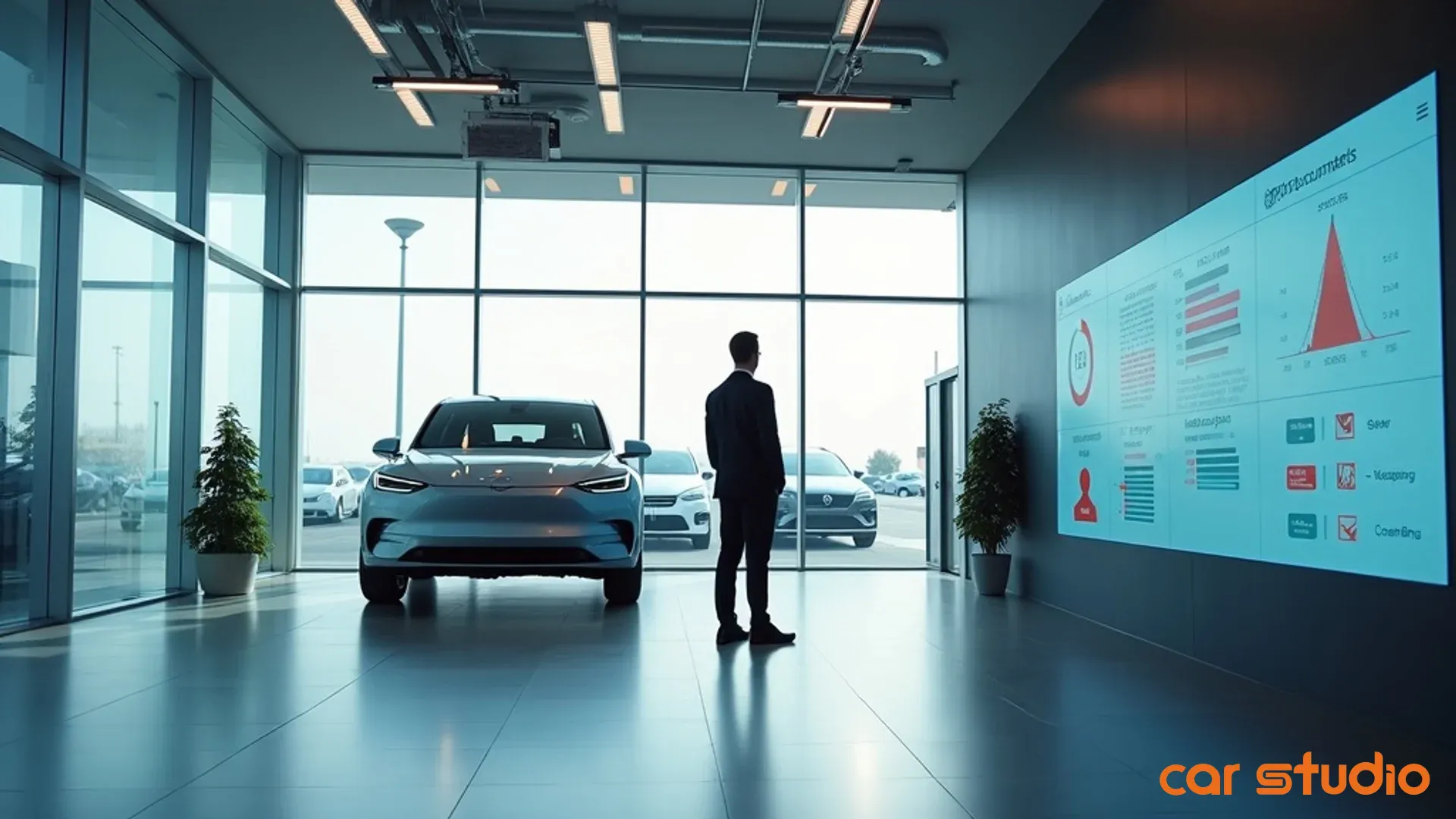

The AI Playbook for Dealer Profitability: A Practical Guide
Your team spent three hours last Tuesday manually editing photos for a single trade-in. Your BDC missed 40% of inbound leads because follow-up templates are outdated and your CRM workflow broke again. Meanwhile, your used car manager is still pricing inventory based on gut feel and a two-day-old market report.
These aren't isolated incidents. They're profit leaks that cost the average dealership between $150,000 and $300,000 annually in lost margin, wasted labor, and missed opportunities. The irony? Most of these problems are now solvable with AI, yet dealerships continue to treat automation as a future consideration rather than an operational imperative.
This playbook isn't about AI theory or distant possibilities. It's a step-by-step implementation system designed to plug your biggest profit leaks within weeks. You'll walk away with a phased deployment model, a pilot project framework, and a clear path to measurable ROI without ripping out your existing tech stack or hiring a data science team.
The Hidden Profit Leaks Costing You Six Figures
Walk through your dealership with a profit lens. Every manual process, every delayed decision, and every inconsistent customer touchpoint represents margin walking out the door.
Manual merchandising inconsistencies drain labor hours. Your photographer shoots 30 vehicles a day, but half need rework because lighting was off or backgrounds were cluttered. Your lot porter spends an hour moving cars to the photo bay. Your marketing coordinator manually uploads, crops, and edits images for each VIN across four listing platforms. By the time a vehicle goes live, you've burned six to eight labor hours on tasks that generate zero incremental gross.
The real cost isn't just time. Inconsistent photo quality directly impacts VDP engagement. Vehicles with poor images sit 12 to 18 days longer than properly merchandised units. At 30 days supply with a $400 daily floorplan cost, that's $4,800 to $7,200 in holding costs per vehicle. Multiply that across your inventory and the numbers become staggering.
Delayed data leads to poor pricing decisions. Your used car manager checks market comps manually or waits for overnight batch reports from your pricing tool. By the time you adjust, the market has already moved. Competitors using real-time pricing algorithms are undercutting you by $200 to $500 on hot units and overpricing you on aged inventory, forcing you into reactive price drops that erode gross.
Pricing delays also create internal friction. Your sales team pushes back on sticker prices they know are too high. Your F&I office struggles to structure deals when front-end gross is already compressed. The entire sales process slows down because nobody trusts the numbers.
Inconsistent lead follow-up loses qualified buyers. Your CRM has workflows, but they're generic. A trade-in inquiry gets the same email cadence as a finance question. High-intent buyers who need immediate answers wait 90 minutes for a callback while your BDC works through a queue sorted by timestamp instead of buyer intent.
Industry benchmarks show that responding within five minutes increases conversion by 400% compared to a 30-minute response time. Yet most dealerships still treat speed-to-lead as a training problem rather than a systems problem. You can't hire your way out of inconsistency. You need intelligent automation that prioritizes, qualifies, and routes leads based on behavior and intent, not arrival order.
The 3 Pillars of an AI-Driven Dealership
AI isn't a single tool. It's a capability layer that touches every part of your operation. The dealerships winning with AI right now aren't chasing shiny objects. They're systematically deploying automation across three core profit centers.
Pillar 1: Intelligent Merchandising. This is where AI delivers the fastest ROI because the inputs and outputs are tangible. AI-powered photo editing removes backgrounds, corrects lighting, and standardizes image quality in seconds. AI-generated vehicle descriptions pull from OEM specs, market data, and your own inventory notes to create unique, SEO-optimized copy at scale.
The result? Your merchandising team shifts from manual production work to quality control and strategy. Instead of spending eight hours editing photos, they spend 30 minutes reviewing AI output and focusing on premium units that need custom creative. Your time-to-line drops from 48 hours to four hours, and your VDP engagement rates climb because every vehicle looks showroom-ready online.
Platforms like Car Studio AI integrate photo enhancement, background removal, and automated merchandising workflows into a single system, eliminating the need to stitch together multiple point solutions. This matters because merchandising isn't just about pretty pictures. It's about speed, consistency, and freeing your team to focus on higher-value work.
Pillar 2: Dynamic Operations. AI excels at processing massive datasets and surfacing actionable insights faster than any human analyst. Dynamic pricing tools ingest real-time market data, competitor listings, and your own turn rates to recommend optimal price points by VIN. Inventory management systems predict which units will age out and suggest recon prioritization based on profit potential and days supply.
The operational shift here is profound. Your used car manager moves from reactive decision-making to proactive strategy. Instead of waiting for a unit to hit 45 days before panicking, the system flags it at 25 days with a recommended action: price adjustment, marketing boost, or wholesale decision. Your inventory turns faster, your floorplan costs drop, and your gross per unit stabilizes because you're not chasing the market with desperate price cuts.
Dynamic operations also extend to service and parts. AI-driven appointment scheduling optimizes bay utilization. Predictive maintenance recommendations increase customer retention by surfacing service needs before breakdowns occur. These aren't futuristic concepts. Dealerships are deploying them today and seeing absorption rate improvements of 8% to 15% within six months.
Pillar 3: Automated Engagement. This pillar addresses the lead management chaos that plagues most dealerships. AI-powered chatbots handle initial qualification, answer common questions, and route high-intent buyers to the right salesperson instantly. Automated follow-up sequences adapt based on customer behavior, sending trade-in appraisals to shoppers who clicked your car value estimator and financing options to buyers who spent time on payment calculators.
The key is intelligent automation, not robotic spam. Your CRM already has workflows, but they're static. AI makes them dynamic. A buyer who opens three emails but doesn't respond gets a different message than one who clicked a VDP link but didn't submit a lead. The system learns which messages drive appointments and adjusts cadence and content in real time.
Automated engagement also solves the BDC capacity problem. Your team can only handle so many conversations simultaneously. AI handles the routine inquiries, freeing your BDC to focus on high-value interactions that require human judgment and relationship-building. Lead-to-appointment conversion rates improve because response times drop and personalization increases.
Your Phased Implementation Playbook
AI implementation fails when dealerships treat it like a light switch. You can't flip it on and expect transformation overnight. Success requires a phased approach that builds momentum, proves value, and integrates systems over time.
Phase 1: Audit your tech stack and pick one pilot. Start by mapping your current tools and identifying gaps. List every platform you use for inventory management, CRM, merchandising, pricing, and marketing. Note where manual handoffs occur and where data silos exist.
Next, identify your highest-impact pain point. Is it time-to-line? Lead response time? Pricing accuracy? Pick one problem that costs you measurable profit and select an AI tool designed to solve it. This is your pilot project.
Your pilot should meet three criteria. First, it must integrate with your existing tech stack without requiring a full system replacement. Second, it must deliver measurable results within 30 days. Third, it must require minimal training so adoption friction is low.
For most dealerships, the ideal first pilot is automated photo editing. It's low-risk, high-visibility, and delivers immediate time savings. Your team will see the difference in hours, not months, and that builds internal buy-in for future AI investments.
Assign a project owner. This can't be a committee decision. One person needs to own the pilot, track metrics, and report results weekly. Define success criteria upfront. If you're piloting photo automation, success might be reducing photo editing time by 70% and cutting time-to-line by 24 hours.
Phase 2: Scale the pilot and add a second AI capability. Once your pilot proves ROI, scale it across your entire operation. If you started with photo editing for used inventory, expand it to new inventory and service loaners. Standardize the workflow so it becomes part of your daily routine, not a special project.
Now add a second AI capability that complements the first. If you automated merchandising, the logical next step is dynamic pricing or an AI-powered car value estimator. The goal is to create compound benefits where multiple AI tools work together to amplify results.
For example, faster merchandising means vehicles hit the market sooner. Dynamic pricing ensures those vehicles are competitively priced from day one. An AI car value estimator on your website captures trade-in leads and feeds them into your CRM for automated follow-up. Each tool enhances the others, creating a flywheel effect that drives incremental profit.
Track ROI at every stage. Build a simple spreadsheet that calculates time saved, cost avoided, and revenue gained. Include labor hours, floorplan savings, gross profit per unit, and lead conversion rates. Update it monthly and share results with your team. Transparency builds trust and momentum.
Phase 3: Integrate systems for compound benefits. This is where AI moves from tactical wins to strategic advantage. Integration means your AI tools share data and trigger actions across platforms without manual intervention.
Imagine this workflow. A customer submits a trade-in inquiry through your AI car value estimator. The system instantly appraises their vehicle, sends a personalized offer via email, and creates a CRM task for your BDC. If the customer doesn't respond within 24 hours, an automated follow-up text includes a link to schedule an appraisal appointment. When they book, your inventory management system flags similar units in stock and alerts your sales team.
That's integration. No manual handoffs. No data re-entry. No missed opportunities.
Achieving this level of integration requires platforms that talk to each other. This is why many dealerships are moving away from point solutions toward integrated platforms that handle multiple AI capabilities under one roof. The upfront cost may be higher, but the operational efficiency and data consistency deliver better long-term ROI.
Measure ROI at every stage with key metrics. AI without measurement is just expensive software. Define KPIs for each phase and track them religiously. For merchandising, measure time-to-line, photo editing hours, and VDP engagement rates. For pricing, track days supply, gross per unit, and turn rate. For engagement, measure lead response time, lead-to-appointment conversion, and appointment show rate.
Create a dashboard that visualizes these metrics. Share it in your weekly management meetings. Celebrate wins publicly and address gaps quickly. The goal isn't perfection. It's continuous improvement driven by data, not opinions.
Quick Wins: Drive Measurable ROI in 14 Days
You don't need six months to prove AI works. You need two weeks and a willingness to start small. These quick wins deliver immediate value and build momentum for larger initiatives.
Days 1-7: Automate vehicle photo editing and backgrounds. This is the fastest path to visible ROI. Manual photo editing is time-consuming, inconsistent, and expensive. AI photo enhancement tools eliminate these problems in minutes.
Start by selecting 10 vehicles from your current inventory. Run their photos through an AI photo editor that removes backgrounds, corrects lighting, and standardizes image quality. Compare the before and after images side by side. The difference will be obvious.
Next, calculate time savings. If manual editing takes 20 minutes per vehicle and AI reduces that to two minutes, you've saved 18 minutes per unit. Across 100 vehicles per month, that's 30 hours of labor freed up for higher-value work.
Now deploy the tool across your entire photo workflow. Train your merchandising team on the new process. The workflow should look like this: photographer shoots vehicles using a mobile app, images upload automatically to the AI platform, the system processes and enhances photos in real time, and your team reviews and approves final images before publishing to listing sites.
The result? Your time-to-line drops from 48 hours to four hours. Your VDP engagement increases because every vehicle looks professional. Your team stops dreading photo day because the tedious work is automated.
Car Studio AI offers photo enhancement capabilities designed specifically for automotive retail, handling everything from background removal to lighting correction in a single platform. The key advantage is speed and consistency at scale, which matters when you're turning 50 to 100 units per month.
Days 8-14: Deploy an AI-powered car value estimator. Trade-ins are the lifeblood of used car operations, yet most dealerships make it hard for customers to get instant appraisals. An AI car value estimator changes that by providing real-time valuations based on VIN, mileage, and condition.
Embed the estimator on your website homepage and trade-in landing pages. Promote it in your email campaigns and social media posts. The goal is to capture trade-in leads before customers visit competitor sites or third-party appraisal tools.
The estimator should deliver instant results. Customers enter their VIN and mileage, answer a few condition questions, and receive a valuation range within seconds. The system captures their contact information and creates a CRM lead automatically.
Here's why this works. Customers want transparency and speed. Waiting 24 hours for a callback feels like friction. Instant valuations feel like service. You're meeting buyers where they are in the shopping journey and capturing their information when intent is highest.
Track three metrics during this 14-day sprint: number of appraisals submitted, lead-to-appointment conversion rate, and trade-in acquisition cost. Compare these numbers to your baseline. Most dealerships see a 30% to 50% increase in trade-in leads within the first two weeks because the barrier to entry is lower.
The beauty of these quick wins is they require minimal investment and deliver fast feedback. If photo automation saves your team 30 hours in week one, you've already justified the cost. If your car value estimator generates 20 qualified trade-in leads in week two, you've proven demand. These early wins build the business case for larger AI investments.
Common Objections & Pitfalls to Avoid
AI adoption isn't just a technology challenge. It's a people and process challenge. The dealerships that succeed anticipate objections, address fears, and avoid common implementation mistakes.
Managing team adoption and job replacement fears. The biggest barrier to AI adoption isn't cost or complexity. It's fear. Your team worries that automation means layoffs. Your photographers think AI will replace them. Your BDC assumes chatbots will eliminate their roles.
Address this head-on. AI doesn't replace people. It replaces tasks. Your photographer won't lose their job because of AI photo editing. They'll spend less time in Photoshop and more time shooting premium units, creating video walkarounds, and developing creative campaigns that drive engagement.
Your BDC won't be replaced by chatbots. They'll handle fewer routine inquiries and more high-value conversations with qualified buyers. The goal is to elevate your team's work, not eliminate it.
Communicate this message early and often. Involve your team in the pilot selection process. Ask them which tasks they find most tedious and time-consuming. When they see AI eliminating the work they hate, resistance turns into enthusiasm.
Provide training and support. Don't assume your team will figure out new tools on their own. Schedule hands-on training sessions. Create simple SOPs that outline the new workflows. Assign champions who can answer questions and troubleshoot issues in real time.
Celebrate wins publicly. When AI saves your merchandising team 20 hours in a week, recognize that achievement in your team meeting. When your BDC converts more leads because response times improved, highlight the impact. Positive reinforcement builds momentum and reduces resistance.
Avoiding tool sprawl with platforms vs. point solutions. One of the biggest mistakes dealerships make is buying too many point solutions. You add an AI photo editor from one vendor, a pricing tool from another, a chatbot from a third, and a car value estimator from a fourth. Before long, you have eight logins, four dashboards, and zero integration.
Tool sprawl creates operational chaos. Your team wastes time switching between platforms. Data silos prevent you from seeing the full customer journey. Costs add up because you're paying for overlapping features across multiple subscriptions.
The alternative is platform consolidation. Look for integrated platforms that handle multiple AI capabilities under one roof. A unified platform means one login, one dashboard, and seamless data flow between tools.
The tradeoff is flexibility. Point solutions often excel at one specific task. Platforms offer breadth but may not be best-in-class for every feature. The question is whether you value specialization or integration more.
For most dealerships, integration wins. The operational efficiency of a unified platform outweighs the marginal performance difference of best-of-breed point solutions. You'll spend less time managing vendors, troubleshooting integrations, and training your team on multiple systems.
When evaluating platforms versus point solutions, ask these questions. Does this tool integrate with my existing DMS and CRM? Can it share data with other systems in real time? Does it require manual data entry or does it automate workflows end to end? Will my team actually use it or will it become shelfware?
Choose tools that solve real problems, not tools that sound impressive in a demo. The best AI investment is the one your team uses every day, not the one with the most features.
Making the business case for budget approval. AI isn't free, and convincing ownership to invest requires a clear ROI story. Vague promises about efficiency and innovation won't cut it. You need numbers.
Start with your profit leak audit. Quantify the cost of manual processes, delayed decisions, and inconsistent execution. If photo editing consumes 30 hours per week at $20 per hour, that's $31,200 annually in labor costs. If aged inventory costs you $400 per day in floorplan and vehicles sit 15 days longer than necessary, that's $6,000 per unit in avoidable holding costs.
Now calculate the AI solution cost. If an AI photo editing platform costs $500 per month, that's $6,000 annually. Compare that to the $31,200 in labor costs you're eliminating. The ROI is obvious.
Build a simple payback model. Show how much the AI tool costs, how much it saves or generates, and how long it takes to break even. Most AI tools in automotive retail pay for themselves within three to six months.
Include soft benefits in your pitch. Faster time-to-line means you capture more buyer interest before they move on to competitors. Consistent merchandising improves brand perception and customer trust. Better lead follow-up increases conversion rates and lifetime customer value. These benefits are harder to quantify but equally important.
Present your case with confidence. You're not asking for a favor. You're proposing a profit-generating investment that pays for itself quickly and delivers ongoing returns. Frame it as a competitive necessity, not a nice-to-have. Your competitors are already deploying AI. The question isn't whether to invest. It's whether you can afford not to.
Turn Strategy Into Results
AI isn't a distant future trend. It's an operational reality that's reshaping automotive retail right now. The dealerships that win over the next five years won't be the ones with the biggest marketing budgets or the most locations. They'll be the ones that operationalize AI to eliminate profit leaks, accelerate decision-making, and deliver consistent customer experiences at scale.
This playbook gave you a concrete implementation framework. You know where your profit leaks are. You understand the three pillars of an AI-driven dealership. You have a phased deployment model that starts with quick wins and scales to full integration. You've addressed the objections and pitfalls that derail most AI initiatives.
Now it's time to act. Pick your pilot project this week. Assign an owner. Define success metrics. Give your team 14 days to deliver measurable results. Use those quick wins to build momentum and justify the next phase.
The gap between strategy and execution is where most dealerships get stuck. They attend conferences, read articles, and talk about AI, but nothing changes operationally. Don't let that be you.
Ready to stop leaking profit? Schedule a demo to see how an integrated AI platform operationalizes this entire playbook. You'll walk away with a custom implementation roadmap tailored to your dealership's specific pain points and profit opportunities.
Turn strategy into results. Talk to our team to calculate your AI profitability potential and build your custom implementation roadmap. We'll show you exactly how dealerships like yours are using AI to save time, increase gross, and win more deals.