
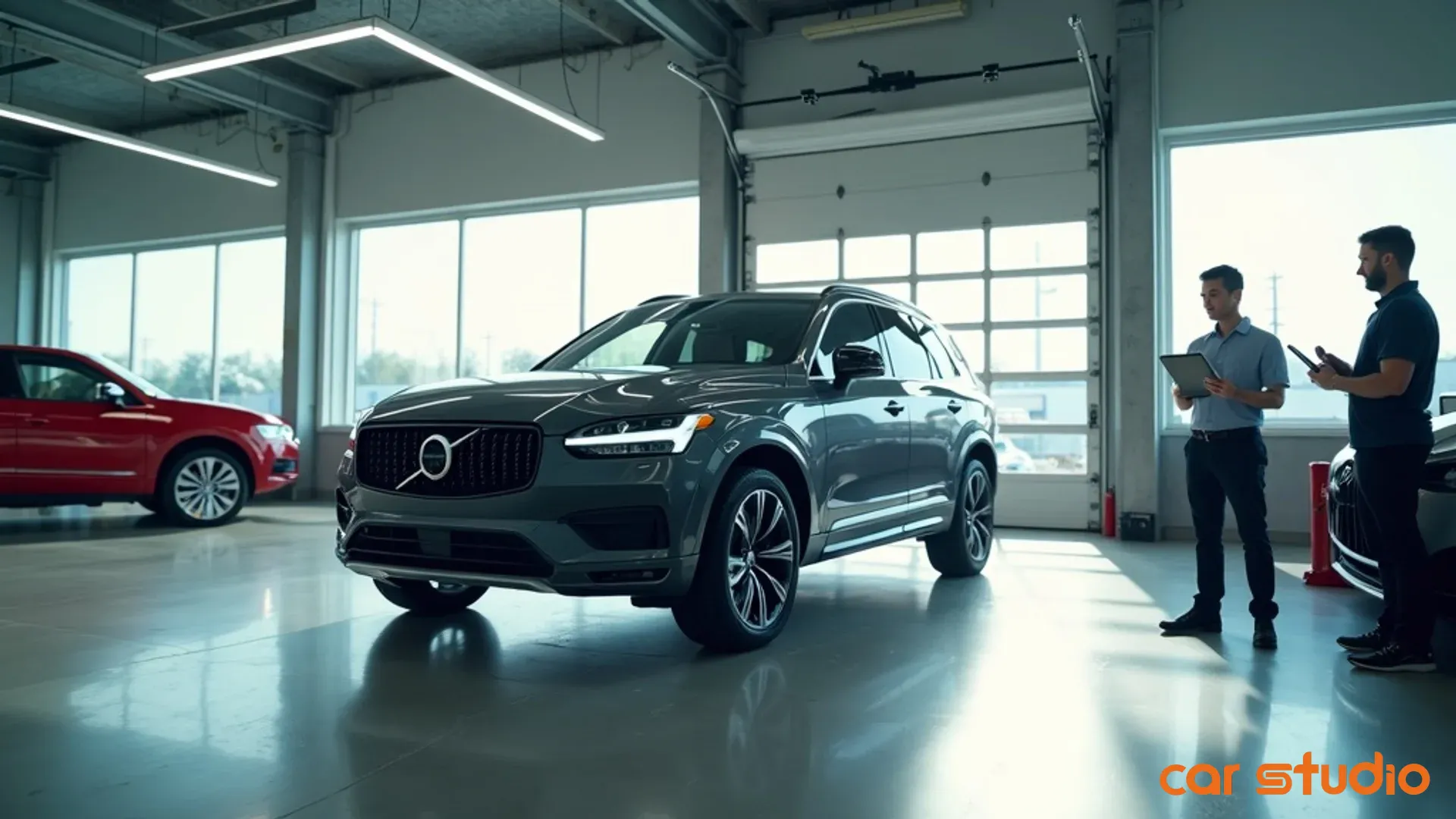

The AI Playbook for Untapped Used Car Profit
Your used car department is bleeding margin, and you might not even see it happening.
It's not the market. It's not your inventory mix. It's the 47 minutes your photographer spends editing backgrounds. It's the three days a unit sits waiting for recon sign-off. It's the pricing analyst who's still pulling comps manually at 6 PM on a Friday.
Margin compression in used cars isn't a macro problem. It's an operational one. And while your competitors are still debating whether AI belongs in the dealership, the smartest operators are already using it to reclaim 8 to 12 points of gross per unit.
This isn't theory. It's a playbook. A step-by-step system that connects acquisition, reconditioning, merchandising, and pricing into one profit-protecting workflow. No fluff. No vendor pitches disguised as strategy. Just the tactical framework your used car manager can start running tomorrow.
The Hidden Margin Killers in Your Used Car Process
Most dealers know their gross is shrinking. Few know exactly where it's leaking.
The culprits aren't dramatic. They're mundane, repetitive, and invisible until you map the entire workflow from appraisal to online listing. Here's what's quietly eroding your profit.
Inconsistent acquisition data. Your appraiser eyeballs the trade. Maybe they pull a KBB number. Maybe they check MMR if they're disciplined. But there's no standardized process for capturing condition, options, or local demand signals. So you're either over-allowing on the trade or under-buying at auction because your data is anecdotal, not systematic.
Slow reconditioning cycles. The average dealership takes 7 to 10 days to get a unit from acquisition to the lot. That's not because recon is complex. It's because nobody owns the handoff. The vehicle sits in limbo between detail, photos, and inspection. Every extra day is a day of depreciation, a day of holding cost, and a day your competitor is already online with a similar unit.
Manual merchandising bottlenecks. Your photographer shoots 40 photos per car. Then they spend an hour editing, cropping, and removing backgrounds. Then someone uploads them to your DMS, your website, and your syndication partners. Multiply that by 15 units a week, and you've got a full-time job that adds zero strategic value.
Reactive pricing strategies. You price a unit based on what you have in it, maybe glance at a few comps, and hope it moves in 30 days. When it doesn't, you drop the price $500 and wait another two weeks. You're not pricing to market velocity. You're pricing to gut feel. And gut feel doesn't scale.
These aren't technology problems. They're workflow problems. But technology is the only way to fix them at scale.
The AI Profit Engine: A 4-Stage Framework
Here's the truth about AI in automotive retail: it's not magic, and it's not optional. It's a set of tools that automate the repetitive, data-heavy tasks your team shouldn't be doing manually.
The dealers winning in used cars right now aren't using AI as a science project. They're using it as an operational system. Four stages. One continuous loop. Every stage designed to protect margin and accelerate turn.
Stage 1: AI-Powered Acquisition & Appraisal
This is where profit is made or lost. You need accurate, real-time valuation data at the point of appraisal. Not a static book value. Not a guess based on last month's auction results. Live market data that accounts for local demand, days supply, and comparable listings.
AI-driven appraisal tools pull data from multiple sources, including NHTSA VIN decoder databases, auction results, and retail listing aggregators. They give your appraiser a confidence range, not a single number. That range is based on actual market behavior, not editorial opinion.
The output is a recommended acquisition cost and a projected retail price. Your appraiser still makes the call, but now they're making it with 10x more data than the guy across the street.
Stage 2: Automated Recon & Photo Workflow
Once the unit is acquired, the clock starts. Every hour it's not online is an hour of lost opportunity.
AI doesn't replace your recon process. It accelerates it. Automated photo workflows eliminate the manual editing grind. Background removal, perspective correction, lighting normalization, and image sequencing all happen in seconds, not hours.
Platforms like Car Studio AI automate photo editing so your photographer can shoot 100 units a week instead of 40. The consistency is better. The speed is faster. And your merchandising team can focus on writing descriptions and optimizing listings instead of babysitting Photoshop.
Stage 3: Intelligent Merchandising & Syndication
Your VDP is your showroom floor. If the photos are bad, the description is generic, or the listing is missing key details, you've already lost the lead.
AI-powered merchandising tools analyze your inventory and auto-generate optimized descriptions based on high-performing keywords and phrases. They pull vehicle specs directly from VIN data, so there's no manual entry. They suggest which features to highlight based on what drives engagement in your market.
Syndication happens automatically. One upload pushes the listing to your website, Autotrader, Cars.com, Facebook Marketplace, and your CRM. No duplicate work. No version control issues. Just one source of truth.
Stage 4: Dynamic Pricing
Static pricing is dead. If you're setting a price on day one and leaving it untouched for 30 days, you're giving away gross.
Dynamic pricing tools monitor your competition in real time. They track how many times your VDP is viewed, how long visitors stay, and whether they're clicking through to other units. If engagement is high but leads are low, the price might be the friction point. If engagement is low, the issue might be photos or placement.
AI doesn't auto-adjust your price without your approval. It surfaces the signal and recommends the move. You still control the strategy. But now you're reacting to data, not hope.
Implementation Playbook: Activating Your AI Workflow
You don't need a six-month roadmap and a consulting firm to get started. You need a clear audit, a prioritized plan, and someone who owns the outcome.
Here's how to activate this framework in your dealership without blowing up your current process.
Audit Your Current State Process
Start by mapping your existing workflow. Not the workflow you wish you had. The one you actually run today.
Walk a single unit from appraisal to online listing. Document every step, every handoff, and every delay. Who touches the vehicle? What systems do they use? Where does it sit idle?
You're looking for three things: redundant manual tasks, data entry that happens more than once, and bottlenecks where one person's delay cascades across the entire process.
Most dealerships discover they're entering the same VIN into four different systems. They're uploading photos twice. They're waiting on recon sign-off because nobody's sure who's responsible for final inspection.
This audit isn't about blame. It's about visibility. You can't optimize what you can't see.
Identify Key Tech Integration Points
You don't need to rip out your DMS. You need to connect the tools you already have and fill the gaps with purpose-built AI solutions.
Your DMS is your system of record. Your CRM is your lead engine. Your website is your storefront. AI tools should plug into these systems, not replace them.
Look for integration points where data flows automatically. Can your appraisal tool push acquisition cost directly into your DMS? Can your photo platform auto-populate your website and syndication feeds? Can your pricing tool pull live inventory data without a manual export?
If the answer is no, you're creating manual work. And manual work is where profit leaks.
Assign Roles and Responsibilities
AI doesn't run itself. Someone needs to own the workflow, monitor the outputs, and troubleshoot when things break.
Assign a process owner for each stage. Your used car manager owns acquisition and pricing. Your recon manager owns the photo and merchandising workflow. Your marketing director owns syndication and VDP performance.
Each owner needs a clear success metric. Days to market. Photo turnaround time. VDP engagement rate. Cost per reconditioned unit.
Hold a weekly standup. Five minutes. What's working? What's stuck? What do we need to fix?
Set Initial Performance Benchmarks
You can't improve what you don't measure. Before you flip the switch on any AI tool, capture your baseline.
How long does it take to get a unit from acquisition to online today? What's your average cost per recon? What's your VDP view-to-lead conversion rate? What's your gross profit per unit?
Write these numbers down. Put them on a whiteboard. Share them with your team.
In 30 days, you'll measure again. The goal isn't perfection. It's progress.
Quick Wins in 14 Days: Your First AI Sprint
You don't need a full rollout to see value. You need one focused sprint that delivers a visible win and builds team confidence.
Here's a 14-day plan that targets the highest-impact, lowest-friction opportunity in your used car process: merchandising speed.
Focus on Merchandising Speed First
Merchandising is the easiest place to prove AI value. It's repetitive, time-consuming, and directly tied to revenue. Faster merchandising means faster time to market. Faster time to market means more gross.
Your goal for this sprint: cut photo-to-listing time in half.
Automate Background Removal on 100% of Units
Manual background editing is the single biggest time sink in automotive photography. Your photographer shoots a car in the lot, then spends 20 minutes cloning out light poles, trash cans, and other inventory.
AI background removal tools eliminate this entirely. Upload the raw photo. The AI identifies the vehicle, removes the background, and replaces it with a clean, dealership-branded backdrop. Total time: 8 seconds per image.
Run this on every unit for the next two weeks. Track the time saved. Most dealerships recover 6 to 10 hours per week per photographer.
Standardize Photo Composition with AI Guides
Consistency drives trust. If your photos look different from unit to unit, buyers notice. They assume the inconsistency reflects the quality of your inventory.
AI-powered photo guides overlay a template on your photographer's screen. Shoot the front three-quarter angle. The AI shows you exactly where to position the vehicle in the frame. Same angle, same distance, same lighting every time.
This isn't about creativity. It's about repeatability. And repeatability is what makes your inventory look professional at scale.
See how an AI-automated photo studio drives faster turns and higher VDP engagement.
By day 14, you should see measurable improvement in three areas: photos per hour, time from shoot to upload, and VDP engagement rate. If you don't, something in your workflow is still broken. Fix it before you move to the next stage.
Download our free 14-Day AI Sprint checklist to get started.
Common Objections & Pitfalls to Avoid
Every dealership that hesitates on AI raises the same concerns. Most of them are valid. None of them are insurmountable.
Here's how to address the objections and avoid the mistakes that derail adoption.
"AI is too complex for my team."
This objection usually comes from a GM who's been burned by a clunky DMS upgrade or a CRM that nobody uses.
The truth: modern AI tools are simpler than the systems you're already running. Background removal is one click. VIN decoding is automatic. Dynamic pricing recommendations show up in a dashboard, not a spreadsheet.
Complexity isn't the issue. Change management is. If you roll out a new tool without training, without a clear owner, and without explaining why it matters, your team will ignore it.
Start small. Train one person. Let them prove it works. Then expand.
"My team won't adopt it."
Your team won't adopt anything if they don't understand what's in it for them.
Photographers don't care about AI. They care about going home on time. Show them how automated editing saves two hours a day, and they'll champion the tool.
Used car managers don't care about machine learning. They care about gross profit. Show them how dynamic pricing protects margin, and they'll use it every day.
Adoption isn't a technology problem. It's a communication problem. Tie every AI tool to a specific pain point your team already feels.
Fear of Losing Operational Control
Some dealers worry that AI will make decisions without human oversight. That pricing will auto-adjust. That photos will go live without approval.
Good AI tools don't replace judgment. They augment it. You still set the pricing strategy. You still approve the final listing. You still decide which units to acquire.
AI just gives you better data to make those decisions faster and with more confidence.
If a vendor is pitching full automation with no human in the loop, walk away. That's not AI. That's a liability.
Choosing Disconnected Point Solutions
This is the most common mistake. A dealer buys an AI appraisal tool, a separate photo editor, a separate pricing platform, and a separate syndication service. None of them talk to each other. So the team is still doing manual data entry between systems.
You've added cost without reducing friction.
The goal isn't to buy AI tools. The goal is to build a connected workflow. Look for platforms that integrate natively with your DMS and CRM. Look for vendors who understand automotive retail, not just SaaS.
Our solution unifies this workflow so your team isn't stitching together five different logins and three different data exports.
Measuring Success: The KPIs That Matter
AI is an investment. Like any investment, it needs to deliver measurable ROI. Here are the four metrics that tell you whether your AI workflow is protecting margin or just adding cost.
Days to Market
This is the most important operational metric in used cars. How long does it take to get a unit from acquisition to online listing?
Industry average is 7 to 10 days. Best-in-class dealerships are under 4. Every day you shave off this number is a day of reduced holding cost and a day closer to full retail price.
Track this weekly. Break it down by stage: appraisal to recon, recon to photos, photos to listing. Find the bottleneck and fix it.
VDP Engagement Lift
Your VDP is where the sale starts. If engagement is low, nothing else matters.
Track views per listing, time on page, and view-to-lead conversion rate. Compare units with AI-enhanced photos to units with manual photos. The difference should be obvious within 30 days.
If you're not seeing a lift, your photos still aren't good enough, or your pricing is out of range.
Cost Per Reconditioned Unit
Recon is a fixed cost in most dealerships. Detail, photos, inspection, minor repairs. It adds up fast.
AI reduces the labor component of recon, especially in photography and data entry. Track your total recon cost per unit before and after AI adoption.
Most dealerships see a 15 to 25 percent reduction in labor hours within 60 days. That's not a projection. That's what happens when you stop paying someone to edit backgrounds for three hours a day.
Gross Profit Per Unit (PVR)
This is the bottom line. Are you making more money per car?
AI protects margin in two ways: it gets you to market faster, so you can command a higher price, and it gives you better pricing intelligence, so you're not leaving money on the table or sitting on aging inventory.
Track your gross PVR by month. Segment by units that went through the AI workflow versus units that didn't. The delta is your ROI.
If gross isn't improving after 90 days, you're either not using the tools correctly, or you're solving the wrong problem.
Stop Leaving Money on the Table
Margin compression in used cars isn't going away. Inventory costs are up. Consumer price sensitivity is up. Your competitors are faster, smarter, and more aggressive than they were 24 months ago.
You can't out-spend them. You can't out-advertise them. But you can out-execute them.
The AI playbook isn't about replacing your team. It's about giving them the tools to move faster, price smarter, and merchandise better than anyone else in your market. It's about turning your used car department from a cost center into a profit engine.
The dealers who win over the next three years won't be the ones with the biggest ad budgets. They'll be the ones who operationalize intelligence, eliminate friction, and protect every point of gross like it's the last one they'll ever see.
Because in a compressed-margin environment, it might be.
Ready to stop leaving money on the table? See how Car Studio AI operationalizes this playbook to protect your margins. Transform your used car process from a cost center to a profit engine. Schedule a platform demo today.