


How to Edit Car Photos Like a Pro with AI Tools
In the digital era, the visual quality of car photos can truly make or break a sale. Whether you’re an automotive dealer, a professional car photographer, or just a car enthusiast wanting to showcase your vehicle, editing car photos to perfection is now more accessible than ever, thanks to AI-driven technology. As someone deeply involved in the car photo editing space and a long-time user (and sometimes tester!) of both manual and AI car photo editors, I can confidently say that the difference between an ordinary and a “wow” car listing often lies in the post-processing magic especially with the latest car photo editing apps and online car photo editors.
Why High-Quality Car Images Matter
Let’s be honest: most buyers make snap decisions based on what they see first. Research consistently shows that listings with professional car photo editing attract up to 50% more attention, clicks, and inquiries. It’s no surprise, then, that dealerships, OEMs, and automotive groups are investing in the best car photo editor platforms. But here’s the challenge: traditional editing is time-consuming and requires a skilled touch. Enter AI car photo editing the new gold standard for rapid, scalable, and studio-quality results.
What Makes AI Car Photo Editors Stand Out?
Modern AI car photo editors like Car Studio AI are designed specifically for the unique needs of automotive imaging. What sets these tools apart isn’t just speed—it’s their ability to deliver stunning, consistent results at scale. Here’s what I’ve learned using (and sometimes pushing the limits of) these apps:
1. AI Car Photo Editing and Enhancement
Edit car photos online with just a few clicks: No steep learning curve, no fiddling with layers or masks.
AI car editor tools can instantly detect cars, backgrounds, logos, and reflections.
AI car photo enhancement means sharper images, boosted colors, and that all-important “pop” that grabs buyer attention.
2. Car Photo Background Remover and Editor
With a good car background remover, you can swap out cluttered or distracting backdrops for clean, professional ones. Many car photo background editor solutions offer pre-set backgrounds or let you upload your own dealership branding. I’ve seen firsthand how this simple tweak increases perceived vehicle value—and gets listings noticed faster. You can deep dive into the sales impact of background removal in this article.
3. Professional Retouching and Detail Enhancement
Car photo retouching powered by AI can eliminate blemishes, fix lighting, and add realistic shadows.
Logo and badge highlighting helps emphasize your brand—vital for OEMs and high-end dealers.
Some platforms even use car image enhancement AI to fine-tune tiny details, making every image look showroom-ready.
4. Bulk Editing, Automation, and Integration
The real game-changer is speed: Auto photo editing AI can process hundreds (or thousands) of images in minutes. Integration with CRM or inventory management systems is now possible. Upload, edit, and publish all in one workflow.
And if you’re ready to push your listings further, 360 car photography and interactive spins are also being revolutionized by AI, creating digital showroom experiences that boost engagement and trust.
How to Choose the Best AI Car Photo Editor for You

This is where a little research pays off. Look for:
Feature range: Does the car photo editing software support background removal, shadow addition, retouching, and bulk processing?
Ease of use: Even the most powerful car retouching app is useless if your team can’t adopt it quickly.
Processing speed: Can it handle large inventories with minimal lag?
Customization options: Can you create a signature look for your brand?
Integration capabilities: Can it connect with your website, CRM, or DMS?
From my own experience, the best car photo editor is the one that fits seamlessly into your daily workflow and helps you focus on what matters most closing deals, not clicking endlessly in Photoshop.
Real-World Tips for AI Car Photo Editing
Consistency is Everything
Consistency across your listings is not just aesthetic—it’s strategic. An AI photo editor car can enforce brand guidelines automatically, making every listing look like it came out of the same studio.
Optimize for Speed and Volume
Dealerships with hundreds of cars can’t afford slowdowns. AI car photo editing software lets you move at the speed of business, turning image bottlenecks into a competitive advantage.
Use Data-Driven Enhancements
Some car photo AI platforms analyze what kinds of images convert best and automatically tweak new photos to match those high-performing characteristics.
The Future is Now: 360 & AI Car Modification
If you want to stand out, consider taking your visuals to the next level with AI car modification online—the fastest way to digitally customize and sell cars in 2025 and beyond.
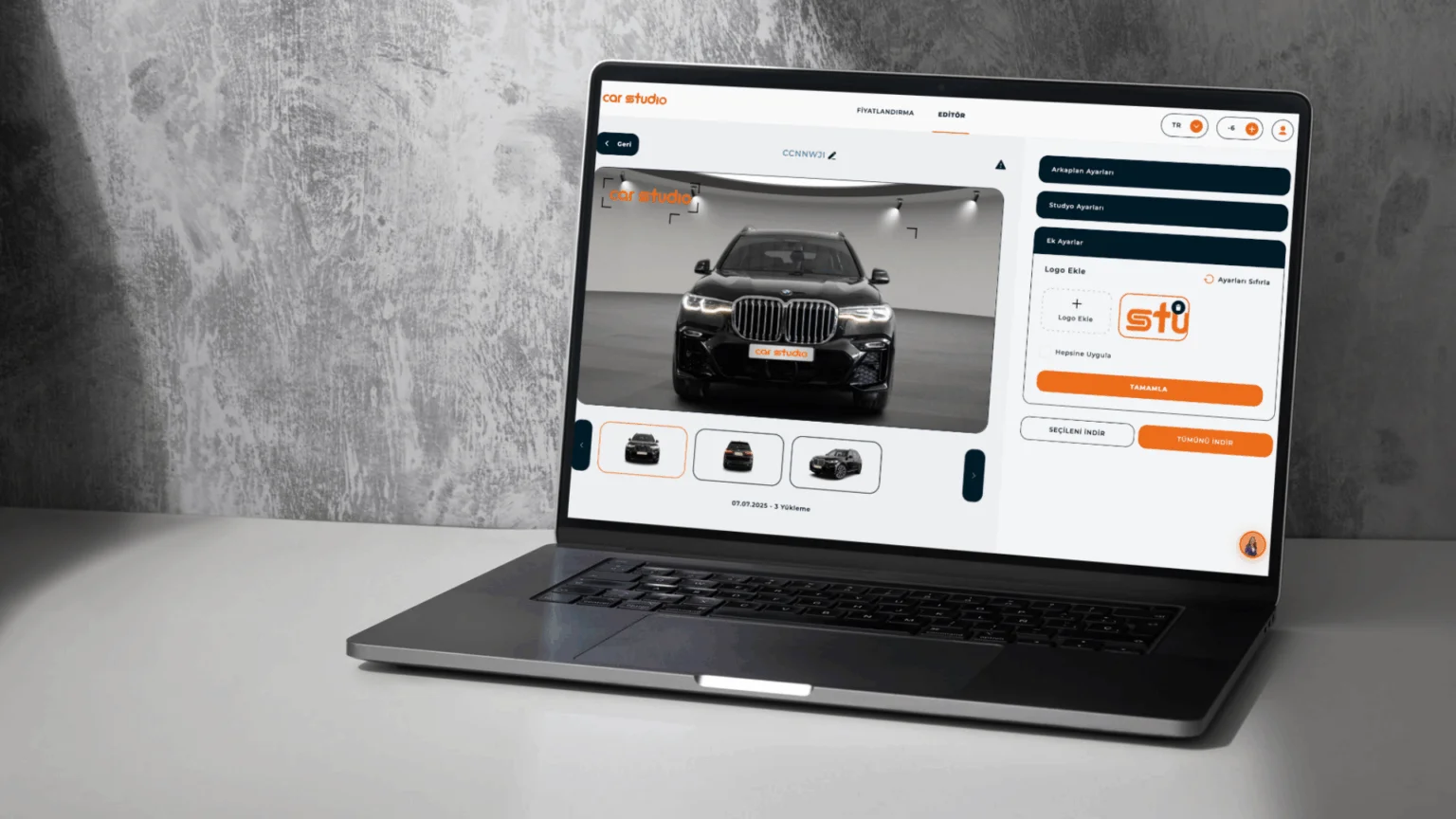
AI Car Photo Editing vs. Manual Editing: Which Should You Choose?
Traditional car photo editing has long been the go-to method for achieving professional results. Skilled editors would spend hours fine-tuning lighting, removing backgrounds, and retouching details in programs like Photoshop. While this hands-on approach offers complete control, it comes with significant drawbacks: high costs, longer turnaround times, and inconsistency, especially when working with large inventories.
AI car photo editors, on the other hand, automate these time-consuming tasks, producing consistent and high-quality results within seconds. The biggest advantages are speed and scalability AI can process thousands of images in the time it would take a human to edit just a few. Plus, AI-powered tools are constantly learning from millions of images, so their enhancement and retouching algorithms get better over time.
That being said, for extremely unique or creative edits, a manual touch may sometimes still be needed. But for the vast majority of dealership, marketplace, or inventory photos, AI car photo editing offers an unbeatable blend of efficiency and quality helping businesses stay ahead in a fast-moving digital landscape.
Case Study: How Dealerships Increased Sales with AI Car Photo Editing
Many automotive businesses have already embraced AI-powered car photo editing with impressive results. Take, for example, a mid-sized dealership that transitioned from manual editing to an AI car photo editor. Previously, their team spent several days each week preparing new listings, struggling to maintain consistency and speed as inventory grew.
After switching to an AI car photo editing app, their workflow transformed. Backgrounds were automatically removed and replaced with branded visuals. Lighting and shadows were enhanced with a single click, and every image matched their brand’s style. As a result, the time spent editing dropped by over 70%, and listings went live much faster.
Most importantly, customer engagement soared. The dealership saw a 40% increase in online inquiries within the first month. Prospective buyers spent more time browsing listings, with clearer and more attractive car photos boosting trust and perceived value. For many dealerships, these results are proof that investing in AI car photo editing tools is not just a matter of convenience—but a critical step toward staying competitive. For more success stories, check out Car Studio AI’s customer impact.
Final Thoughts
As someone who’s seen the car industry’s digital transformation up close, I believe AI car photo editing isn’t just a trend—it’s the new normal. Whether you’re a one-person seller or manage a large dealership, the right car photo editing app or AI car photo editor online can help you stand out, save time, and ultimately sell more cars.
Ready to take your car images to the next level? Start experimenting with an AI car photo editor online and watch your listings turn heads like never before.
FAQ Section
What is AI car photo editing?
AI car photo editing refers to the use of artificial intelligence algorithms to enhance and adjust car images automatically. Instead of spending hours manually editing each photo, these tools can remove or change backgrounds, add realistic shadows, fix lighting, and even retouch specific details all within seconds. From my own experience working with various dealerships and car sellers, AI-driven editing has proven to be a total game-changer, especially for teams that need to process large batches of images efficiently and consistently.
How does AI improve car photo quality?
AI takes car photo quality to the next level by making intelligent, data-driven enhancements. For example, the AI can automatically detect and correct uneven lighting, sharpen blurred details, add or enhance shadows so cars look grounded and natural, and remove unwanted objects or backgrounds. In my testing, I’ve found that AI can often spot issues that humans might overlook like subtle color imbalances or reflectionsand fix them instantly. This not only makes your listings more appealing but also ensures a consistent, professional look across your entire inventory. Find out more about advanced enhancement methods here.
Can AI car photo editing tools integrate with other software?
Absolutely. One of the best features of modern AI car photo editors is their seamless integration capabilities. Many tools offer APIs or direct connections to your CRM, inventory management, or website platforms. This means you can upload your photos, have them automatically edited, and publish them online without ever leaving your workflow. In my consultancy projects, I’ve seen businesses cut their listing preparation time in half just by integrating AI photo editing into their existing systems. It’s a real productivity booster, especially for larger teams or growing dealerships. You can learn more about integration options here.
Is AI photo editing expensive?
It’s a common misconception that AI photo editing comes with a hefty price tag. While the initial investment can be higher than paying for manual edits, the long-term savings are substantial. Here’s what I’ve seen: AI tools can process hundreds or even thousands of photos in the time it takes a human to edit just a handful, which means lower labor costs and faster go-to-market for every listing. Plus, the boost in sales efficiency and the professional edge you get from consistently high-quality photos can more than justify the investment. In short, AI car photo editing usually pays for itself much faster than people expect.
How do I choose the best AI car photo editing tool?
Choosing the right AI car photo editor comes down to your specific needs and workflow. Here are a few tips I always share with clients:
Look for specialization: Make sure the tool is designed for car photos, not just general photo editing.
Evaluate feature range: Does it offer background removal, lighting adjustment, logo enhancement, bulk processing, and custom branding?
Ease of use matters: The tool should be intuitive so your team can adopt it without a steep learning curve.
Integration capabilities: Can it work with your current CRM, website, or inventory systems?
Support and updates: AI is evolving fast choose a provider that regularly updates their platform and offers responsive support.
From my own experience, the best way to decide is to test a couple of leading options with your own photos and see which fits best with your workflow and goals. Don’t be afraid to ask for a demo or trial period.