
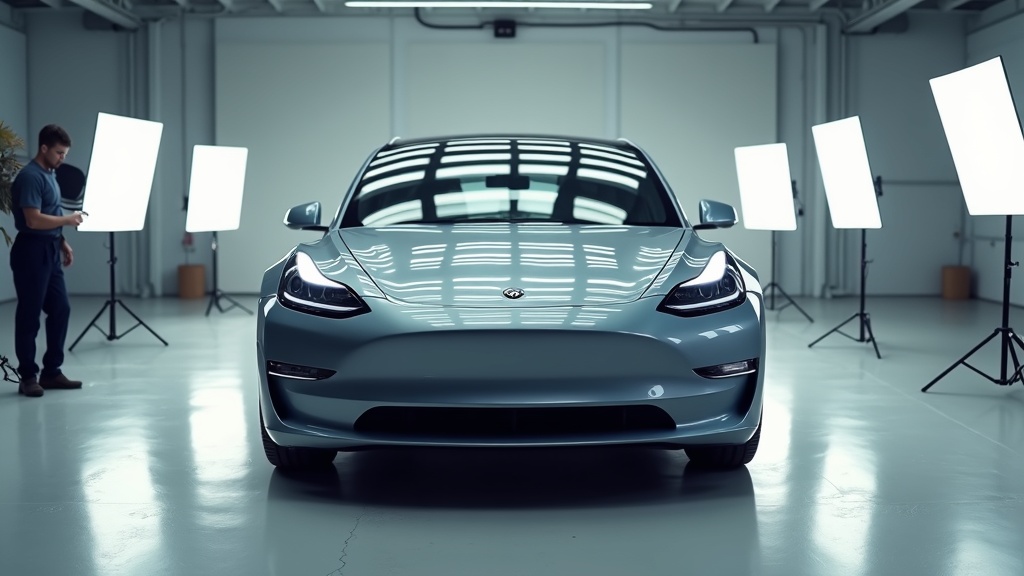

Car Background Removal: A Guide to Boosting Online Sales
Your inventory photos look like a crime scene.
Not literally, but the cluttered backgrounds, oil stains, competing vehicles in frame, and random service bay equipment tell shoppers one thing: you don't care enough to present your product properly. And if you don't care about the photos, why would they trust you with a $40,000 purchase decision?
The average shopper views 14 vehicle detail pages before ever contacting a dealership. They're making snap judgments in under three seconds per listing. Messy backgrounds don't just look unprofessional. They actively destroy perceived value, erode trust, and send qualified buyers straight to your competitor's cleaner, more consistent inventory presentation.
Professional car background removal isn't a nice-to-have anymore. It's table stakes for dealers who want to compete in a market where 95% of the buying journey happens before a customer walks through your door.
This guide gives you the operational framework to systematize professional vehicle merchandising at scale. You'll get decision trees, SOPs, checklists, and a 14-day pilot plan that proves ROI before you commit your entire inventory.
Why Inconsistent Photos Cost You Sales
The digital-first impression is the new curb appeal
Your lot used to be your showroom. Customers drove by, saw your inventory lined up under balloons and banners, and pulled in if something caught their eye.
That world is dead.
Today, your VDP is your showroom floor. Shoppers scroll through inventory on their phones during lunch breaks, late at night, and while sitting in your competitor's finance office. They're comparing your 2022 F-150 against 47 other similar trucks within a 50-mile radius.
The dealer with the cleanest, most professional presentation wins the click. The click becomes the lead. The lead becomes the appointment. Everything starts with that first visual impression.
When your photos show cluttered backgrounds, inconsistent lighting, and random vehicles photobombing your hero shot, you're telling shoppers you run a disorganized operation. They extrapolate that sloppiness to your service department, your finance process, and the condition of the vehicle itself.
How messy backgrounds erode trust and perceived value
A 2021 study of online automotive shoppers found that 67% of respondents said photo quality directly influenced their perception of vehicle condition, even when the vehicle itself was identical.
Put another way: the same truck photographed against a clean, professional background was perceived as being in better condition and worth more money than the identical truck photographed in front of a parts dumpster.
Messy backgrounds create cognitive friction. The shopper's brain has to work harder to isolate the vehicle from the visual noise. That extra effort registers as doubt. Doubt kills conversions.
Clean, consistent backgrounds do three things simultaneously:
- Eliminate distractions so the vehicle is the only focal point
- Signal professionalism that builds institutional trust
- Create brand consistency across your entire inventory
When every vehicle in your inventory has the same clean, branded background, you're communicating operational excellence. You're showing shoppers that you sweat the details. That attention to detail transfers to their perception of how you'll treat them as a customer.
Connecting poor imagery to higher VDP bounce rates
Your analytics already tell this story, even if you haven't connected the dots yet.
Pull your VDP engagement metrics for the last 90 days. Look at average time on page, photo carousel interaction rate, and bounce rate. Now segment those metrics by photo quality.
You'll see a pattern: vehicles with professional, clean backgrounds hold attention longer. Shoppers click through more photos. They're more likely to submit a lead form or click to call.
Vehicles with cluttered, inconsistent backgrounds get abandoned faster. High bounce rates signal to your website's algorithm and third-party listing platforms that the listing isn't engaging. That kills your organic visibility and pushes your inventory lower in search results.
Poor photos create a compounding problem. They reduce engagement, which reduces visibility, which reduces traffic, which reduces leads. You're paying for that inventory to sit on your lot longer, accruing floorplan interest, while better-photographed units at competing dealerships turn faster.
AI vs. Manual Editing: Making the Right Choice
You have three options for achieving professional car backgrounds: hire a photographer with a mobile studio, outsource to a manual editing service, or use AI-powered background removal. Each has specific use cases where it makes sense.
Comparing speed, cost, scale, and quality control
Manual photography with professional backdrops delivers the highest quality ceiling. A skilled photographer with proper lighting equipment and physical backdrop systems can create stunning images. But this approach has severe scalability problems.
Manual photography costs $50-150 per vehicle depending on your market. It requires scheduling, weather cooperation, and physical space. Most importantly, it's slow. You can process maybe 8-12 vehicles per day with a dedicated photographer.
For a dealership turning 80-120 units per month, that's a full-time resource just for photography. The math works for high-volume stores or luxury dealers where the average gross profit justifies the investment. For everyone else, it's a bottleneck.
Manual editing services (offshore or domestic) offer a middle ground. You shoot photos yourself, upload them to a service, and receive edited images with clean backgrounds within 24-48 hours. Cost runs $3-8 per image.
This works well for dealers who want control over the shooting process but lack in-house editing expertise. The downside is turnaround time and quality inconsistency. You're dependent on individual editors who may interpret your brand standards differently.
AI-powered background removal tools have matured dramatically in the past 18 months. Modern platforms use deep learning models trained on millions of vehicle images to automatically detect edges, preserve reflections, generate realistic shadows, and apply branded backgrounds.
Speed is the killer advantage. AI processes images in seconds, not hours. You can batch-process 50 vehicles before lunch. Cost per image drops to $0.50-2.00 depending on volume, making it economically viable to apply professional backgrounds to your entire inventory, not just premium units.
AI vs. Manual Editing Comparison
| Factor | AI Background Removal | Manual Editing Service | Professional Photography | |--------|----------------------|------------------------|--------------------------| | Cost per vehicle | $5-20 (full set) | $30-80 (full set) | $50-150+ | | Processing speed | Minutes (batch) | 24-48 hours | Same day (weather dependent) | | Consistency | Perfect (algorithmic) | Variable (human) | High (single photographer) | | Scalability | Unlimited | Limited by editor capacity | Severely limited | | Quality ceiling | Very high | Very high | Highest | | Setup complexity | Low (software) | Low (upload portal) | High (equipment, space) | | Weather dependency | None (post-process) | None (post-process) | High | | Brand control | Template-based | Spec-based | Direct |
Addressing common AI pitfalls (e.g., "floating" look)
Early AI background removal tools had an obvious tell: the floating car effect. Vehicles looked pasted onto backgrounds with no shadows, wrong perspective, or unnatural lighting that screamed "fake."
That was 2019 technology. Modern AI platforms like Car Studio AI use physics-based shadow generation and perspective matching to create photorealistic composites. The algorithm analyzes the original lighting direction, vehicle height, and camera angle to generate accurate ground shadows and reflections.
The floating effect happens when three things go wrong:
- No shadow generation: The AI simply cuts out the background without adding a new shadow
- Incorrect perspective: The background doesn't match the camera angle of the original shot
- Lighting mismatch: The background has different lighting direction than the vehicle
Quality AI tools solve all three problems automatically. They detect the sun angle from the original image, match it to the background lighting, and generate shadows that correspond to the vehicle's actual footprint.
The key is using AI that was purpose-built for automotive applications, not generic background removal tools designed for e-commerce product shots. Vehicles have unique challenges: reflective surfaces, transparent windows, complex wheel geometry, and ground shadows that must look natural.
When manual services or in-house teams make sense
AI isn't always the right answer. Three scenarios where manual approaches make more sense:
Luxury and exotic inventory: If you're selling $150K+ vehicles, the extra investment in professional photography pays for itself in brand perception. High-net-worth buyers expect perfection. A $200 photo shoot is rounding error on a $15,000 gross deal.
Complex custom builds: Heavily modified vehicles, custom paint jobs, or unique builds benefit from a photographer's artistic eye. Manual editing gives you more creative control over presentation.
Marketing hero shots: Your website homepage, billboard creative, and social media campaigns need hand-crafted images. Use AI for inventory merchandising at scale, manual photography for marketing assets.
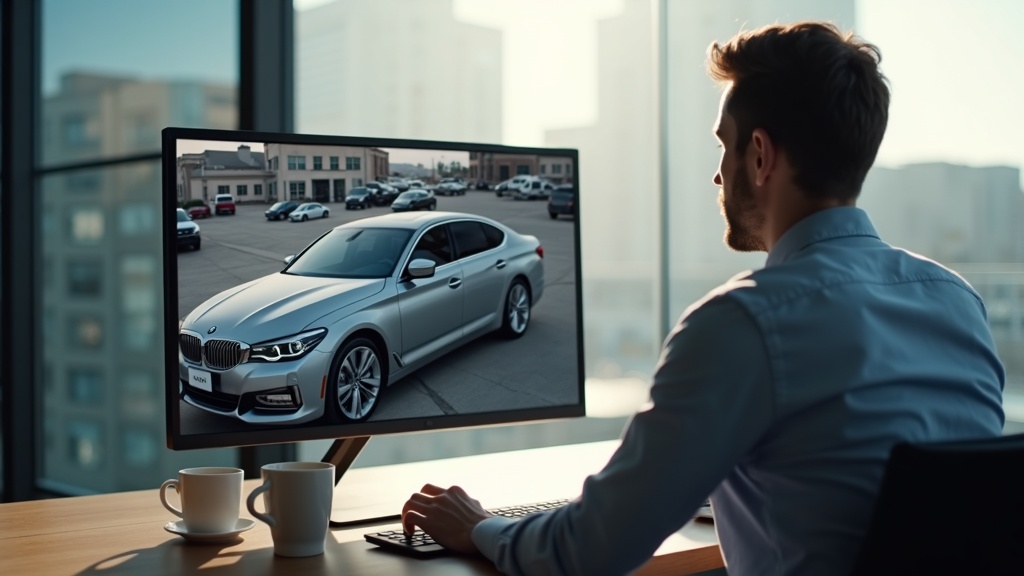
For most dealers, the winning formula is hybrid: AI for 90% of inventory to ensure consistency and speed, manual photography for the top 10% of units where the extra investment drives measurable lift in engagement or gross profit.
The Financial Impact of a Clean Background
How professional visuals boost VDP engagement
VDP engagement is the leading indicator of lead quality and sales velocity. Time on page, photo views, and interaction rate predict which listings will convert to appointments.
Professional backgrounds increase all three metrics simultaneously.
When a shopper lands on a VDP with clean, consistent imagery, they immediately understand they're looking at a professional operation. That first impression buys you attention. Instead of bouncing in three seconds, they stay for 45 seconds. They click through all 30 photos instead of just the first five.
More engagement signals higher intent. A shopper who views 20+ photos is exponentially more likely to submit a lead form than someone who views three and leaves.
The data backs this up. Dealers who implement consistent background removal across inventory report 15-30% increases in average time on VDP and 20-40% increases in photo carousel interaction rates within the first 30 days.
Those aren't vanity metrics. They translate directly to lead volume and quality. More engaged shoppers submit better leads with higher contact rates and show-up percentages.
Building a premium, trustworthy brand identity online
Your online brand is the sum of every touchpoint a shopper experiences before they contact you. Inconsistent, low-quality photos communicate that you're a discount operation running on thin margins with no attention to detail.
Clean, professional imagery positions you as a premium dealer worth paying more to do business with. Even if you're not selling luxury vehicles, professional presentation elevates your brand above competitors still posting iPhone photos shot in the service lane.
This matters more than ever in a market where shoppers are willing to travel 50+ miles for the right vehicle from the right dealer. They're not just buying a car. They're buying confidence that the transaction will be smooth, the vehicle will be as described, and the dealer will stand behind the sale.
Professional photos are proof of operational excellence. They demonstrate that you invest in your business, care about details, and run a tight ship. That perception justifies higher asking prices and reduces price-based objections.
Driving higher quality leads, not just more traffic
The goal isn't more leads. It's better leads.
Professional vehicle merchandising filters out tire-kickers and attracts serious buyers who value quality and professionalism. When your listings look better than everyone else's, you attract shoppers who care about presentation and are willing to pay for it.
These are your best customers. They have higher credit scores, larger down payments, and lower price sensitivity. They're looking for a dealer they can trust, not just the cheapest price.
Clean backgrounds also reduce the "it looked better online" problem that kills deals. When your photos accurately represent the vehicle without distracting backgrounds, shoppers show up with realistic expectations. That reduces appointment no-shows and increases closing rates.
You're not tricking anyone with professional photos. You're giving them an accurate, distraction-free view of the vehicle so they can make an informed decision before driving to your lot. That pre-qualification saves everyone time and increases the percentage of appointments that turn into deliveries.
Implementation Playbook: Your SOP for Perfect Car Photos
Implementing professional background removal isn't about buying software. It's about building a repeatable system that your team can execute consistently without thinking.
This SOP gives you the end-to-end workflow from vehicle arrival to published listing.
Photo capture guidelines (angles, lighting, consistency)
Quality output requires quality input. AI can fix backgrounds, but it can't fix blurry photos, terrible lighting, or missing angles. Your photographers need clear standards.
Photo Capture Checklist
| Requirement | Standard | Why It Matters | -------------|----------|----------------| | Time of day | 9 AM - 3 PM (avoid early/late sun) | Consistent lighting, minimal harsh shadows | | Weather | Overcast preferred, full sun acceptable | Diffused light reduces reflections and hot spots | | Camera height | Waist level (3.5-4 feet) | Natural perspective, avoids distortion | | Distance from vehicle | 12-15 feet for full shots | Captures entire vehicle without wide-angle distortion | | Background | Consistent location, minimal clutter | Makes AI processing faster and more accurate | | Required angles | Front 3/4, rear 3/4, both profiles, straight front, straight rear | Industry standard for VDP galleries | | Interior shots | All four doors open, clean cabin | Separate workflow, but capture simultaneously | | Detail shots | Wheels, engine, trunk, unique features | Supports premium positioning | | Image format | JPEG, minimum 2000px wide | Ensures quality after processing |
Shooting workflow:
- Pre-shoot vehicle prep (5 minutes): Wash vehicle, remove dealer tags/stikers, close all doors, turn wheels straight
- Exterior capture (8 minutes): Shoot all required angles in sequence, same spot every time
- Interior capture (5 minutes): Open doors, shoot cabin from all four doors plus cargo area
- Detail capture (3 minutes): Wheels, engine bay, unique features, damage documentation
- Quality check (2 minutes): Review on camera, reshoot any blurry or poorly framed images
Total time per vehicle: 23 minutes with a trained photographer.
The key is consistency. Shoot every vehicle in the same location, same time of day, same angles, same sequence. This creates muscle memory for your team and ensures the AI has consistent inputs to work with.
AI processing & quality control workflow
Once photos are captured, they move into the processing pipeline. This is where AI does the heavy lifting, but human QC is still critical.
Background Removal SOP
Step 1: Batch Upload
- Upload all photos for a single vehicle to your AI platform
- Tag with stock number and basic vehicle info
- Select background template (branded, neutral, or OEM-specific)
Step 2: Automated Processing
- AI detects vehicle edges and removes original background
- Generates realistic shadows based on original lighting
- Applies selected background template
- Processes transparent windows to show interior
- Enhances image quality (sharpening, color correction)
Processing time: 30-90 seconds per image set
Step 3: Quality Control Review
- QC reviewer checks each processed image for:
- Clean edge detection (no halos or rough cuts)
- Realistic shadow placement and opacity
- Proper window transparency
- Correct background alignment
- No "floating" appearance
- Flag any images that need manual touch-up
- Approve batch for distribution
QC time: 2-3 minutes per vehicle
Step 4: Manual Touch-Up (if needed)
- Send flagged images to manual editor
- Common fixes: complex reflections, chrome details, wheel spokes
- Re-submit to QC for final approval
Touch-up time: 5-10 minutes per flagged vehicle (typically 10-15% of inventory)
Step 5: Distribution
- Export approved images in required formats/sizes
- Auto-upload to website, third-party listings, DMS
- Archive original and processed files for compliance
Platforms like Car Studio AI automate steps 2, 4, and 5, reducing manual touchpoints and ensuring consistency. The system learns from QC feedback to improve edge detection and shadow generation over time.
Distributing enhanced assets to listings and DMS
Processed photos are worthless if they sit in a folder. Your workflow must include automated distribution to every platform where shoppers see your inventory.
Distribution checklist:
- Dealership website: Primary VDP gallery, homepage featured inventory
- AutoTrader/Cars.com: Replace existing photos via API or bulk upload
- Facebook Marketplace: Sync to inventory feed
- Craigslist (if applicable): Manual or automated posting
- DMS: Archive for compliance and future reference
- Google My Business: Featured inventory posts
Most modern AI platforms include API integrations with major listing sites and DMS systems. Set up the integration once, and every processed photo automatically flows to all connected platforms.
This eliminates the "we processed the photos but forgot to update the listings" problem that plagues manual workflows.
Objections & Pitfalls: Overcoming Common Hurdles
Every dealer considering AI background removal has the same three objections. Here's how to address them with your team and why they're not deal-breakers.
"AI isn't as good as a human"
This was true in 2019. It's not true anymore.
Modern automotive-specific AI models are trained on millions of vehicle images. They've seen every edge case: chrome wheels, transparent spoilers, complex reflections, dark vehicles on dark backgrounds. The algorithms are better at consistent edge detection than most human editors because they don't get tired or distracted.
The quality ceiling for manual editing is higher. A skilled Photoshop artist can create a perfect composite that's indistinguishable from a studio shot. But that's not the comparison that matters.
The real comparison is: AI at scale vs. inconsistent manual editing or no background removal at all.
AI gives you professional, consistent results across 100% of inventory. Manual editing gives you exceptional results on the 10% of inventory you prioritize and mediocre results on everything else.
For most dealers, consistent "very good" beats inconsistent "excellent."
"We don't have time for another new tool"
This objection assumes AI adds work. It doesn't. It replaces work.
Your current workflow probably looks like this:
- Photographer shoots vehicles (30 minutes per unit)
- Photos sit on a memory card for 2-3 days
- Someone uploads them to the website (15 minutes per unit)
- Photos go live with whatever background was in the original shot
- Marketing director complains about photo quality
- Nothing changes because there's no bandwidth
AI workflow looks like this:
- Photographer shoots vehicles (23 minutes per unit with proper SOP)
- Photos upload automatically to AI platform via mobile app
- AI processes and distributes to all platforms (automated)
- QC spot-checks 10% of inventory (5 minutes per day)
- Professional photos are live within 2 hours of shooting
You're not adding a tool. You're replacing a broken manual process with an automated system that requires less human intervention and produces better results.
The time investment is in setup (2-3 days) and training (1 day). After that, AI saves 10-15 minutes per vehicle compared to manual workflows.
"This costs too much for our entire inventory"
Run the math on what poor photos actually cost you.
If inconsistent imagery increases your average days-to-turn by even three days, you're paying more in floorplan interest than AI background removal costs. A $30,000 vehicle at 5% floorplan interest costs $12.33 per day to hold. Three extra days is $37 in carrying cost.
If AI costs $15 per vehicle and reduces time-to-line by three days, you're $22 ahead before accounting for any lift in engagement or lead quality.
Now add the secondary effects:
- Higher VDP engagement increases lead volume by 10-20%
- Better presentation reduces price objections and supports higher gross
- Faster turn improves inventory velocity and cash flow
The ROI is obvious when you account for the full impact, not just the software cost.
If budget is genuinely tight, start with a pilot. Process your top 20 units and measure the lift. Use that data to justify expanding to the full inventory.
Managing reflections and transparent window cutouts
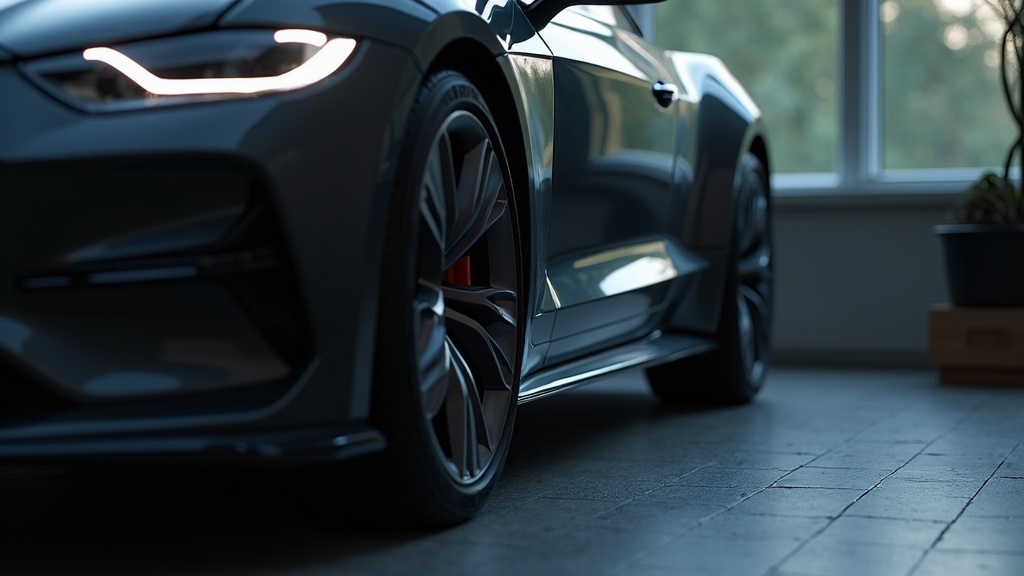
Reflections and window transparency are the two technical challenges that separate good AI from bad AI.
Reflections: Chrome bumpers, wheels, and body panels reflect the surrounding environment. Poor AI tools either blur these reflections or create unnatural artifacts. Quality AI preserves reflections while removing the background, then generates new reflections that match the replacement background.
Look for AI platforms that specifically handle automotive reflections. Generic background removal tools designed for e-commerce will butcher chrome details.
Window transparency: Shoppers want to see the interior through the windows. Poor AI either makes windows completely opaque or creates weird cutouts that look fake.
Quality AI detects window glass, preserves transparency, and subtly adjusts the background visible through the windows to match the new environment. This creates a natural look where you can see the cabin without the background looking pasted on.
Common fixes for AI errors:
- Floating car: Ensure your AI generates ground shadows automatically, or add them in post-processing
- Rough edges: Increase input photo resolution and ensure clean edge detection in original shot
- Unnatural reflections: Use AI trained specifically on automotive imagery, not generic tools
- Window issues: Shoot with doors closed and clean glass to help AI detect transparency
- Color shifts: Calibrate your camera's white balance before shooting
Most quality issues trace back to input photo quality, not AI limitations. Follow the photo capture checklist and 90% of problems disappear.
Quick Wins in 14 Days: A Mini-Plan for Your Dealership
You don't need to commit your entire inventory to prove ROI. Run a two-week pilot that generates measurable data with minimal risk.
Week 1: Pilot with 10 high-value vehicles
Day 1-2: Setup and selection
- Choose your AI platform and complete setup
- Select 10 pilot vehicles: mix of fast-movers and aged inventory
- Document current VDP metrics for these units (time on page, photo views, bounce rate, lead volume)
Day 3: Training
- Train your photographer on the photo capture checklist
- Shoot all 10 vehicles using the SOP
- Upload to AI platform and process
Day 4: Quality control
- Review all processed images
- Flag any that need manual touch-up
- Approve final images for distribution
Day 5: Distribution
- Replace existing photos on website and third-party listings
- Update social media posts for these vehicles
- Ensure all platforms show new imagery
Day 6-7: Baseline monitoring
- Let new photos run for 48 hours
- Begin tracking VDP engagement metrics
- Monitor lead volume and quality
Week 2: Measure VDP lift and create a rollout plan
Day 8-12: Data collection
- Track daily VDP metrics for pilot vehicles
- Compare to pre-pilot baseline
- Document any changes in lead volume, quality, or appointment rates
Day 13: Analysis
- Calculate average lift in time on page, photo views, and engagement rate
- Measure any change in lead volume or quality
- Identify which vehicle types showed the strongest response
Day 14: Rollout decision
- Present findings to management
- Calculate projected ROI for full inventory
- Create phased rollout plan if pilot was successful
Tracking key metrics (time-on-page, photo clicks)
Focus on these four metrics during your pilot:
- Average time on VDP: Should increase 15-30% with professional backgrounds
- Photo carousel interaction rate: Percentage of visitors who click through multiple photos (target 20-40% lift)
- Bounce rate: Should decrease as engagement increases
- Lead volume per VDP view: Measures conversion rate improvement
Pull these metrics from Google Analytics or your website platform. Compare pilot vehicles to control group (similar vehicles without background removal) to isolate the impact.
14-Day Pilot Tracking Template
| Metric | Pre-Pilot Baseline | Week 1 Average | Week 2 Average | % Change | --------|-------------------|----------------|----------------|----------| Avg. time on VDP | | | | | Photo clicks per session | | | | | Bounce rate | | | | | Leads per 100 VDP views | | | | | Lead-to-appointment rate | | | | |
If you see double-digit improvements in any of these metrics, you have proof that professional backgrounds drive measurable business impact. Use that data to justify expanding the program.
Decision Tree: Choosing Your Background Solution
Not every dealership needs the same solution. Use this decision tree to identify the right approach for your operation.
Start here: What's your monthly unit sales volume?
- Under 30 units/month: Manual editing service or selective AI for premium inventory only
- 30-80 units/month: AI platform with batch processing, manual touch-up for exceptions
- 80-150 units/month: Full AI automation with integrated distribution, dedicated QC role
- 150+ units/month: Enterprise AI platform with API integrations, multiple QC staff, possible in-house photography team
Next: What's your average gross profit per unit?
- Under $2,000: Cost-focused AI solution, prioritize speed and consistency over perfection
- $2,000-4,000: Mid-tier AI with manual touch-up available, balance cost and quality
- Over $4,000: Premium AI or hybrid approach, invest in highest quality for brand positioning
Next: What's your current photo quality?
- Consistently poor (cluttered backgrounds, bad lighting): AI will deliver immediate, dramatic improvement
- Inconsistent (some good, some bad): AI creates consistency and raises the floor
- Already professional: AI may offer marginal improvement; focus on efficiency gains
Next: Do you have in-house creative resources?
- Yes (designer, photographer, or marketing team): Hybrid approach, AI for volume, manual for hero shots
- No: Full AI automation with outsourced QC or platform-managed service
Final decision:
- AI platform with self-service: You have bandwidth for QC and want maximum control
- AI platform with managed service: You want results without dedicating internal resources
- Manual editing service: Low volume, high gross profit, need creative flexibility
- In-house photography: Very high volume or luxury brand requiring maximum quality
Most dealers in the 50-120 unit/month range with $2,500-3,500 average gross profit land on AI platforms with self-service QC. This balances cost, quality, and operational efficiency without requiring dedicated creative staff.
Transform Your Merchandising, Transform Your Results
Poor vehicle photos aren't just an aesthetic problem. They're a sales problem, a turn problem, and a brand problem that compounds every day you ignore it.
Professional car background removal solves all three simultaneously. It positions your inventory as premium, builds trust with shoppers who've never met you, and drives measurable improvements in engagement, lead quality, and sales velocity.
The dealers winning in today's digital-first market aren't the ones with the lowest prices. They're the ones with the most professional presentation, the most consistent brand experience, and the most efficient operations.
AI-powered background removal gives you all three without requiring a photography degree, a six-figure budget, or a dedicated creative team. You get professional results at scale, delivered automatically, for less than you're currently paying in floorplan interest on vehicles that sit too long because the photos look terrible.
Start with the 14-day pilot. Pick 10 vehicles, process the photos, measure the lift. The data will tell you whether this drives real business impact for your store.
Ready to stop losing sales to poor photos? Schedule a strategy call to see how Car Studio AI can systematize your merchandising and deliver consistent, professional backgrounds across your entire inventory. Transform your VDP engagement and start turning inventory faster with automated background removal built specifically for automotive retail.