

# How Top Dealer Groups Use AI to Turn Inventory Faster and Protect Gross Profit
Your lot is full, but your turn rate is stuck at 45 days. Your used car manager swears he's pricing aggressively, yet you're watching competitors move similar units in half the time. Your recon team is buried, your merchandising is inconsistent, and your acquisition strategy is still based on gut feel and last month's sales data.
Meanwhile, the dealer group across town is operating like a hedge fund. They're buying smarter, listing faster, and pricing dynamically. Their secret isn't more staff or a bigger marketing budget. It's a systematic approach to inventory management powered by AI.
This isn't about replacing your team with robots. It's about giving your people the tools to make faster, more profitable decisions at every stage of the inventory lifecycle. The best dealer groups have stopped treating AI as a buzzword and started using it as an operational system.
This guide will show you exactly how they do it.
The AI Velocity Flywheel: A 3-Part Framework
Inventory velocity isn't a single metric. It's the output of three interconnected processes: what you buy, how you present it, and how you price it. When these three functions work in isolation, you get inconsistent results. When they work together, powered by real-time data and AI-driven recommendations, you create a flywheel that accelerates with every turn.
The AI Velocity Flywheel is a three-stage system that connects acquisition, merchandising, and pricing into a continuous loop. Each stage feeds the next, and the data from every sale makes the entire system smarter.
AI-Driven Acquisition: Sourcing the Right Cars at the Right Price
Most dealers are still buying based on instinct, auction lane experience, and rough comps pulled from a handful of sources. That worked when inventory was plentiful and margins were wide. Today, every acquisition mistake costs you 30 to 60 days of lot time and thousands in carrying costs.
AI changes the acquisition game by analyzing thousands of data points in seconds: current market demand, regional pricing trends, days supply by trim and color, historical turn rates for similar units, and real-time auction results. Instead of guessing whether a 2021 F-150 XLT with 42,000 miles is a good buy at $34,500, your system tells you the optimal acquisition range based on what's actually selling in your market.
Here's what AI-driven acquisition looks like in practice:
Pre-auction analysis. Before your buyer steps into the lane, the system flags high-probability units based on your dealership's turn history, current inventory gaps, and predicted retail demand. You're not chasing every truck. You're targeting the three trims that move in 21 days or less.
Live appraisal scoring. When a customer walks in for a trade appraisal, AI pulls comparable sales, adjusts for mileage and condition, and recommends an ACV range that protects your margin while staying competitive. Your appraiser still makes the final call, but they're working with data, not hunches.
Inventory gap identification. The system continuously monitors your lot composition against local search demand. If you're heavy on sedans but search traffic is spiking for compact SUVs, you get an alert. Your acquisition strategy shifts before you're stuck with aging inventory.
Pro Tip: Use AI to create a "do not buy" list based on your slowest-moving segments. If a body style or trim consistently sits for 60+ days, flag it in your auction app so your buyers don't chase it just because the price looks good.
AI-Enhanced Merchandising: Creating Perfect Listings in Seconds
You know the drill. A car comes out of recon, photos get taken, someone writes a description, the listing goes live three days later, and half the time the photos are inconsistent or the description is copy-pasted from the last unit.
Slow, inconsistent merchandising kills velocity. Buyers are comparing your listing to 50 others in real time. If your photos look amateurish or your description is generic, they scroll past.
AI can generate compelling descriptions and use an ai photo enhancer to standardize backgrounds, a core function of platforms like Car Studio AI. But the real power is in speed and consistency. What used to take 45 minutes per vehicle now takes five.
Here's the merchandising workflow powered by AI:
- Photo capture and enhancement. Your lot attendant shoots photos on a smartphone. AI automatically removes distracting backgrounds, adjusts lighting, and applies consistent framing. Every listing looks like it came from a professional studio.
- Automated description generation. The system pulls VIN data, identifies key features, and writes a description optimized for search and engagement. It highlights the features buyers in your market actually care about, not generic fluff.
- Instant syndication. The listing goes live across your website, third-party sites, and social channels simultaneously. No manual uploads, no version control issues.
- Performance feedback loop. The system tracks VDP views, time on page, and lead conversion by listing quality. Over time, it learns which photos, descriptions, and feature callouts drive the most engagement for each vehicle type.
The result? Time-to-line drops from days to hours. Listing quality becomes consistent across your entire inventory. And your team stops spending hours on data entry and starts focusing on selling.
Pro Tip: Set a 24-hour time-to-line target for every vehicle. If a car isn't live within one business day of leaving recon, you're losing money. AI-powered merchandising makes this standard achievable, not aspirational.
AI-Optimized Pricing: Dynamically Pricing Based on Live Market Data
Pricing is where most dealers leave the most money on the table. Price too high, and you sit. Price too low, and you give away gross. The traditional approach is to set an initial price based on comps, then start cutting after 30 days.
AI flips this model. Instead of reactive price cuts, you get proactive pricing recommendations based on real-time market conditions, competitor pricing, and your specific turn goals.
AI models analyze market data to pinpoint optimal pricing, a key strength of solutions built for inventory velocity. The system doesn't just tell you what similar cars are listed for. It tells you what they're actually selling for, how long they're taking to sell, and what price point maximizes your probability of hitting your turn target while protecting gross.
Here's how dynamic pricing works:
Initial pricing based on market velocity. When a car hits your lot, the system recommends a starting price based on current supply, demand signals, and your target days-to-sell. If the market is hot and inventory is tight, you price for margin. If supply is heavy, you price for turn.
Automated repricing triggers. As the car ages, the system monitors VDP traffic, lead activity, and competitor pricing changes. If engagement is strong but you're not getting offers, the price might be slightly high. If engagement is weak, the issue might be merchandising or market fit, not price.
Exception alerts. If you override the AI recommendation, the system flags it and tracks the outcome. Over time, you'll see patterns. Maybe your used car manager has a great feel for trucks but consistently overprices sedans. That insight helps you refine who makes pricing decisions on which inventory.
Gross profit protection. The system doesn't just optimize for speed. It balances turn rate against margin. You set minimum acceptable gross thresholds, and the AI won't recommend a price that violates them. You're not racing to the bottom. You're finding the optimal point on the curve.
Pro Tip: Review your pricing exceptions weekly. If you're consistently overriding AI recommendations and your overrides are outperforming the system, your data inputs might be wrong. If the AI is consistently right and you're still overriding, you have a trust problem, not a technology problem.
Your AI Implementation Playbook
You don't need a six-month enterprise software rollout to start using AI. You need a clear plan, clean data, and a willingness to test and iterate. This playbook will take you from evaluation to execution in 30 to 60 days.
Step 1: Assess Your Data Health and Readiness
AI is only as good as the data you feed it. If your inventory data is incomplete, your photos are inconsistent, and your CRM is full of duplicate records, AI can't fix that. It will just automate your mess.
Start with a data audit. Use this checklist to evaluate your readiness:
If you're failing more than two categories, pause. Fix your data foundation before you layer AI on top. You can start small by cleaning up your most recent 90 days of inventory and sales data, then expand backward.
Pro Tip: Assign one person to own data quality. This isn't an IT project. It's an operations discipline. Your inventory manager or used car director should be accountable for data accuracy, not your vendor.
Step 2: Integrate AI into Your Appraisal Process
The fastest ROI from AI comes at the front end of your inventory cycle. Better acquisition decisions mean faster turns and higher gross. Start by integrating AI into your trade appraisal and auction buying workflows.
For trade appraisals:
- Connect your appraisal tool to an AI-powered car value estimator that pulls live market data, not outdated book values.
- Train your appraisers to use the AI range as a starting point, then adjust based on condition, reconditioning cost, and strategic fit.
- Track appraisal accuracy by comparing your initial ACV estimate to actual wholesale or retail performance. If you're consistently off by more than 5%, your inputs or your appraiser's adjustments need work.
For auction buying:
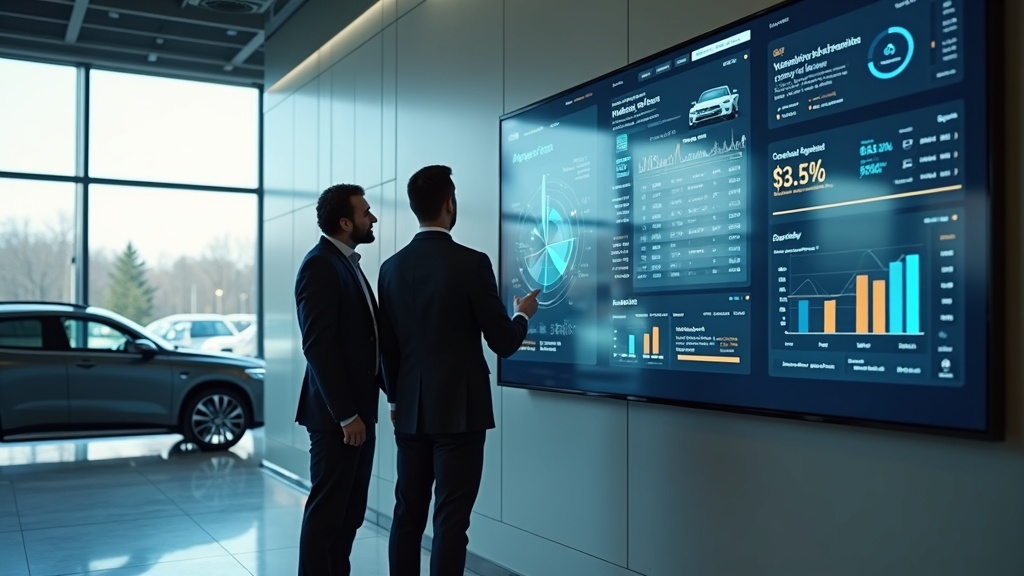
- Use AI to pre-score vehicles before the sale. Flag high-probability units that match your inventory gaps and turn profile.
- Set max-bid alerts based on AI-recommended acquisition cost. Your buyer can override, but they know when they're paying above the optimal range.
- Review post-sale performance. Did the AI-flagged units perform as predicted? If not, refine your scoring model.
This step doesn't require ripping out your existing tools. Most AI platforms integrate with popular appraisal apps and auction services. You're adding a layer of intelligence, not replacing your workflow.
Step 3: Automate Digital Merchandising and Syndication
Once you're buying smarter, the next bottleneck is getting cars online fast and consistently. Manual photo editing, description writing, and listing syndication are time sinks that slow your velocity.
Here's the SOP for AI-powered vehicle merchandising:
- Photo capture. Lot attendant or photographer shoots 20 to 30 photos per vehicle using a smartphone or camera. No special equipment required.
- AI enhancement. Photos are uploaded to the AI platform. The system removes backgrounds, adjusts lighting, crops to standard dimensions, and sequences images in the optimal order.
- Description generation. AI pulls VIN data, identifies key features, and writes a description optimized for your market. You can set templates for tone, length, and feature prioritization.
- Quality review. A team member spot-checks the listing for accuracy. This takes two minutes, not 20.
- Syndication. The listing goes live across your website, third-party platforms, and social channels with one click.
- Performance tracking. The system monitors VDP views, engagement time, and lead conversion. High-performing listings inform future merchandising decisions.
The goal is to get time-to-line under 24 hours for every vehicle. AI makes this achievable without hiring more staff.
Pro Tip: Don't try to automate everything on day one. Start with photo enhancement and syndication. Once your team is comfortable, add AI-generated descriptions. Build confidence incrementally.
Step 4: Set Rules for Dynamic Pricing Recommendations
Pricing is the most sensitive part of the AI adoption curve. Your used car manager has been pricing inventory for 15 years. Telling them to trust an algorithm is a tough sell.
Start by positioning AI as a decision-support tool, not a replacement for human judgment. The system recommends. Your team decides.
Here's how to implement dynamic pricing without triggering a revolt:
- Define your pricing philosophy. Are you optimizing for turn, gross, or a balance of both? Set clear targets: "We want to turn inventory in 30 days while maintaining $2,500 average gross on used vehicles."
- Set guardrails. Establish minimum gross thresholds, maximum discount limits, and blackout periods (e.g., no price cuts in the first 10 days).
- Enable AI recommendations. The system suggests initial pricing and repricing actions based on market data, engagement signals, and your targets.
- Track overrides. When your team overrides a recommendation, log the reason and track the outcome. This builds a feedback loop that improves the AI and helps you identify when human intuition is adding value.
- Review weekly. Hold a 30-minute pricing meeting every week. Compare AI recommendations to actual decisions and outcomes. Celebrate wins. Diagnose misses.
Over time, your team will learn when to trust the AI and when to override it. The goal isn't blind automation. It's faster, more informed decision-making.
Quick Wins: Boost Velocity in the Next 14 Days
You don't need a full AI rollout to see results. Here are three high-impact actions you can take in the next two weeks using basic AI tools or even manual processes informed by AI principles.
Day 1-3: Identify and Re-Merchandise Aging Units
Pull a report of every vehicle on your lot for more than 45 days. These are your problem children. They're costing you money every day.
For each aging unit, ask three questions:
- Is the merchandising weak? Check the photos and description. If they're subpar, re-shoot and rewrite. Use an ai photo enhancer if you have access to one, or at minimum, clean up the backgrounds and lighting manually.
- Is the price wrong? Compare your asking price to recent sales of similar units in your market. If you're 10% above the pack, you're not "holding gross." You're sitting on dead inventory.
- Is the car a bad fit? If the unit doesn't match local demand, wholesale it or move it to a sister store. Don't let pride keep a loser on your lot.
Re-merchandise and reprice these units by day three. You'll see engagement lift within a week.
Day 4-7: Analyze Top-Selling Models for Acquisition Focus
Pull your sales data for the last 90 days. Identify your top five fastest-turning models. These are your winners.
Now answer these questions:
- Do you have enough of them in stock? If your best-selling model turns in 18 days and you only have two in inventory, you're leaving money on the table.
- Where are you sourcing them? Are you buying them at auction, taking them in trade, or both? Double down on the most profitable acquisition channel.
- What's your pricing strategy? Are you pricing these units for margin or turn? If they're moving fast, you might have room to capture more gross.
Use this analysis to build a targeted acquisition list for the next two weeks. Focus your buying energy on proven winners, not hopeful experiments.
Day 8-14: Review Pricing Exceptions Against AI Recommendations
If you're using any kind of pricing tool (even a basic market comp tool), pull a report of every time your team overrode the recommended price in the last 30 days.
For each override, track the outcome:
- Did the car sell faster or slower than predicted?
- Did you capture more or less gross than the AI expected?
- Was the override based on a legitimate insight (e.g., "This color is hot right now") or just resistance to change?
This exercise will reveal patterns. Maybe your team is great at pricing trucks but consistently misprices imports. Maybe you're overriding the AI on every price increase recommendation because you're risk-averse.
Use these insights to refine your pricing process. If the AI is consistently right, trust it more. If your team is consistently right, figure out what they know that the AI doesn't, and feed that insight back into the system.
Pro Tip: Turn this 14-day sprint into a monthly habit. Pick three high-impact actions, execute them, measure the results, and iterate. Velocity isn't a one-time project. It's a discipline.
Common Pitfalls & How to Sidestep Them
AI isn't a magic wand. It's a tool. And like any tool, it can be misused, ignored, or blamed for problems it didn't create. Here are the three biggest mistakes dealers make when adopting AI, and how to avoid them.
Mistake #1: Ignoring Underlying Data Quality Issues
You can't AI your way out of bad data. If your inventory records are incomplete, your pricing history is missing, or your CRM is full of junk, AI will amplify those problems, not fix them.
How to sidestep it:
Before you invest in AI, invest in data hygiene. Run an audit using the checklist in Step 1 of the implementation playbook. Fix the gaps. Establish data entry standards and hold your team accountable.
If you're not willing to clean up your data, don't buy AI. You'll waste money and blame the technology when the real issue is your foundation.
Mistake #2: Overriding AI Without Clear Logic
Your used car manager has been in the business for 20 years. He's seen every market cycle. When the AI recommends a price cut and he overrides it, he's probably got a reason.
But if that reason is "I just don't trust it" or "I've always priced this way," you have a problem. Overrides without logic are just guesses dressed up as experience.
How to sidestep it:
Create an override log. Every time someone overrides an AI recommendation, they document the reason and the expected outcome. Then you track what actually happens.
This does two things. First, it forces your team to think critically about why they're overriding. Second, it creates a feedback loop that improves both the AI and your team's decision-making.
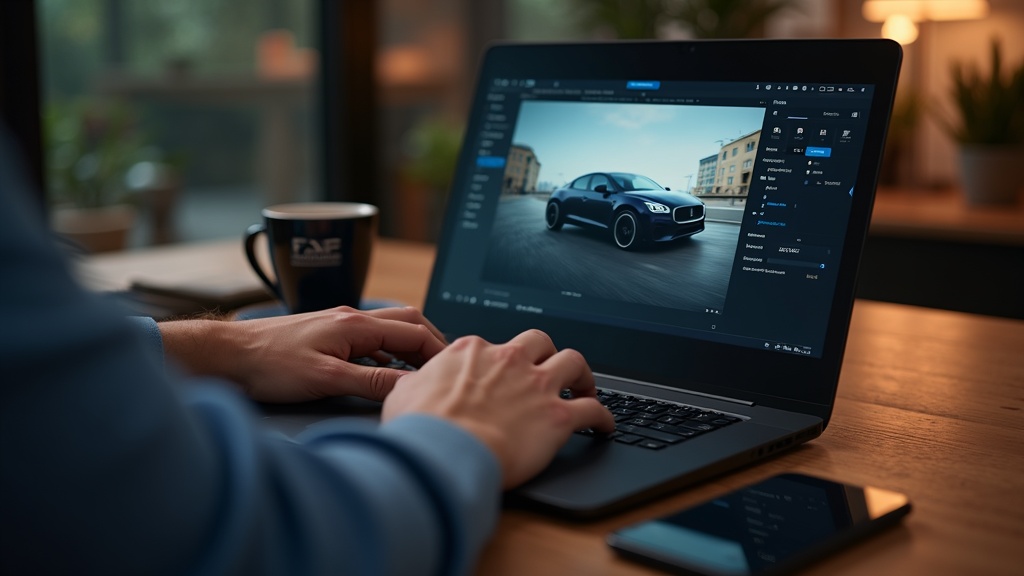
Here's what that looks like in practice:
Over time, you'll see patterns. If your team's overrides consistently outperform the AI, your data inputs are wrong or your market has unique dynamics the AI isn't capturing. If the AI consistently wins, you need to build more trust in the system.
Mistake #3: Treating AI as a "Set and Forget" Tool
AI isn't autopilot. It's a co-pilot. The best results come from continuous feedback, refinement, and human oversight.
Some dealers install an AI platform, let it run for 90 days, see mediocre results, and declare it a failure. The problem isn't the AI. It's the lack of engagement.
How to sidestep it:
Treat AI like a new hire. You wouldn't bring on a new manager, give them zero training, ignore their questions, and expect great results. AI is the same.
Schedule weekly reviews. Look at the recommendations. Track the outcomes. Adjust the settings. Feed the system better data. Celebrate the wins and diagnose the misses.
AI gets smarter over time, but only if you're actively managing it. If you're not willing to invest 30 minutes a week in oversight and optimization, you're not ready for AI.
Pro Tip: Assign an "AI champion" on your team. This person owns the relationship with the platform, tracks performance, and advocates for continuous improvement. Without a champion, AI becomes shelfware.
Measuring What Matters: From Days-to-Sell to Gross Profit
You can't improve what you don't measure. The best dealer groups obsess over a small set of high-impact metrics that directly tie to profitability. Here's what to track.
Track Turn Rates by Model and Acquisition Source
Average turn rate is a vanity metric. It tells you nothing actionable. You need to know which models are moving fast and which are dragging down your average.
Break down your turn rate by:
- Make and model. Are your trucks turning in 20 days while your sedans sit for 60? Adjust your acquisition strategy accordingly.
- Acquisition source. Are trade-ins turning faster than auction buys? Are certain auctions consistently delivering slow movers? Use this data to refine where and what you buy.
- Price point. Are your sub-$20K units flying while your $40K+ inventory sits? This tells you where demand is in your market right now.
Set turn rate targets by segment. Don't expect every vehicle to turn in 30 days. A high-margin luxury unit might justify a 45-day turn. A commodity sedan should move in 21 days or less.
Monitor VDP Engagement vs. Time on Lot
A car that's getting 200 VDP views but no leads has a different problem than a car getting 10 views. The first might be a pricing issue. The second is a merchandising or market fit issue.
Track these engagement metrics for every vehicle:
- VDP views per day. Low views mean poor visibility or weak merchandising. High views with no leads mean pricing or description issues.
- Time on VDP. If visitors are bouncing in five seconds, your photos or description aren't compelling. If they're spending two minutes but not converting, you might be missing key information or your CTA is weak.
- Lead conversion rate. What percentage of VDP visitors submit a lead? Industry average is 2-4%. If you're below that, you have friction in your lead capture process.
Use this data to diagnose problems early. If a car has been on your lot for 15 days with weak engagement, don't wait until day 45 to act. Re-merchandise it now.
Correlate Pricing Adjustments with Final Gross Profit
The goal isn't just to turn inventory fast. It's to turn it profitably. Track the relationship between your pricing strategy and your final gross.
For every sale, log:
- Initial asking price. What did you list it for?
- Number of price changes. How many times did you adjust the price?
- Final sale price. What did it actually sell for?
- Days-to-sell. How long did it take?
- Total gross profit. What did you net after recon and pack?
Look for patterns. Are you consistently cutting price too early? Are you holding price too long and sacrificing turn? Are certain models more price-sensitive than others?
This analysis will help you refine your pricing strategy over time. The goal is to find the optimal balance between speed and margin for each vehicle type.
Pro Tip: Build a simple dashboard that shows these three metrics in real time. You don't need a fancy BI tool. A shared spreadsheet updated daily will work. The key is visibility. If your team can see the metrics, they'll start managing to them.
Your Next Move
The dealer groups winning today aren't smarter than you. They're not working harder. They're working differently. They've built systems that turn data into decisions, and decisions into profit.
AI isn't the future of automotive retail. It's the present. The question isn't whether you'll adopt it. It's whether you'll adopt it before your competitors do.
You don't need to overhaul your entire operation overnight. Start with one piece of the AI Velocity Flywheel. Fix your acquisition process. Automate your merchandising. Tighten your pricing discipline. Build momentum with quick wins, then expand.
The 14-day sprint in this guide will show you what's possible. The implementation playbook will show you how to scale it. The metrics framework will show you how to measure it.
Download our free AI-Readiness Checklist to see where your dealership stands. It takes five minutes to complete and will give you a clear picture of your gaps and opportunities.
See a 3-minute video of the AI Velocity Flywheel in action. Watch how top dealer groups are connecting acquisition, merchandising, and pricing into a single, intelligent system.
Ready to turn inventory faster? Schedule a personalized demo to see how our AI platform can optimize your dealership's velocity and profit. We'll walk you through the exact tools and workflows used by the highest-performing dealer groups in the country.
Don't let your competitors get ahead. See a live demo of how AI can transform your inventory strategy in 30 days. We'll show you the system, the metrics, and the results. No fluff. No sales pitch. Just a clear path to faster turns and better margins.
The choice is yours. Keep doing what you've always done and hope the market shifts in your favor. Or build a system that wins in any market.