
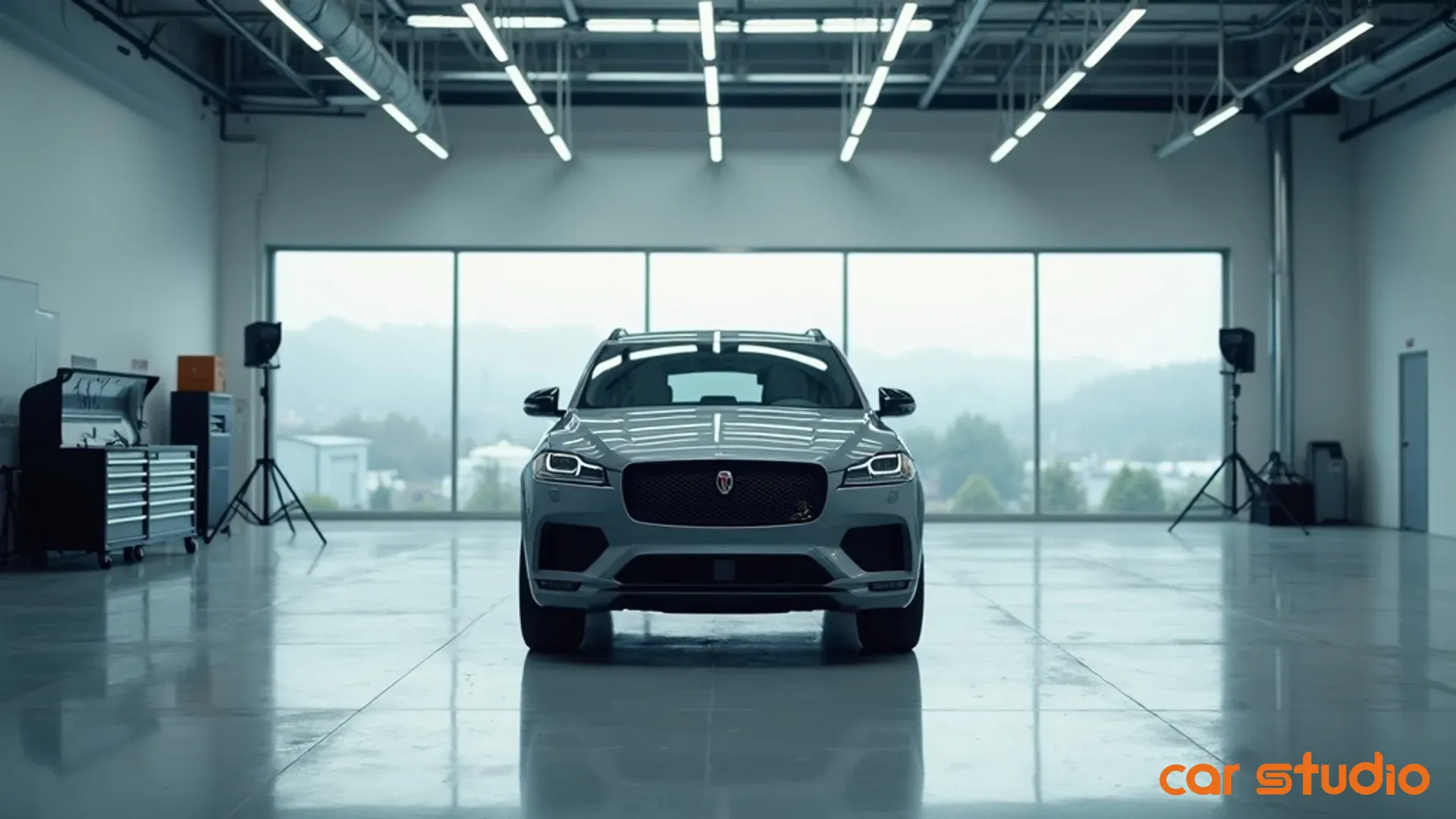

Your Photographer Is a Bottleneck: How to Merchandise Inventory at Scale
Your photographer called in sick. Again. Meanwhile, fresh units are sitting on the back lot waiting to go live, your aged inventory isn't moving, and your best cars aren't even online yet. You've invested in tools for leads, follow-up, and CRM — but the bottleneck quietly capping your sales is the one process nobody automated: getting vehicles photographed and listed.
Here's the problem in one sentence: a single photographer is a hard ceiling, and that ceiling doesn't move when your inventory grows. One person can shoot a limited number of cars a day — fewer when it rains, fewer when they're out, zero when they quit. As your volume climbs, listings back up, cars sit unphotographed, and every day of delay is a day a unit generates no interest at all.
This isn't about working your photographer harder or replacing your team. It's about removing the constraint so your inventory can go live as fast as it arrives — whether you list dozens of cars a month or thousands across multiple locations.
The Real Cost Isn't the Photographer's Time — It's the Ceiling
Most managers think about photography as a line item: an hourly wage, some editing time. The bigger cost is the throughput limit.
When one person is the only path from "car arrives" to "car is live," three expensive things happen.
Listings back up when volume spikes. A busy acquisition week or a multi-location operation quickly outruns what one shooter can handle. Cars that are reconditioned and ready to sell sit in a queue, invisible to buyers, accruing carrying cost while they wait for their turn in front of the camera.
The whole pipeline breaks at a single point of failure. Sick days, vacations, turnover, bad weather — any one of them stalls your entire merchandising process. If only one person knows the workflow, your listings live and die by that person's calendar.
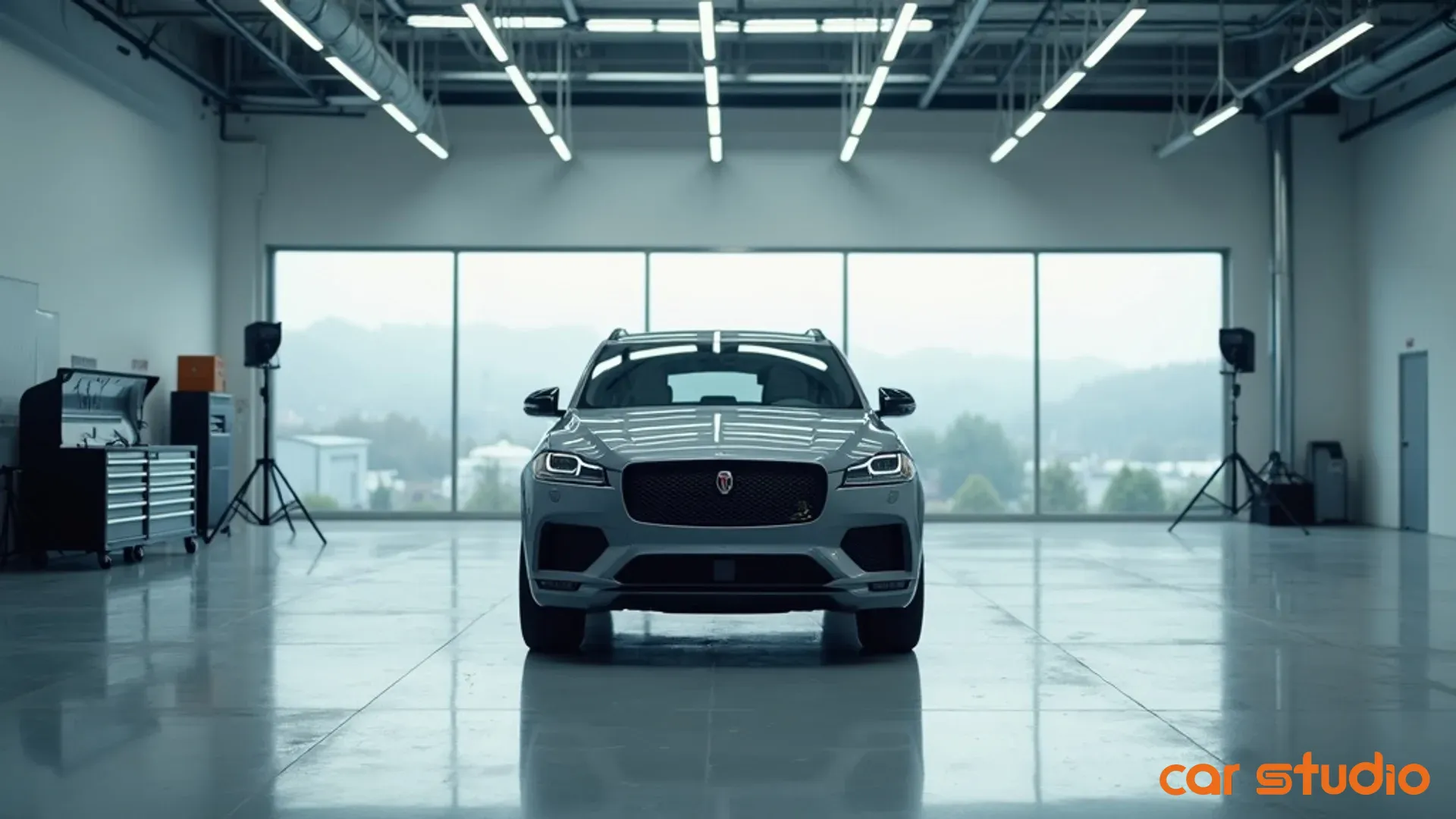
Quality drifts as they rush to keep up. When one person is trying to clear a backlog, corners get cut. Monday-morning shots look different from Friday-afternoon ones. Framing wanders, lighting shifts, and your listings turn into a patchwork — which quietly erodes buyer trust, because inconsistent presentation reads as an inconsistent operation.
The fix isn't a second photographer, which just raises the ceiling slightly while doubling overhead and adding another single point of failure. The fix is decoupling the capture from the finishing — so anyone can take the photos, and the professional, consistent output happens automatically.
Decouple Capture From Finishing
Here's the shift that removes the bottleneck: separate the two jobs your photographer currently does.
Job one is capture — pointing a camera at the car and getting the required angles. This doesn't require a specialist. With a simple shot list, any team member with a recent phone can do it in minutes.
Job two is finishing — making every image clean, bright, consistent, and distraction-free. This is the part that used to require skill, software, and time. It's also the part that AI now handles automatically.
When you split these, the ceiling disappears. Capture becomes something anyone on the lot can do, so you're never waiting on one person. Finishing becomes an automated step that treats every car identically — the same background, the same lighting standard, the same framing — no matter who shot it or when.
An AI car photo editor is what makes the finishing step scale. You upload the raw phone photos, and the tool detects the vehicle, removes the cluttered background, drops the car onto a clean studio backdrop, evens out the lighting, and sharpens detail — in seconds per image, across a whole batch at once. A tool like Car Studio AI is trained specifically on vehicles, so it handles the tricky edges (wheels, mirrors, grilles) cleanly and keeps the result realistic rather than pasted-on.
The result: a listing goes from "car in the lot" to "studio-quality photos live" without a specialist in the loop, and without the backlog.
What Scaling Consistency Actually Buys You
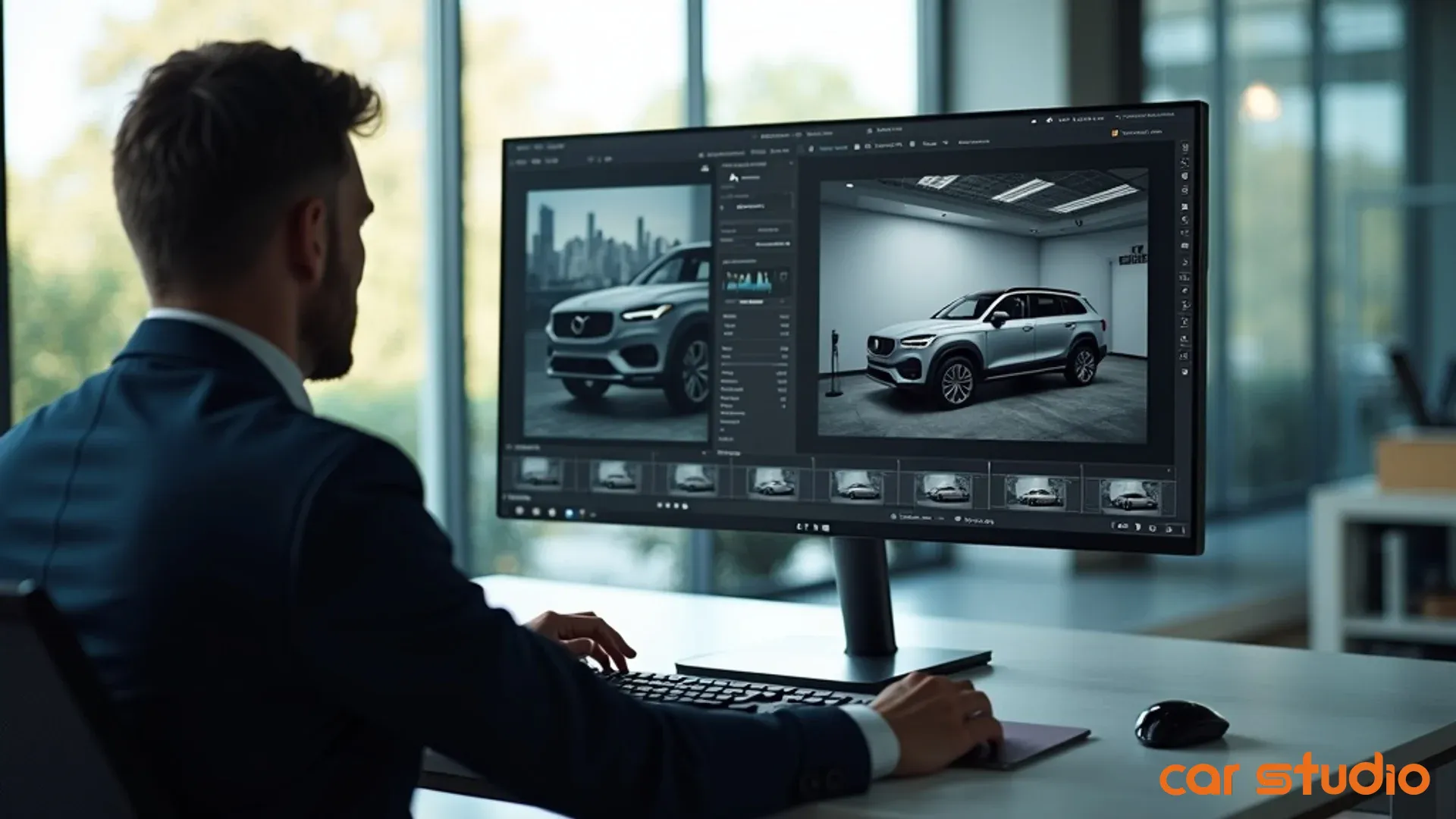
Removing the bottleneck isn't only about speed. When finishing is automated, you get things a manual process can never deliver at volume.
Every car gets the same treatment. An entry-level compact gets the exact same clean, professional presentation as a premium truck. That uniformity signals professionalism across your entire catalog and shapes how buyers perceive your operation before they ever read a price.
Growth stops breaking your process. Whether you add 20 cars this week or 200, the finishing step absorbs it without new hires, new scheduling, or new failure points. Your merchandising capacity scales with your inventory instead of fighting it.
Your skilled people do higher-value work. This isn't about eliminating your photographer. It's about freeing them from repetitive volume work so they can focus where craft matters — hero shots for your highest-value units, lifestyle imagery, or special vehicles that deserve extra attention. Automation handles the routine 80%; your photographer elevates the 20% that moves the needle.
Consistency compounds into trust. A shopper comparing several listings for a similar car gravitates toward the one that looks credible and cared-for. When every listing you publish clears the same bar, you win more of those comparisons — at scale, across every unit.
How to Build the Scalable Workflow
You don't need a massive project to remove the bottleneck. Four moves get you there.
- Write a simple shot list. Define the angles every vehicle needs — front and rear three-quarter, both side profiles, dashboard, front and rear seats, cargo area, engine bay, wheels, odometer, and key features. Put it on a one-page card with example photos. Anyone should be able to follow it without training.
- Make capture a team task, not a specialist task. Once the finishing is automated, capture no longer requires an expert. Equip a few people with the shot list and a recent phone so a car can be photographed the moment it's ready, regardless of who's working. No more single point of failure.
- Automate the finishing. Route every set of raw photos through an AI car photo editor that batch-processes the whole set: background replacement, lighting correction, sharpening, consistent framing. This is the step that guarantees uniform, professional output no matter who shot it — and it's what lets you scale without adding people.
- Add a fast quality check. Before listings go live, one person spends a few seconds per car confirming the essentials: all angles present, backgrounds clean, images sharp, nothing distorted. A quick human checkpoint keeps the automated output honest without becoming a bottleneck itself.
That's the whole system. Capture is distributed, finishing is automated, and quality stays consistent — so your listings keep pace with your inventory instead of lagging behind it.
A Note on Getting AI Backgrounds Right
Not all AI background replacement is equal. Early tools produced obviously fake, pasted-on results that hurt trust more than they helped — a car floating on a generic scene, edges cut through the wheels, lighting that didn't match. Modern, vehicle-trained tools have largely solved this: the car should look like it genuinely belongs in the scene, with clean edges and realistic shadows.
Two things to watch for when you evaluate a tool. First, test the edges — wheels, mirrors, and grilles are where weak tools fail, so check them on your own cars during a trial. Second, avoid over-processing. Some enhancers crank saturation and contrast so hard that reds go neon and blacks lose detail, which makes buyers suspicious. Aim for natural, accurate enhancement that looks professional — not an Instagram filter. Bad AI is worse than no AI, so pilot before you commit.
Stop Letting One Person Cap Your Sales
Your merchandising is only as fast as its slowest step. As long as one photographer is the single path from lot to live, your inventory will always back up, your process will always break at the worst moments, and your quality will always drift under pressure.
The way out isn't hiring another shooter — it's removing the constraint. Distribute the capture, automate the finishing, and keep a light quality check in place. Your listings go live faster, every car looks professional, and your process finally scales with your inventory instead of fighting it.
Start small: pick a batch of cars waiting in your queue, have anyone shoot them against the shot list, and run them through an AI editor to see studio-quality, consistent results in minutes.
See it on your own inventory — try Car Studio AI free. No credit card, no subscription.
For dealerships · marketplaces · OEMs · individual sellers