
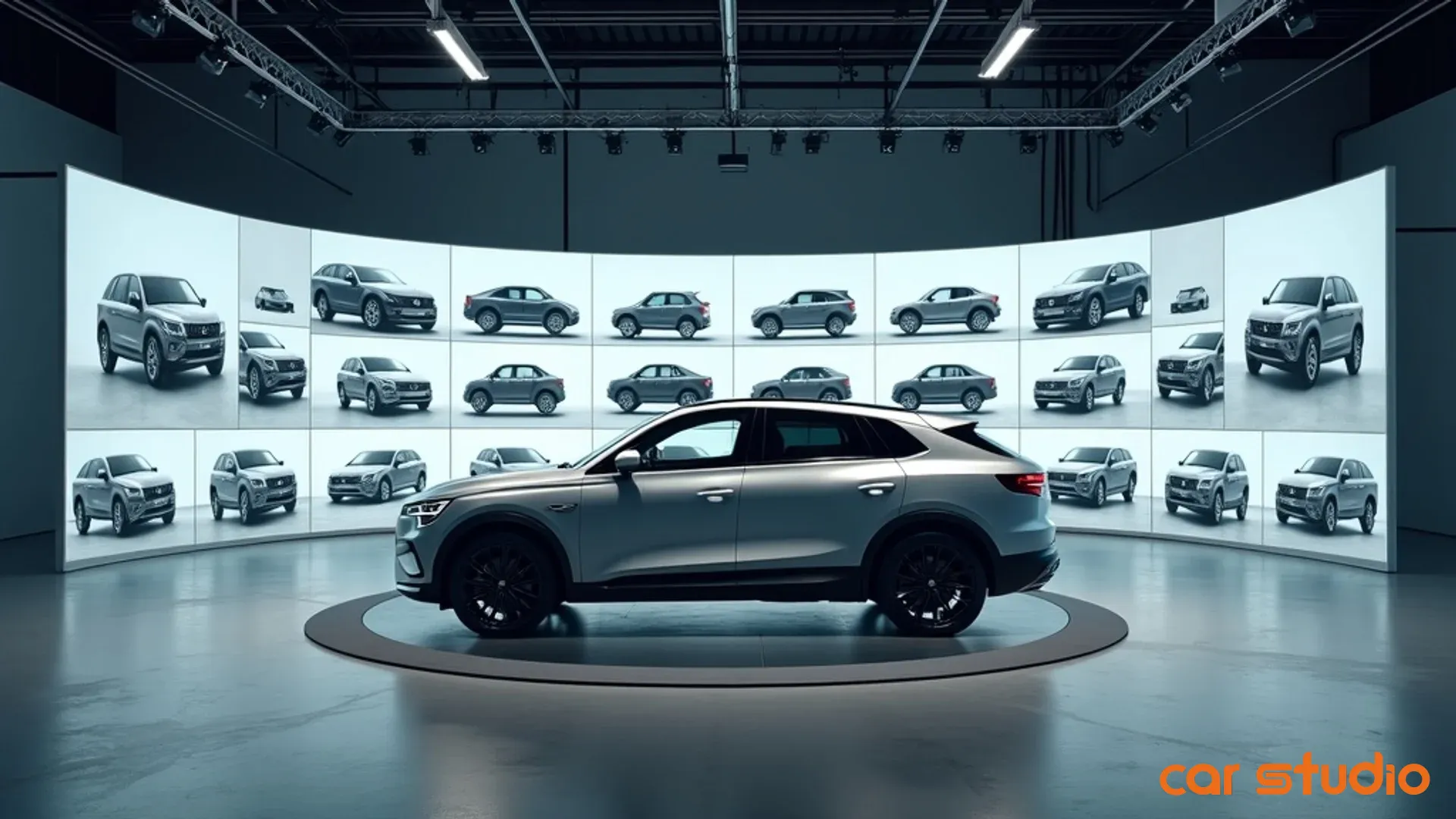

Scaling Trust: The Dealer's Guide to Consistent Vehicle Visuals
Your VDP photos are costing you deals.
Not because they're terrible. Most aren't. But they're inconsistent. One car gets shot in golden-hour sunlight on a freshly washed lot. The next is photographed under gray skies with a service bay in the background. Another shows tire shine and perfect angles. The one beside it has mud on the wheels and a crooked frame.
Shoppers notice. They scroll past your inventory in seconds, and inconsistency reads as carelessness. If you can't be bothered to present vehicles professionally, why would a buyer trust you with a $40,000 purchase decision?
Visual inconsistency doesn't just hurt your brand. It kills conversion, slows turn, and leaves gross profit on the table. The good news? This is a solvable problem. You don't need a Hollywood production crew or a six-figure budget. You need a system.
This guide will show you how to build one.
The High Cost of Visual Inconsistency
Walk into any dealership and ask the GM about their biggest digital merchandising challenge. Most will talk about getting cars online faster. Few will mention photo quality. Even fewer understand how much money poor visuals are bleeding from their operation.
Here's what inconsistent vehicle photography actually costs you.
Erodes Online Buyer Trust Instantly
Shoppers form judgments in under three seconds. When they land on a VDP with mismatched lighting, cluttered backgrounds, or visibly different photo styles across your inventory, they assume one of two things: either you don't care, or you're hiding something.
Both assumptions kill trust before the conversation even starts.
A buyer comparing your listing to a competitor's sees two identical trucks at similar prices. Yours has inconsistent angles, varying backgrounds, and uneven lighting. Theirs looks like it rolled off a showroom floor in every shot. Who gets the lead?
Increases VDP Bounce Rates
Engagement metrics don't lie. VDPs with professional, consistent imagery hold attention longer. Shoppers click through more photos, engage with additional content, and submit leads at higher rates.
When your photos look amateurish or chaotic, bounce rates spike. Shoppers leave without scrolling. They don't watch videos. They don't click "Get Pre-Approved" or "Schedule a Test Drive." They just move on to the next listing.
Every bounce is a lost opportunity. Multiply that across hundreds of VDPs and thousands of monthly visitors, and you're watching serious revenue walk out the door.
Slows Inventory Turn and Adds Carrying Costs
Here's the operational reality: cars that sit cost money. Every additional day a unit spends on your lot adds carrying costs, increases the risk of depreciation, and ties up capital you could deploy elsewhere.
Inconsistent visuals slow turn because they reduce digital engagement. Fewer clicks mean fewer leads. Fewer leads mean fewer appointments. Fewer appointments mean longer days supply.
A vehicle that could turn in 30 days with strong merchandising sits for 45 or 50 because the photos didn't do their job. That's two extra weeks of floorplan interest, potential reconditioning needs, and opportunity cost.
Why Consistency Builds Instant Credibility
Professional athletes talk about "looking fast." Even standing still, their posture and presence communicate competence. The same principle applies to your inventory.
Consistent, polished vehicle visuals communicate professionalism before a single word is spoken. They set expectations, build confidence, and prime buyers to engage.
Establishes Brand Professionalism and Polish
Think about the brands you trust. Apple. Lexus. Ritz-Carlton. What do they have in common? Obsessive attention to visual consistency. Every touchpoint, every interaction, every image reinforces the same message: we care about details.
Your dealership can do the same. When every VDP features clean backgrounds, consistent lighting, and standardized angles, you're signaling that your operation runs with precision. Buyers assume that if you're meticulous about photos, you're meticulous about reconditioning, pricing, and service.
That assumption is worth thousands in perceived value.
Creates a Predictable, Premium Shopping Experience
Shoppers crave predictability. They want to know what to expect. Inconsistent visuals create cognitive friction. Buyers have to work harder to evaluate your inventory because every listing looks different.
Consistency removes that friction. When every vehicle is presented the same way, shoppers can focus on what matters: comparing features, evaluating condition, and deciding whether to engage.
This predictability also elevates perceived quality. Even mid-tier inventory looks premium when it's photographed with care and presented consistently. You're not changing the product. You're changing how it's perceived.
Primes Buyers for Conversion and Higher Gross
Here's where this gets interesting. Professional, consistent visuals don't just attract more leads. They attract better leads.
Buyers who engage with polished VDPs arrive with higher intent and stronger trust. They've already decided you're a serious operation. They're less price-sensitive because they perceive higher value. They're more likely to convert, and they're more willing to pay your asking price.
The math is simple. Higher-quality leads close at better margins. Consistent visuals are the first step in that value chain.
A Framework for Scalable Visual Consistency
You can't manually edit your way to consistency. Not at scale. Not with 100+ units in inventory and new arrivals hitting the lot daily. You need a repeatable system that works whether you're processing five cars a week or fifty.
That system rests on three pillars: standardized capture, AI enhancement, and quality assurance.
The Three Pillars: Standardized Capture, AI Enhancement, QA
Standardized Capture means defining exactly how every vehicle gets photographed. Same angles. Same lighting conditions. Same shot list. No exceptions.
This isn't about stifling creativity. It's about creating a baseline. Once you have a consistent foundation, you can add creative shots or highlight unique features. But the core set of images must be identical across your inventory.
AI Enhancement is where the magic happens. Modern AI tools can automate background replacement, remove reflections, correct lighting, and upscale image quality without manual editing. This is the scalability lever. What used to take 20 minutes per vehicle now takes 20 seconds.
Platforms like Car Studio AI specialize in automotive imagery, automating background swaps and enhancements with minimal input. You upload raw photos, the AI processes them, and you get showroom-quality images ready for upload.
Quality Assurance is your safety net. Even with automation, you need a final check. Someone on your team reviews the output, flags issues, and ensures every VDP meets your standards before it goes live.
This three-step process turns visual merchandising from a chaotic, time-consuming task into a predictable, scalable operation.
Using AI Tools for Automation (Backgrounds, Enhancement)
Let's talk specifics. AI-powered photo editors can handle tasks that used to require Photoshop expertise and hours of manual labor.
Background replacement is the most obvious use case. Lot backgrounds are messy. Service bays, other vehicles, power lines, and cluttered surroundings distract from the car. AI tools can remove all of that and replace it with a clean, neutral backdrop or a premium studio environment.
The result? Every vehicle looks like it was shot in a controlled setting, even if it was photographed on a busy lot in the rain.
Shadow and reflection removal is another game-changer. Harsh shadows, windshield reflections, and glare make photos look amateurish. AI can detect and correct these issues automatically, producing clean, professional images without manual retouching.
Upscaling and enhancement improve image quality. If your team is shooting with smartphones or older cameras, AI can upscale resolution, sharpen details, and correct color balance. The output looks like it came from professional equipment.
These tools don't replace good photography. They amplify it. A decent photo becomes great. A great photo becomes flawless.
Measuring Impact on VDP Engagement and Lead Volume
None of this matters if you can't measure results. The good news? VDP engagement metrics are easy to track.
Start with time on page. How long do shoppers spend on your VDPs before and after implementing consistent visuals? Longer engagement typically correlates with higher intent.
Track photo views per listing. Are shoppers clicking through more images? If so, they're more engaged and more likely to convert.
Monitor lead volume and lead quality. Are you getting more inquiries? Are those inquiries converting at higher rates? Are buyers less price-focused?
Finally, watch your turn rate. Are vehicles moving faster? If consistent visuals are doing their job, you should see a measurable reduction in days supply for well-merchandised units.
Implementation Playbook: Your SOP for Perfect VDPs
Theory is useless without execution. Here's how to build your visual consistency system from the ground up.
Define Your Dealership's Unique Visual Signature
Before you shoot a single photo, decide what your brand looks like. This is your visual signature, and it should be consistent across every VDP.
Start with backgrounds. Will you use neutral gray? White studio? Outdoor scenic? Pick one and stick with it. Consistency matters more than the specific choice.
Next, define your shot list. Most dealerships need 20 to 30 photos per vehicle: front three-quarter, rear three-quarter, side profile, interior dashboard, front seats, rear seats, cargo area, engine bay, wheels, and key features.
Document the exact angles for each shot. Front three-quarter should always be taken from the same position relative to the vehicle. Side profile should always be perfectly perpendicular. This eliminates guesswork and ensures every photographer on your team produces identical results.
Finally, set lighting standards. Overcast days produce the most consistent natural light. Avoid shooting in direct sunlight, which creates harsh shadows and blown-out highlights. If you're shooting indoors, use consistent artificial lighting.
Write this down. Create a one-page photo guide with sample images showing the exact angles and settings you expect. Laminate it and give it to everyone who touches a camera.
Build a Simple Photo Capture Process
Complexity kills consistency. Your photo capture process should be simple enough that any team member can execute it without supervision.
Assign responsibility. Who's shooting photos? Is it your lot porter? A dedicated photographer? Your recon team? Make it clear who owns this task and hold them accountable.
Create a trigger. When does a vehicle get photographed? Immediately after recon? Before it hits the lot? Define the exact point in your workflow when photos happen, and make it non-negotiable.
Standardize equipment. Everyone should use the same camera or smartphone. If you're using phones, specify the model and settings. Consistency in equipment produces consistency in output.
Build a shot sequence. Your photographer should follow the same order every time: walk around the vehicle clockwise, starting with the front three-quarter, then side, rear three-quarter, rear, other side, interior, engine, details. This rhythm becomes automatic and reduces missed shots.
Time the process. A well-trained photographer should complete a full shoot in 10 to 15 minutes. If it's taking longer, your process is too complicated.
Leverage AI for Background Replacement and Touch-Ups
Once you have raw photos, it's time to enhance them. This is where AI tools earn their keep.
Upload your images to an AI photo editor or automotive-specific platform. Car Studio AI, for example, allows batch uploads and automates background replacement across multiple vehicles simultaneously.
Select your preferred background. Most platforms offer a library of studio environments, outdoor settings, and neutral backdrops. Choose one that aligns with your brand and apply it to every vehicle.
Enable automatic enhancements. Most AI tools offer one-click corrections for lighting, shadows, reflections, and color balance. Turn these on. The AI will analyze each image and apply corrections without manual input.
Review the output. AI isn't perfect. Occasionally, you'll see artifacts or errors that need correction. Flag these and either re-upload the original or manually adjust.
The goal is to process an entire vehicle's photo set in under five minutes. If you're spending more time than that, you're either using the wrong tool or over-editing.
Implement a Final Quality Assurance Checklist
Automation is powerful, but it's not foolproof. Every VDP should pass a final QA check before going live.
Assign someone to review every photo set. This doesn't have to be the photographer. It can be your internet manager, BDC lead, or marketing coordinator. The key is accountability.
Your QA checklist should cover the basics. Are all required angles present? Is the background consistent? Are there visible defects, reflections, or distractions? Are the wheels clean? Is the lighting even?
If a photo set fails QA, send it back for correction. Don't publish subpar images just to hit a deadline. Inconsistent visuals are worse than a slight delay.
Track QA failure rates. If the same photographer is consistently missing shots or producing poor-quality images, that's a training issue. Address it immediately.
Objections & Pitfalls to Avoid
Every dealership has reasons why this won't work for them. Let's address the most common objections head-on.
"We Don't Have the Time or Staff"
This is the most frequent pushback, and it's usually based on outdated assumptions about how long photo editing takes.
Manual editing is slow. Photoshop-based workflows can take 20 to 30 minutes per vehicle. If you're processing 50 cars a month, that's 25 hours of labor. No wonder it feels impossible.
AI changes the equation. With automated background replacement and enhancement, you're looking at five minutes per vehicle. That's four hours a month for the same 50 cars. Suddenly, it's manageable.
The real question isn't whether you have time. It's whether you're willing to prioritize visual consistency over other tasks. If you're spending hours manually editing photos, you're doing it wrong. Automate the heavy lifting and focus your team on QA and strategy.
Managing Team Adoption and Consistent Training
New processes fail when teams don't buy in. If your photographers, lot staff, or internet team don't understand why consistency matters, they won't follow the system.
Start with education. Show your team the data. Pull up VDP engagement metrics for well-merchandised units versus poorly merchandised ones. Show them bounce rates, lead volume, and turn times. Make the business case clear.
Next, make the process easy. If your SOP is complicated or requires specialized skills, adoption will be slow. Simplify. Provide clear instructions, visual examples, and hands-on training.
Finally, create accountability. Track compliance. If someone isn't following the process, address it immediately. Consistency only works if everyone participates.
Choosing the Right Technology Stack (vs. Manual Editing)
Not all AI photo editors are created equal. Some are built for general photography. Others specialize in automotive imagery.
General-purpose tools like magic eraser apps or basic AI photo enhancers can handle simple tasks, but they struggle with automotive-specific challenges like reflections, complex backgrounds, and vehicle proportions.
Automotive-specific platforms are purpose-built for dealerships. They understand the unique requirements of vehicle photography and offer features like batch processing, automated background libraries, and integrations with inventory management systems.
When evaluating tools, ask these questions. Can it process multiple vehicles simultaneously? Does it integrate with your existing workflow? How much manual intervention is required? What's the cost per image or per vehicle?
Platforms like Car Studio AI are designed for dealerships that need to process high volumes with minimal training. The interface is simple, the automation is robust, and the output is consistent.
Avoid the temptation to cobble together free tools or rely on manual editing. The time savings and consistency gains from a purpose-built platform pay for themselves within weeks.
Quick Wins in 14 Days
You don't need to overhaul your entire operation overnight. Start small, prove the concept, and scale from there.
Here's a 14-day plan to see measurable results.
Days 1 to 3: Audit Your Top 20 VDPs for Consistency
Pull your 20 most-viewed VDPs from the last 30 days. These are your highest-traffic listings, so they have the biggest impact on perception.
Review the photos. Are the backgrounds consistent? Are the angles standardized? Is the lighting even? Are there visible defects or distractions?
Document the issues. Take screenshots. Note which vehicles have strong visuals and which need work. This audit gives you a baseline and helps you identify patterns.
Days 4 to 7: Batch-Apply One Standardized Background Change
Pick one background and apply it to all 20 vehicles. Use an AI tool to automate the process. This should take a few hours at most.
The goal isn't perfection. It's consistency. Even if the photos aren't flawless, they should all look like they belong to the same dealership.
Upload the updated images to your VDPs and publish them.
Days 8 to 14: Track VDP Engagement Lift Pre- and Post-Change
Now measure the impact. Pull engagement metrics for the same 20 VDPs before and after the visual update.
Look at time on page, photo views per listing, and lead submissions. Compare the two-week period before the change to the week after.
You should see a lift. Even small improvements in engagement translate to more leads and faster turn.
If the data shows improvement, you've proven the concept. Now scale it across your entire inventory.
If the data is flat, dig deeper. Were the original photos already strong? Did you choose the wrong background? Is there a technical issue with how the images are displaying?
This 14-day sprint gives you real-world proof that visual consistency drives results. Use that proof to secure buy-in for a full rollout.
Turn Visual Merchandising Into a Competitive Advantage
Most dealerships treat vehicle photography as a necessary chore. Shoot the car, upload the photos, move on. That's a mistake.
Visual merchandising is a trust-building engine. It's the first impression, the credibility signal, and the engagement driver that determines whether a shopper becomes a lead.
Inconsistent visuals cost you deals every single day. They erode trust, increase bounce rates, and slow inventory turn. But the inverse is also true. Consistent, professional imagery builds credibility, primes buyers for conversion, and accelerates sales.
The framework is simple. Standardize your capture process. Automate enhancement with AI. Implement quality assurance. Measure the results.
You don't need a massive budget or a dedicated production team. You need a system. Build it, follow it, and watch your VDP engagement climb.
Stop losing buyers to inconsistent visuals. See a personalized demo of how Car Studio AI automates professional, trust-building imagery for your entire inventory. Discover how dealerships are cutting photo processing time by 80 percent while improving engagement and lead quality. Your next 50 sales are waiting on the other side of better visuals.