
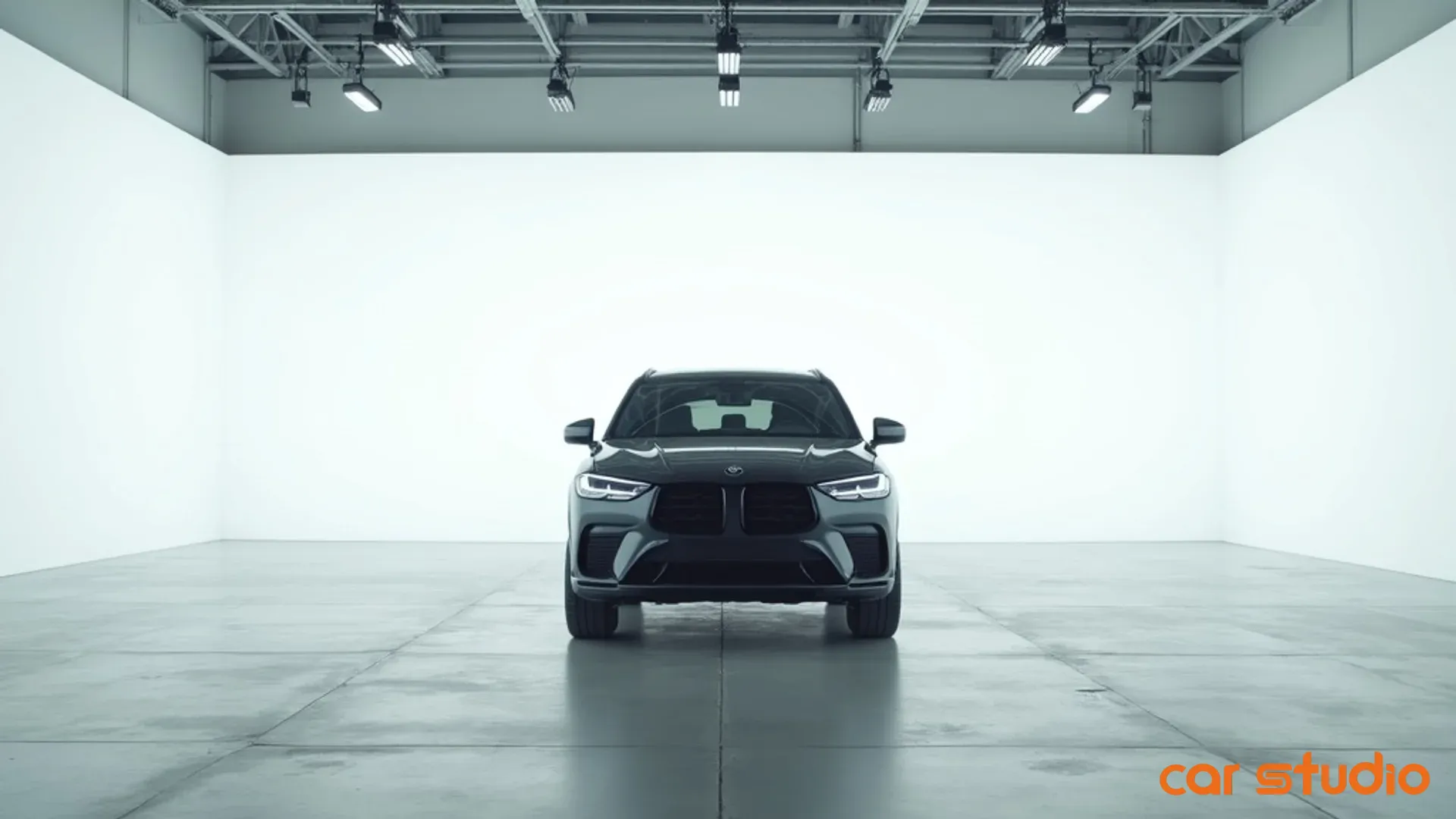

Stop Bleeding Profits: Fix Your Dealership's Visuals Now
Your inventory is sitting. Days on lot are climbing. You're blaming market conditions, interest rates, maybe even your pricing strategy. But while you're watching the macro trends, there's a controllable internal process quietly draining thousands from your bottom line every single month: visual merchandising.
Most dealers treat vehicle photography as a checkbox task. Get the car on the lot, snap some photos, push it live. But between the moment a unit hits your lot and when it appears online with compelling visuals, you're hemorrhaging money in ways that never show up on a P&L line item.
Every day of delay costs you in holding expenses. Every missing interior shot costs you in lost leads. Every inconsistent background costs you in brand credibility. And every aged unit with mediocre photos costs you in margin erosion when you're forced to cut price just to move metal.
The dealers winning right now aren't the ones with the best inventory mix or the biggest ad budgets. They're the ones who've turned visual merchandising from a bottleneck into a competitive weapon. They understand that speed and consistency in how vehicles appear online directly impacts turn rates, lead volume, and gross profit per unit.
This isn't about taking prettier pictures. It's about building a system that protects your margins and accelerates inventory velocity through operational excellence in visual merchandising.
The Hidden Costs of Slow Visuals
When you ask most GMs about the cost of slow merchandising, they'll mention holding costs. Floor plan interest, sure. But that's just the visible tip of a much larger profit drain.
Price erosion on aged units is where the real damage happens. Every week a vehicle sits past 30 days, your pricing power weakens. Shoppers see the days on lot counter. They smell desperation. Your sales team knows it too, so they start discounting before you even authorize it. A unit that could have sold at full retail with fresh, compelling visuals at day 10 now needs a $1,500 haircut at day 45 just to generate interest.
The math is brutal. If you're carrying 100 units and 20 of them age past 45 days because they weren't merchandised quickly or well enough, you're looking at $30,000 in unnecessary margin compression. That's not a market problem. That's an operations problem.
Lost lead volume from incomplete VDPs is the silent killer. Third party sites and your own website are ruthless. Incomplete listings get buried in search results. Shoppers filter them out. Even when they do appear, a VDP with 12 photos gets half the engagement of one with 30+ photos showing every angle, feature, and detail.
You're not just losing eyeballs. You're losing qualified leads who would have submitted if they'd seen the panoramic sunroof shot, the clean cargo area, or the premium wheel close up. Every missing photo is a conversion opportunity you're handing to the dealer down the street who bothered to show the whole vehicle.
Weakened negotiation power at the desk starts online. When a shopper walks in after viewing a sparse, low quality VDP, they're already skeptical. They assume there's something to hide. They assume the vehicle isn't as nice as described. Your sales team starts the conversation defending the unit instead of building value.
Compare that to a shopper who spent five minutes exploring a rich, detailed VDP with 40 high resolution photos. They've already sold themselves. They know the condition. They've visualized ownership. Your closer isn't selling anymore. They're facilitating a transaction the visuals already won.
Brand damage from inconsistent imagery compounds over time. Shoppers don't evaluate vehicles in isolation. They're comparing your entire inventory presentation against every other dealer in the market. When your photos are a mix of sunny day lot shots, cloudy overcast shots, and dimly lit indoor shots with different backgrounds and quality levels, you look disorganized.
Inconsistency signals operational sloppiness. If you can't get your photos right, what else are you cutting corners on? Reconditioning? Inspections? Service? It's a subconscious brand tax that's impossible to measure but absolutely real in how shoppers perceive your dealership's professionalism.
The common thread in all of these costs is time and quality. Speed without quality gets you blurry, inconsistent photos that don't convert. Quality without speed gets you beautiful photos of vehicles that have already aged. You need both, and that requires a system.
The Visual Velocity Flywheel: Turning Speed into Profit
Visual velocity isn't about working faster. It's about building a system where speed and quality reinforce each other to create compounding returns.
Speed drives more VDP engagement because timing matters. When a vehicle goes live within hours of hitting your lot, it appears at the top of freshness sorted listings. It gets the "new arrival" badge. It catches shoppers actively monitoring inventory. That first 72 hours online is your highest conversion window. Miss it because you're waiting on photo edits, and you've already lost your best shot at full retail.
But speed alone isn't enough. Those photos need to be good. High resolution, well lit, consistent backgrounds, complete shot sequences. When shoppers land on a VDP that loads fast and shows them everything they want to see, they stay. Average time on page doubles. Photo gallery clicks triple. And every additional second of engagement increases lead probability.
Engagement generates more qualified leads because visual completeness builds confidence. A shopper who views 25+ photos isn't just browsing. They're evaluating seriously. They're checking panel gaps, reading the window sticker, zooming in on tire tread. By the time they submit a lead, they've pre qualified themselves. They know what they're looking at and they want it.
Your BDC isn't wasting time answering basic questions that should have been answered visually. "Does it have a sunroof?" "What color is the interior?" "Are there any scratches?" All of that should be obvious from the photos. When it is, your lead to appointment rate climbs because you're only talking to people who've already done their homework.
Consistency builds brand trust subconsciously. Shoppers won't consciously think "Wow, every vehicle on this dealer's site has the same professional background and lighting." But they will feel it. The entire inventory looks premium. It looks cared for. It looks like a dealership that sweats the details.
That subconscious trust translates into higher lead quality, better show rates, and stronger closing percentages. It also means shoppers are more likely to return to your site first when they're ready to buy, because the experience was smooth and professional the first time.
Faster turn rates protect margins by keeping inventory fresh. When your visual merchandising system is dialed in, vehicles move faster. Faster turn means less price pressure. Less price pressure means more gross per unit. More gross per unit means you can invest in better inventory, which turns even faster.
It's a flywheel. Speed creates engagement. Engagement creates leads. Leads create sales. Sales create cash flow. Cash flow lets you stock better. Better inventory with great visuals sells faster. And the cycle accelerates.
The dealers who've built this flywheel aren't smarter or better capitalized. They've just systematized the one part of the sales process that's entirely within their control: how quickly and how well they present inventory online.
Implementation Playbook: Your 4-Step Visual Velocity System
Building visual velocity requires a repeatable system that removes variability and bottlenecks. Here's the four step framework that high performing dealers use to turn lot to live from days into hours.
Step 1: Standardize Capture with a Shot List
Inconsistency starts at capture. If every photographer is winging it, you'll get different angles, different coverage, and different quality every time. The fix is a mandatory shot list that defines exactly what gets captured for every vehicle, every time.
Your shot list should include 15 to 20 core angles as the baseline. Front three quarter driver side. Rear three quarter passenger side. Straight on front. Straight on rear. Both side profiles. Engine bay. Cargo area with seats up and down. All four wheels. Dashboard. Center console. Front seats. Rear seats. Gauge cluster. Infotainment screen. Window sticker. Any damage or wear.
This isn't optional coverage. This is the minimum to create a complete VDP that answers every question a shopper might have before they pick up the phone. Anything less and you're leaving leads on the table.
Standardization also means consistent lighting and backgrounds. Shoot at the same time of day when possible. Use the same lot location or studio setup. Keep the framing consistent so vehicles look uniform across your inventory. This is what separates professional operations from lot jockeys with smartphones.
Train every person who touches a camera on the shot list. Make it a laminated checklist they carry. Make it part of the recon workflow so vehicles don't move to the next stage until the full sequence is confirmed. Remove the guesswork and you remove the variability.
Step 2: Automate Enhancement and Backgrounding
Capturing the shots is half the battle. Editing them is where most dealers get stuck. Manual editing is slow, expensive, and inconsistent. One editor's idea of color correction isn't the same as another's. Turnaround times stretch to 24 or 48 hours. Bottlenecks form.
This is where AI changes the game. Modern AI photo editors can automatically enhance exposure, correct color balance, remove reflections, and replace backgrounds in seconds. What used to take 10 minutes per photo now takes 10 seconds. What used to require a skilled editor now requires a one click upload.
The quality is consistent because the AI applies the same enhancement logic to every image. No more guessing if the editor is having an off day. No more variability between morning and afternoon batches. Every photo gets the same professional treatment, every time.
Backgrounding is especially powerful. Instead of waiting for perfect weather or dealing with cluttered lot backgrounds, you shoot the vehicle anywhere and let the AI place it on a clean studio background. Instant premium presentation without the overhead of a physical studio or the delays of waiting for conditions.
Tools like Car Studio AI are purpose built for this workflow. Upload raw lot photos, and the system automatically upscales image resolution, unblurs motion shots, applies magic eraser to remove distractions, and composites vehicles onto professional backgrounds. The entire batch processes while you're moving to the next vehicle.
This isn't about replacing your team. It's about removing the bottleneck that's keeping your inventory offline. Your photographer keeps shooting. Your AI handles the tedious editing. Your team focuses on getting vehicles live and generating leads.
Step 3: Centralize and Syndicate Assets Instantly
You've captured the shots. You've enhanced them. Now they need to get everywhere your inventory appears: your website, third party sites, social media, email campaigns. If this step is manual, you've just created another bottleneck.
Centralized asset management means one system of record for all vehicle visuals. When photos are processed, they automatically flow to your DMS, your website CMS, and your syndication partners. No one is manually uploading to five different platforms. No one is wondering which version is the latest.
Instant syndication means your VDPs go live complete the moment the photos are ready. No waiting for someone to log into each third party site and update listings. No delays because the marketing coordinator is in a meeting. The system handles it.
This is where integration with tools like vAuto becomes critical. Your pricing and merchandising decisions are only as good as the data feeding them. If vAuto is telling you to price aggressively but your photos aren't live yet, you're making decisions in a vacuum. Centralized syndication ensures your market data and your visual presentation are always in sync.
The same logic applies to compliance tools like NHTSA VIN decoder integrations. Accurate vehicle data paired with complete visuals creates trust. Incomplete data or missing photos creates friction. Eliminate the friction and you eliminate the drop off.
Step 4: Measure VDP Performance and Iterate
You can't improve what you don't measure. The final step in the system is closing the feedback loop by tracking which visuals drive the most engagement and leads.
Your analytics should show VDP views, time on page, photo gallery interactions, and lead submissions by vehicle. Cross reference that with photo count, time to live, and visual quality scores. The patterns will emerge quickly.
Vehicles with 30+ photos generate more leads than those with 15. Vehicles with clean backgrounds convert better than cluttered lot shots. Vehicles that go live within 24 hours get more early engagement than those that take three days. Use that data to refine your shot list, your editing standards, and your workflow timing.
This is also where you identify underperforming inventory. If a unit has great visuals, strong pricing, and still isn't getting traction, the problem isn't merchandising. It's the vehicle. Move it at auction before it ages further. Visual velocity gives you the clarity to make those decisions faster.
Build a simple dashboard that your team reviews weekly. Which units went live fastest? Which got the most engagement? Which generated leads? Celebrate the wins and diagnose the misses. Continuous improvement becomes part of the culture.
Quick Wins: Your 14-Day Plan to Stop the Bleeding
If you're skeptical or resource constrained, you don't need to overhaul everything at once. Here's a two week plan to prove the concept and build internal momentum.
Day 1: Audit your 10 oldest units. Pull your aged inventory report and look at the 10 vehicles sitting longest. Open their VDPs. Count the photos. Check the quality. Look at the backgrounds. Note the time stamps on when they went live versus when they hit your lot. You'll likely find that most have incomplete visuals, inconsistent quality, or took days to get online. That's your proof that slow merchandising is costing you.
Day 3: Time your current lot to live process. Pick three incoming units and track them from the moment they arrive to the moment they're live online with complete photos. Note every handoff, every delay, every bottleneck. Is recon slow? Is photography inconsistent? Is editing taking 48 hours? Is syndication manual? Map the process and identify the longest delays. That's where you'll focus your fixes.
Day 7: Refresh one aged unit's visuals. Take your oldest unit from the Day 1 audit. Reshoot it with a complete shot list. Run the photos through an AI enhancement tool to clean them up and add professional backgrounds. Update the VDP with the new visuals. Track what happens over the next seven days. Views, engagement, leads. You're building the case that better visuals move metal.
Day 14: Track VDP lift and build the case. Compare the refreshed unit's performance to its prior two weeks. Did views increase? Did time on page improve? Did you get leads you weren't getting before? Document the lift. Show it to your GM or dealer principal. Use it to justify investing in a full visual velocity system. One unit's success is anecdotal. Ten units' success is a pattern. A hundred units' success is a profit center.
This 14 day plan isn't about perfection. It's about proving that visual merchandising directly impacts inventory turn and lead volume. Once you have the data, the investment decision becomes obvious.
Common Objections & Pitfalls (And How to Solve Them)
Every dealer who's tried to improve visual merchandising has hit the same roadblocks. Here's how to navigate them.
"We don't have the time or staff." This is the most common objection and it's backwards. You don't have time because your current process is inefficient. Manual editing, inconsistent workflows, and lack of automation are why you're understaffed. The fix isn't hiring more people. It's removing the bottlenecks that are wasting the people you have.
AI tools increase output without increasing headcount. One photographer with an AI editor can process the same volume as three photographers with manual editing. Your existing team becomes more productive. You're not asking them to do more work. You're giving them tools that make the work faster.
"Our current photo provider is good enough." Good enough is the enemy of great, and in a competitive market, good enough loses. If your provider takes 48 hours to turn around edited photos, you're losing two days of prime selling time on every vehicle. If their quality is inconsistent, you're losing leads to dealers with better presentation.
Run the numbers. Calculate the cost of those delays in holding expenses and lost leads. Compare that to the cost of switching to a faster, more consistent solution. The ROI isn't close. Loyalty to a vendor who's costing you money isn't loyalty. It's inertia.
"Price matters more than perfect photos." Price absolutely matters, but shoppers never get to your price if they don't engage with your VDP first. Photos are the gateway. They determine whether a shopper clicks, whether they stay, and whether they trust you enough to submit a lead.
You can have the best price in the market, but if your photos are blurry, incomplete, or inconsistent, shoppers will assume there's a reason you're priced low. They'll assume hidden damage or poor condition. Great visuals don't replace competitive pricing. They amplify it by removing doubt and building confidence.
Avoiding the manual process bottleneck trap. The biggest pitfall is trying to improve quality without addressing speed, or improving speed without addressing quality. You need both. Adding more manual steps to improve quality just creates new bottlenecks. Rushing through capture to improve speed just creates low quality photos that don't convert.
The only way out is automation. Standardize capture so quality is baked in. Automate enhancement so speed is guaranteed. Centralize syndication so distribution is instant. Remove the human dependency from the repetitive tasks and let your team focus on the high value work: selling cars.
From Cost Center to Profit Driver
Most dealers treat visual merchandising as a cost center. It's a task that has to get done, so you staff it minimally and hope for the best. That mindset is why you're leaving money on the table.
The dealers who win treat visual merchandising as a profit driver. They invest in systems that create competitive advantage. They measure ROI in faster turn rates, higher lead volume, and protected margins. They understand that every dollar spent on better, faster visuals returns multiples in gross profit.
Shifting from a task based to system based mindset is the first step. Stop thinking about photography as "get some photos and post them." Start thinking about it as "build a repeatable system that ensures every vehicle is presented at its best within hours of arrival." The former is a checklist. The latter is a competitive moat.
Systems thinking means documenting workflows, defining standards, automating repetitive tasks, and measuring outcomes. It means your visual merchandising process works the same whether your best photographer is on vacation or your newest hire is running it. Consistency at scale is what separates professional operations from chaos.
Using AI as a competitive advantage is the unlock. Early adopters of AI in visual merchandising are already seeing the benefits. They're turning inventory faster. They're generating more leads per vehicle. They're protecting margins by keeping units fresh. And they're doing it all with the same or fewer resources than competitors still stuck in manual workflows.
AI isn't coming. It's here. The question is whether you're going to use it to pull ahead or watch competitors use it to leave you behind. Tools like automatic car painting for virtual customization, AI upscale image for resolution enhancement, and unblur image for motion correction are already standard in high performing stores.
Visual excellence enables profitable scaling. When your merchandising system is dialed in, you can handle more inventory without adding overhead. You can expand into new markets without rebuilding processes. You can acquire other stores and immediately level up their visual presentation.
Scaling profitably requires operational leverage. Manual processes don't scale. Systems do. AI powered visual merchandising is one of the highest leverage investments you can make because it touches every vehicle, every day, forever.
The path forward is clear. Audit your current process. Identify the bottlenecks. Implement the four step visual velocity system. Measure the lift. Scale what works. Your inventory is your most valuable asset. Make sure it's presented like it.
Download our free 15-Shot Sequence Checklist to standardize your capture process today. Get the Visual Velocity SOP template to streamline your team's workflow and eliminate bottlenecks.
Stop bleeding profits from slow merchandising. See how Car Studio AI automates your entire visual workflow in a brief demo. Ready to turn lot to live from days to minutes? Schedule a call to see how AI delivers consistent, profitable visuals at scale.