
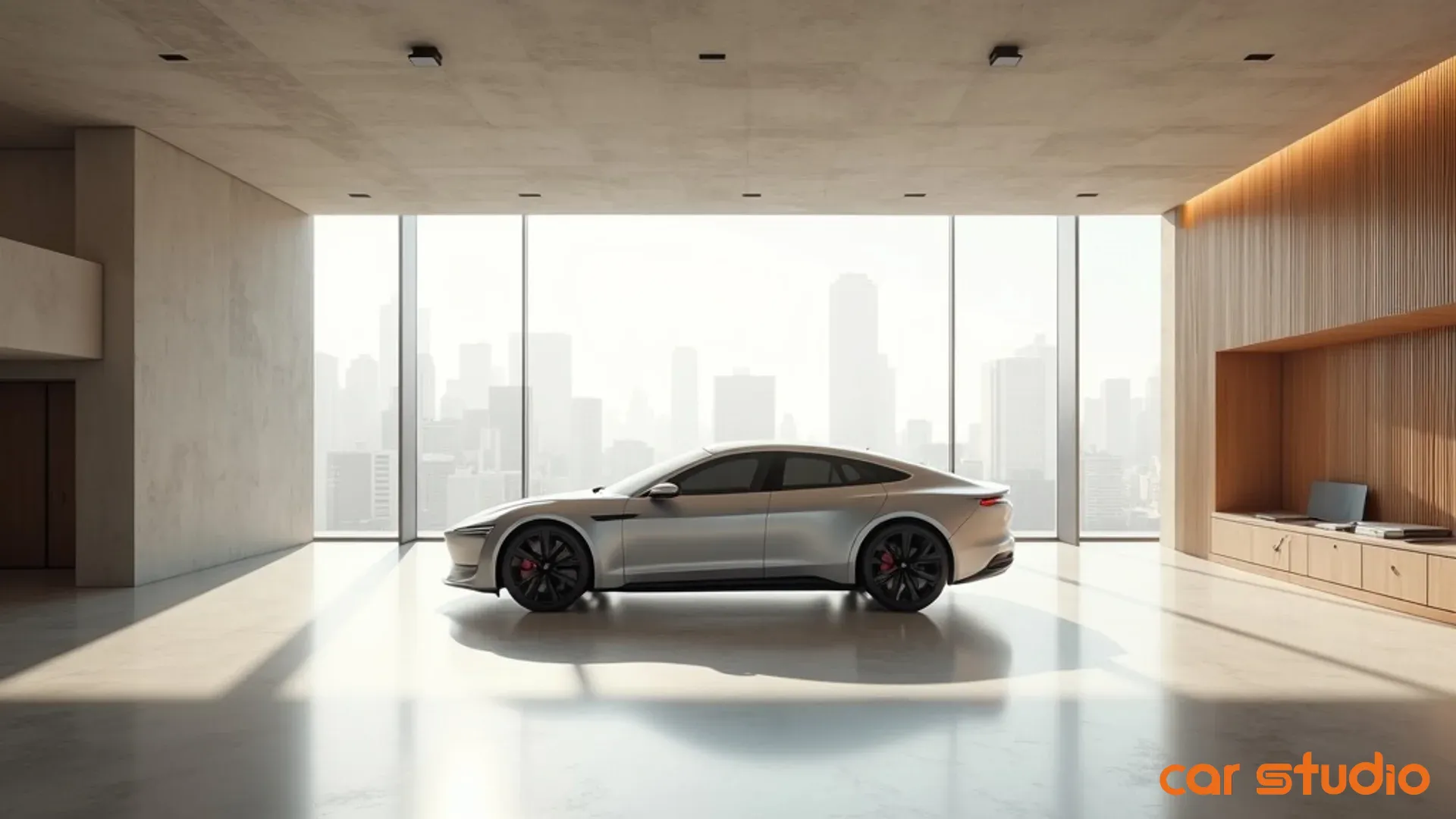

You Don't Need a Photo Studio to Get Studio-Quality Car Photos
Search for "car photo studio" and you'll find two kinds of results. One is companies selling you a physical setup: a dedicated space, a lighting rig, backdrops, turntables, and often a five- or six-figure budget. The other is the reason most sellers give up on the idea entirely and go back to shooting cars in the parking lot.
Here's the thing worth understanding before you spend anything: the studio was never the goal. A clean, professional-looking photo was the goal. The studio is just one way to get there, and for most sellers it's the slowest and most expensive way. There's now a faster one that produces the same result without the room, the rig, or the budget.
Let's break down what a real car photo studio actually does, and how you can get the same output from a phone.
What a Physical Car Studio Actually Does
Strip away the equipment and a vehicle photo studio does three jobs. Understanding them is the key to realizing you can reproduce the result another way.
It controls the background. A studio gives you a clean, uncluttered, consistent backdrop behind every car, so nothing competes with the vehicle and every listing looks uniform. This is most of what makes a studio photo look "studio."
It controls the light. A lighting rig removes harsh shadows, hotspots, and the color casts you get from sun or fluorescent lights, so the car's true color and condition come through evenly.
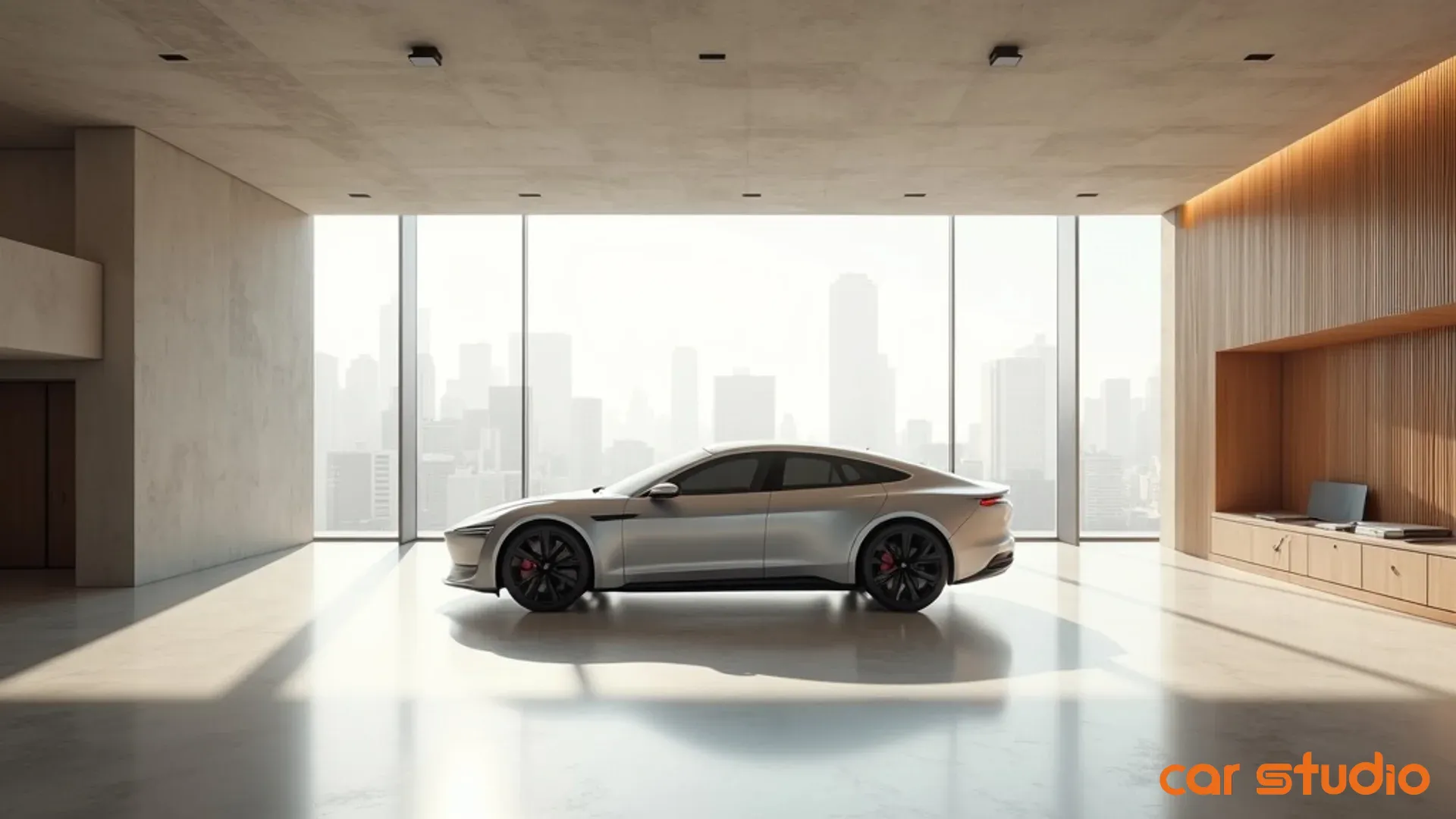
It controls consistency. Because the space, the backdrop, and the light never change, every car shot in it matches every other one. That uniformity is what makes an inventory look professional at a glance.
Notice what's not on that list: the studio doesn't change the car. It doesn't add features or hide flaws. It only controls the environment around the vehicle so the car is seen clearly and consistently. That distinction is exactly why the same result can be produced in software.
Why Building One Rarely Makes Sense
A physical studio delivers those three things, but at a cost most sellers underestimate.
Space. A car studio needs a large, dedicated indoor area you can't use for anything else. For most dealers and nearly every individual seller, that space simply isn't available or isn't worth surrendering.
Money and setup. Proper lighting, backdrops, and the room to house them add up fast, and that's before ongoing maintenance and the electricity to run it.
A person who knows how to use it. A studio full of gear still needs someone who understands lighting to get good results. That's a skill, a hire, or a lot of trial and error.
It still doesn't scale easily. Even with a studio, you're moving each car into the space, shooting it, and moving it out. When inventory spikes, the studio becomes a bottleneck of its own.
For a high-volume operation with capital to spend, a studio can be justified. For everyone else, it's a large, fixed cost to solve a problem that no longer requires it.
The Shortcut: Reproduce the Studio in Software
Here's the shift. If a studio's whole job is to control background, light, and consistency, and none of that involves changing the car itself, then you can reproduce all three after the photo is taken rather than before.
That's what an AI car photo editor does. You shoot the vehicle wherever it is, on a lot, in a driveway, in a parking space, and the software does the three studio jobs for you:
It replaces the background. The cluttered real-world setting is swapped for a clean, neutral studio backdrop, the same effect a physical backdrop would give you, applied to any photo.
It corrects the light. Uneven exposure, harsh shadows, and color casts get balanced automatically, so the car looks evenly lit the way it would under a proper rig.
It delivers consistency. Every image runs through the same treatment, so your whole inventory matches, exactly the uniformity a fixed studio space provides, without the fixed space.
The result is a studio-quality photo without a studio. And because it happens in software, it scales the way a physical room never can: a batch of cars can be processed in the time it takes to move one car into a photo bay.
Why a Vehicle-Specific Tool Matters
Not every background tool produces a studio-quality result. The difference between "clearly professional" and "obviously edited" comes down to how well the car is separated from its original setting and placed into the new one.
A tool built specifically for vehicles, like Car Studio AI, handles the parts that trip up generic editors. It detects the car cleanly around the difficult edges like wheels, mirrors, and grilles, instead of cutting into them. It keeps a realistic shadow beneath the car so the vehicle sits on the ground instead of floating. And it matches the lighting so the car looks like it belongs in the scene rather than pasted onto it. Those three things are the difference between a photo that builds trust and one that quietly undermines it.
Crucially, the car itself stays untouched. Just like a physical studio, the tool controls only the environment around the vehicle. The color, the condition, and the features a buyer sees are exactly what they'll get in person.
Getting a Studio Result From a Phone
You don't need a studio, but you do need a decent starting photo. A few simple habits give the software the best material to work with:
Shoot in even light where you can. An overcast day or open shade avoids the harsh shadows and hotspots of direct midday sun. Clean the car first, since editing controls the background and lighting but won't wipe down a dusty hood. Shoot at roughly door-handle height so the proportions look right. And capture the full set of angles a buyer expects: front and rear three-quarter, both sides, the interior, and any standout features.
From there, the software takes over. A clean background goes in, the lighting evens out, and the car comes out looking like it was shot in a professional space, because as far as the buyer can tell, it was.
The Studio Was Never the Point
If you've been putting off "proper" car photos because a studio felt out of reach, that barrier is gone. The studio was always just a means to an end: a clean, consistent, professional image that lets the car be the hero. You can get that end result now without the room, the rig, or the budget, straight from the phone in your pocket.
Skip the build. Shoot the car where it stands, and let the studio come from the software.
See a studio-quality result on your own car, try Car Studio AI free. No credit card, no subscription.
For dealerships, marketplaces, OEMs, and individual sellers