

The Untapped Profit: How Visual Consistency Drives Dealership Growth
Your best car can be ignored online if its photos look unprofessional.
You've got a pristine 2022 F-150 Lariat sitting on your lot. Clean Carfax. Low miles. Priced right. But the photos show it parked at an odd angle in front of your service bay with a trash can in the background. The interior shots are dark. One wheel is cut off. The listing has been live for 38 days.
Meanwhile, your competitor down the street moves similar inventory in 22 days. Same market. Same brands. The difference? Their VDPs look like they belong in a showroom, not a parking lot.
Visual consistency isn't about being pretty. It's about being trusted. And trust converts faster than any price drop ever will.
Most dealers obsess over pricing tools, CRM workflows, and lead attribution. Those matter. But they've ignored the first moment of truth: the vehicle detail page. If a shopper doesn't trust what they see in the first three seconds, your backend systems never get a chance to work.
This isn't theory. Dealers who enforce visual standards across their inventory see measurable lifts in VDP engagement, time on site, and lead volume. The ones who don't are bleeding margin to competitors who figured this out years ago.
Let's fix that.
Why Visual Consistency is the New Competitive Edge
Visual consistency means every vehicle in your inventory is photographed, edited, and presented according to a repeatable standard. Same angles. Same lighting. Same background. Same level of polish.
Think of it as digital curb appeal. When a shopper lands on your site or sees your cars on third-party platforms, they should immediately recognize your brand. Not because of a logo, but because your vehicles look like they belong to a professional operation.
Inconsistent photos send the opposite message. A buyer scrolling through your inventory sees one car with 12 high-res images and perfect lighting, then clicks to the next listing and finds six grainy phone photos taken at dusk. What does that tell them? That your operation is disorganized. That some cars get attention and others don't. That maybe the vehicle condition is just as inconsistent as the photos.
Distrust kills deals before they start.
Shoppers today visit fewer dealerships in person. They've already made most of their decision online. If your VDPs don't inspire confidence, they're not coming in. They're moving to the next listing, the next dealer, the next market.
Now connect this to gross profit. When a buyer shows up already convinced your vehicle is the right one, you're negotiating from strength. They've spent time on your VDP. They've imagined themselves in the car. They've shared the listing with their spouse. You're not starting from zero. You're closing a deal that began the moment they saw a professional, trustworthy image.
Professional imagery doesn't just move cars faster. It protects margin. Dealers who invest in visual merchandising report higher closing rates and less price resistance. The car sells itself before the shopper ever walks through the door.
The Anatomy of a High-Converting Vehicle Listing
Not all photos are created equal. A high-converting VDP follows a specific structure, and every image has a job to do.
Start with the perfect shot list. You need 25 to 35 images per vehicle, minimum. Exterior angles should include front three-quarter, rear three-quarter, straight-on front, straight-on rear, and both profile sides. Capture close-ups of the wheels, badges, and any distinguishing features like a sunroof, tow package, or unique trim.
Interior shots matter just as much. Front seats from multiple angles. Rear seats. Dashboard and center console. Cargo area. Infotainment screen powered on and displaying the home screen. Gauge cluster showing mileage. Shoppers want to see where they'll spend their time, and a dark or blurry interior shot kills interest instantly.
Don't skip the details. If the vehicle has leather seats, show the stitching. If it's a truck, show the bed liner and tie-downs. If it's a luxury car, show the wood trim and ambient lighting. These details separate your listing from the generic shots everyone else is posting.
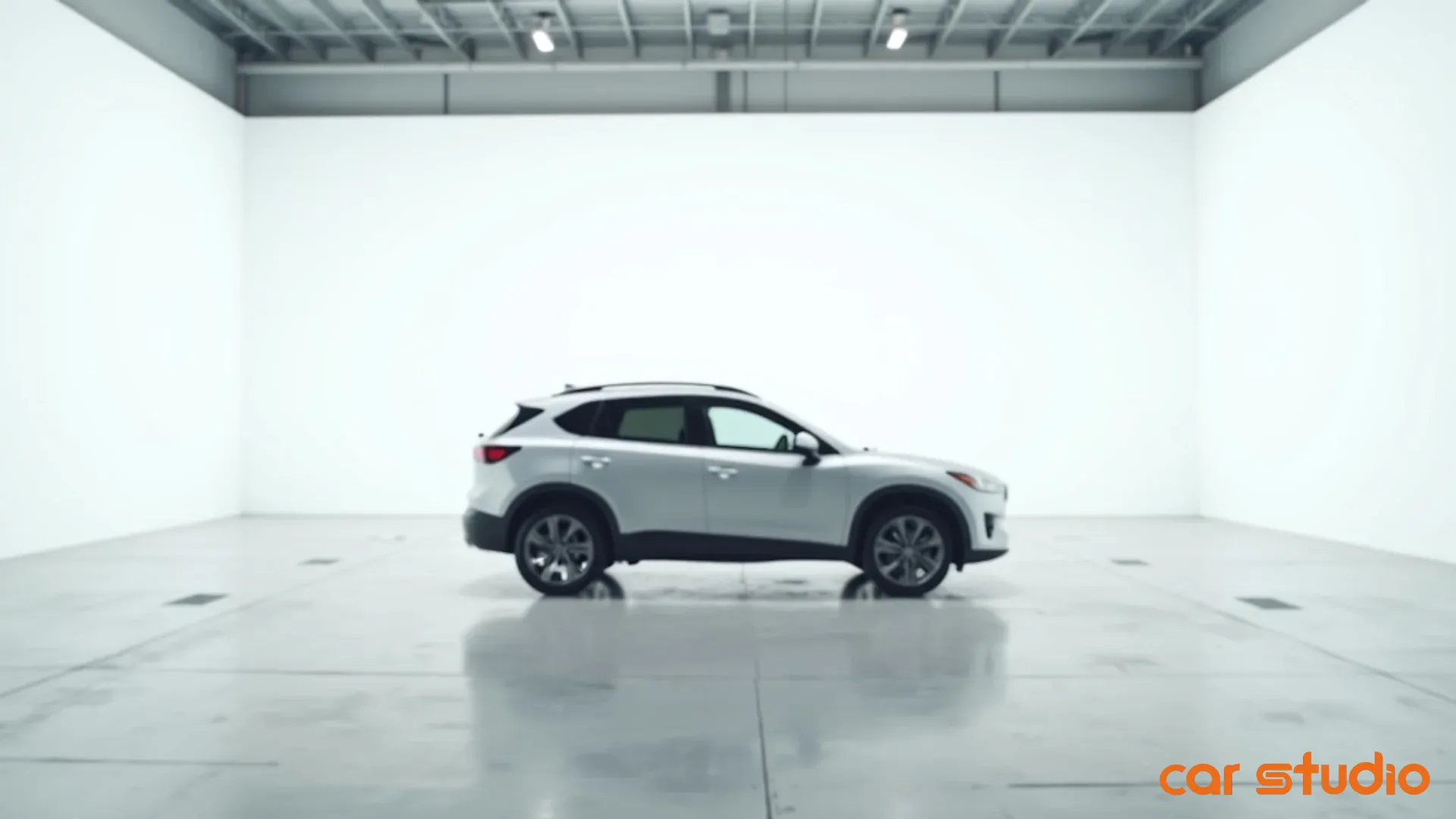
Backgrounds are where most dealers fail. A cluttered lot, other vehicles in the frame, or a distracting environment pulls attention away from the car. Standardize your background. Use a clean, neutral space. If you're shooting outdoors, pick a consistent location with good natural light and minimal distractions. If you're using a photo bay, control the lighting and keep the backdrop uniform.
Consistency creates brand recognition. When a shopper sees three of your listings, they should instantly know they're all from the same dealership. That familiarity builds trust. It signals that you run a tight operation.
High-resolution images are non-negotiable. Shoppers zoom in. They want to inspect the condition. A low-res photo that pixelates when enlarged suggests you're hiding something. Shoot at a minimum of 1920x1080 resolution, and make sure your platform supports full-size uploads.
Reconditioning and unique selling points need visual proof. If you just replaced the tires, photograph them. If the paint was corrected, show the shine. If it's a one-owner vehicle with service records, photograph the Carfax or service booklet. Shoppers are skeptical. Show them the evidence.
Every image should answer a question or eliminate a doubt. If it doesn't, cut it.
Download our free 1-page Visual Standards Checklist to audit your listings today.
From Chaos to Control: Your Implementation Playbook
Building a scalable visual system doesn't require a complete overhaul. It requires a process.
Step 1: Define your dealership's visual brand standard.
Sit down with your team and decide what "good" looks like. Pick five of your best-performing listings and analyze the photos. What do they have in common? What angles worked? What backgrounds? What lighting?
Document it. Create a one-page guide that shows the exact shot list, the preferred background, and the editing style. Include example images. Make it so simple that a new hire can follow it on day one.
This is your visual playbook. Every vehicle that hits your lot should be photographed according to this standard. No exceptions.
Step 2: Equip and train your photo team.
Your photographer needs the right tools. A decent DSLR or mirrorless camera is ideal, but even a high-end smartphone can work if you control the lighting and environment. Invest in a tripod, a polarizing filter to reduce glare, and portable lighting if you're shooting indoors.
Training matters more than equipment. Walk your team through the shot list. Show them how to frame each angle. Teach them to check for distractions in the background, reflections in the paint, and proper exposure.
Run a test batch. Have your photographer shoot five vehicles according to the new standard, then review the images together. Identify what's working and what needs adjustment. Refine the process until it's repeatable.
Step 3: Use technology to automate and scale.
Manual photo editing is a bottleneck. Your team can shoot 20 cars a day, but if it takes 30 minutes to edit each set of images, you'll never keep up.
This is where AI-powered tools like Car Studio AI come in. These platforms automate background replacement, color correction, and image enhancement. You upload raw photos, and the system applies your brand standards automatically. What used to take half an hour per vehicle now takes two minutes.
Automation doesn't just save time. It enforces consistency. Every image gets the same level of polish, the same background, the same lighting adjustments. Your inventory looks cohesive, and your team can focus on shooting more cars instead of editing.
Look for platforms that integrate directly with your inventory management system. The fewer manual steps between shooting and publishing, the faster your time to line.
Step 4: Integrate visuals into your inventory workflow.
Photography can't be an afterthought. It needs to be part of your recon process.
Map out the workflow. Vehicle arrives. Recon inspects and details it. Photos are shot. Images are edited and uploaded. Listing goes live. Each step should have a clear owner and a defined timeline.
Set a standard: no vehicle goes live without a complete photo set. If you're missing images, the car doesn't hit the website. This forces accountability and prevents half-finished listings from sitting online for weeks.
Track your time to line. Measure how long it takes from vehicle acquisition to live listing. If photography is the bottleneck, address it. Hire another photographer. Invest in faster editing tools. Adjust your recon schedule.
Speed matters. Every day a car sits without proper photos is a day you're losing to a competitor who got their listing up faster.
Measuring the ROI of a Consistent Visual Brand
You can't improve what you don't measure. Visual consistency should be tracked like any other profit lever.
Start with VDP views. Compare vehicles with complete, professional photo sets to those with incomplete or inconsistent images. You'll see a clear pattern. Better photos drive more engagement.
Track time on site. Shoppers spend longer on VDPs with high-quality images. They scroll through more photos. They zoom in. They share the listing. All of this signals intent, and intent converts to leads.
Sales velocity is the ultimate metric. Measure average days to sale for vehicles with standardized photos versus those without. The difference is your opportunity cost. If professional imagery cuts your turn time by even five days, multiply that across your entire inventory. That's real money.
Create a photo consistency score. Rate each listing on a simple scale: complete shot list, standardized background, high resolution, proper lighting. Track the percentage of your inventory that meets the standard. Set a goal to hit 90% within 90 days.
Lead conversion rates tell the rest of the story. Pull your CRM data and segment leads by the quality of the VDP they viewed. Leads generated from high-quality listings close at higher rates. They're more qualified. They've already sold themselves.
Platforms that automate visual merchandising often include analytics dashboards. You can see which vehicles are getting the most engagement, which photos are being viewed longest, and how image quality correlates with lead volume. Use this data to refine your standards and double down on what works.
Calculate the lift. If improving your photos increases VDP views by 20% and your lead conversion rate by 10%, what does that do to your monthly sales? Run the numbers. The ROI is almost always positive, often dramatically so.
Common Objections & Pitfalls to Avoid
Every dealer has a reason why they can't prioritize visual consistency. Let's address them.
"It's too expensive and time-consuming."
Compared to what? A single aged unit sitting on your lot for an extra 30 days costs you more in floorplan interest and depreciation than a year's worth of professional photography. Time-consuming is relative. If you're still editing photos manually, yes, it's slow. But modern AI tools cut editing time by 90%. The investment pays for itself in weeks, not months.
"Our photographers are good enough."
Good enough is the enemy of great. Your photographer might be skilled, but if they're not following a consistent standard, you're still losing. Talent without process creates variability. And variability erodes trust. Give your team the tools and the playbook to be consistently excellent, not occasionally great.
"Customers only care about the price."
This is the most dangerous myth in retail automotive. Price matters, but it's not the only factor. Shoppers compare dozens of listings. If two vehicles are priced similarly, they'll choose the one that looks more trustworthy. If your photos are weak, you'll have to drop your price to compete. Professional imagery protects your margin by making your vehicle the obvious choice.
Ignoring mobile-first image optimization.
Over 70% of car shoppers browse inventory on their phones. If your images don't load fast or don't display well on a small screen, you've already lost. Optimize for mobile. Use compressed, high-quality files. Test your VDPs on multiple devices. Make sure every image is clear and impactful, even on a five-inch screen.
Another common pitfall is inconsistency across platforms. Your website might have great photos, but if you're syndicating to third-party sites with different image specs, your listings look different everywhere. Standardize your export settings. Make sure your photos look professional no matter where they appear.
Finally, don't skip the follow-up. Visual standards aren't set-it-and-forget-it. Review your listings monthly. Audit your photo team's work. Adjust your playbook as you learn what drives engagement. Continuous improvement is the only way to stay ahead.
Quick Wins: Your First 14 Days to Visual Excellence
You don't need to overhaul your entire operation overnight. Start small, prove the concept, and scale.
Day 1 to 3: Audit your top 20 VDPs.
Pull your 20 most-viewed listings from the last 30 days. Review the photos. How many have a complete shot list? How many have consistent backgrounds? How many are high resolution? Score each listing. Identify the gaps.
Now do the same for your 20 oldest units. Compare the two groups. Chances are, your aged inventory has weaker photos. That's your low-hanging fruit.
Day 4 to 7: Create a one-page photo standard guide.
Use the audit to define your baseline. Pick the best examples from your top performers. Document the shot list, the background, the lighting, and the editing style.
Print it. Laminate it. Hang it in your photo bay. Make it the single source of truth for your team.
Day 8 to 14: Test a new background on five cars.
Pick five vehicles that aren't moving. Re-shoot them using your new standard. Replace the backgrounds. Enhance the lighting. Upload the new images and monitor the results.
Track VDP views, time on site, and lead inquiries. Compare the performance to similar vehicles with old photos. If the test works, you've got your proof of concept. Roll it out to the rest of your inventory.
This two-week sprint won't solve everything, but it will show you what's possible. And once your team sees the results, they'll buy in.
See 5 examples of high-converting vehicle listings in our image gallery.
The Path Forward
Visual consistency isn't a nice-to-have. It's a competitive requirement.
Dealers who treat photography as an afterthought are leaving money on the table. Every weak VDP is a lost lead. Every inconsistent listing is a trust gap. Every day you wait is a day your competitors are pulling ahead.
The good news? This is fixable. You don't need a massive budget or a complete rebuild. You need a process, a standard, and the discipline to enforce it.
Start with the audit. Define your visual brand. Equip your team. Use technology to scale. Measure the results. Refine and repeat.
The dealers who win in this market aren't the ones with the lowest prices. They're the ones who make buying easy, trustworthy, and obvious. Visual consistency is how you do that at scale.
Your inventory is your product. Your VDPs are your storefront. Make them count.
Ready to enforce brand standards and create perfect vehicle listings in seconds? See how Car Studio AI automates visual merchandising at scale. Stop letting poor photos compromise your sales. Schedule a 15-minute demo to see our AI photo editor transform your inventory.