

What Top Dealer Groups Do Differently in Visual Merchandising
Your best salesperson just lost a deal to a competitor who had worse inventory but better photos.
It happens every day. A shopper scrolls through your VDP, sees inconsistent lighting, a cluttered background, maybe a blurry interior shot. They bounce. Three clicks later, they're filling out a lead form on a competitor's site because that dealer's photos looked professional, trustworthy, and worth the drive.
The gap isn't your inventory. It's your merchandising system.
Top dealer groups understand something most single-point operators miss: visual merchandising isn't about having a guy with a good camera. It's about building a repeatable, scalable production line that moves vehicles from the lot to live listings with speed, consistency, and measurable impact on turn rates.
This article breaks down exactly how elite dealer groups approach visual merchandising as a core operational process, not a creative afterthought. You'll get the four-pillar framework they use, a step-by-step implementation playbook, and a 14-day plan to see immediate results on your VDPs.
From Showroom to VDP: Why Merchandising Is a System, Not an Art
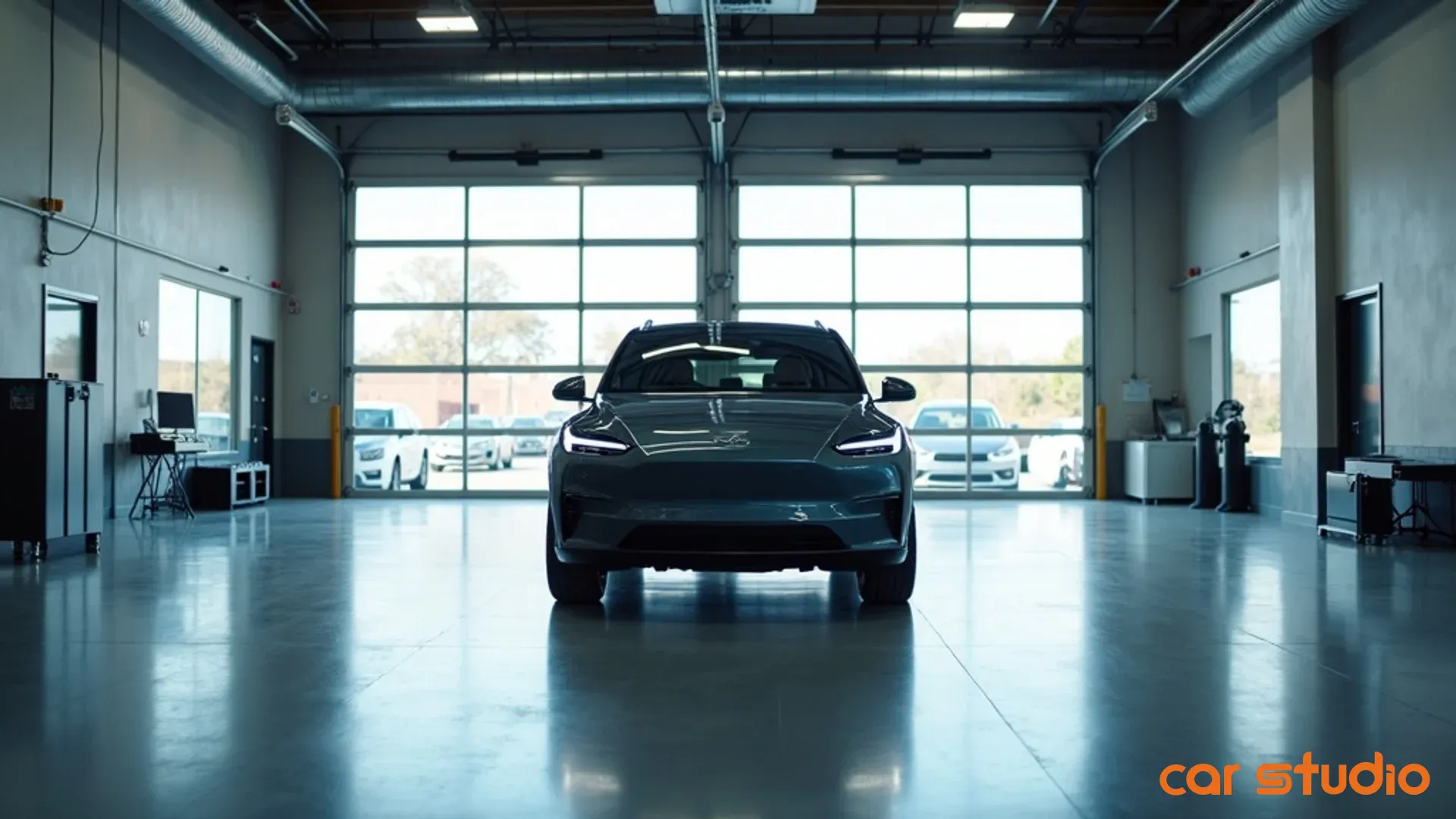
Walk into any top-performing dealership and you'll notice something immediately: the physical lot looks like it was staged by a retail brand. Vehicles are angled the same way. Hoods are closed. No price stickers on windshields. The lighting is consistent because they shoot at the same time every day.
Now open their VDPs. Same story. Every listing has the same photo sequence: front three-quarter, rear three-quarter, interior dashboard, back seat, engine bay, wheels, key features. The backgrounds are clean. The colors pop. The images load fast.
This isn't luck. It's a system.
Automotive visual merchandising is fundamentally different from standard retail because your product is high-consideration, high-value, and constantly changing. You're not photographing the same SKU a thousand times. Every unit is unique, and every day of delay costs you money in floorplan interest and opportunity cost.
The best dealer groups treat merchandising like recon: a timed, standardized process with clear handoffs, quality checkpoints, and a target time-to-line. They know that a vehicle sitting in "pending photos" for three days is bleeding gross profit, and they've built workflows to prevent it.
Here's the loop they've mastered: a vehicle arrives, gets prepped to a visual standard, photographed in a specific sequence, digitally enhanced through an automated workflow, and pushed live to all syndication partners within 24 to 48 hours. Every step has an owner. Every delay has a root cause analysis.
That's the difference. Merchandising as a system drives faster turn because shoppers engage more, click through more, and submit leads more often when your VDPs look like a premium product. Merchandising as an art project means your lot-to-live time is inconsistent, your photos vary wildly by who shot them, and your digital presence undermines your physical inventory investment.
The 4 Pillars of Elite Automotive Visual Merchandising
The dealer groups that dominate their markets don't just take better photos. They've institutionalized four core principles that turn visual merchandising into a competitive advantage.
Pillar 1: Standardization
Standardization means every vehicle gets the same treatment, regardless of who's on shift or how busy the lot is.
Top groups define a brand photo standard that includes the exact shot list, the angles, the lighting conditions, and the lot prep requirements. This isn't a suggestion. It's a checklist that gets audited.
Lot prep is non-negotiable: vehicles are washed, interiors are vacuumed, personal items are removed, floor mats are aligned, and hoods are closed unless the engine bay is a feature. The goal is to eliminate variables that make your inventory look inconsistent or unprofessional.
The photo sequence is locked in. A typical standard includes 20 to 30 images: exterior angles, interior shots, key features, and condition documentation. The sequence is the same whether it's a $12,000 Civic or a $75,000 F-250.
Standardization also extends to digital enhancements. Every image gets the same background replacement, the same color correction, the same sharpening. When a shopper scrolls through your inventory, they should feel like they're shopping a curated showroom, not a random assortment of Craigslist posts.
Pillar 2: Speed
Speed is a KPI, not a nice-to-have.
Elite groups measure lot-to-live time the same way they measure recon cycle time. They know that every day a vehicle sits without a complete VDP is a day it's invisible to online shoppers, and online is where 95% of the journey starts.
The fastest groups have cut lot-to-live time to under 24 hours by treating photography as the first step in recon, not the last. The vehicle gets shot as soon as it's on the lot, even if it's still waiting for detail or service work. Exterior photos happen immediately. Interior and feature shots happen post-detail.
This parallel processing approach means the VDP can go live with a partial photo set and get updated as recon completes, rather than waiting until everything is perfect. Shoppers can start engaging, and your digital advertising can start running.
Speed also requires automation. Manual photo editing is the bottleneck. If your team is spending 20 minutes per vehicle in Photoshop, you'll never scale. The top groups use AI-powered tools to handle background replacement, color correction, and image enhancement in seconds, not minutes.
Pillar 3: Quality
Quality doesn't mean hiring a professional photographer for every unit. It means defining a minimum acceptable standard and building a process that consistently hits it.
Top groups use photo standards that specify resolution, file size, aspect ratio, and compression settings. They know that a blurry image or a slow-loading VDP kills engagement, so they optimize for both visual appeal and page performance.
They also understand the difference between accuracy and enhancement. Enhancement makes the vehicle look its best: clean backgrounds, vibrant colors, sharp details. Accuracy means the photos represent the actual condition. You can't Photoshop out a dent or change the color. That's fraud, and it destroys trust.
Quality control happens at multiple points. The photographer checks the shot list before moving to the next vehicle. The digital editor reviews the enhanced images for consistency. The inventory manager audits a sample of VDPs weekly to ensure compliance.
When quality slips, it's usually a training issue or a process breakdown, not a talent problem. The best groups treat quality as a system output, not an individual responsibility.
Pillar 4: Data
Data separates the pros from the amateurs.
Elite dealer groups measure everything: VDP views, image engagement, time on page, lead conversion rate, and days to sale. They know which photos get the most clicks, which angles drive the most engagement, and which enhancements correlate with faster turn.
They use this data to refine their photo standards. If shoppers consistently engage more with interior shots, they add more interior angles. If background replacement increases VDP views, they apply it to every unit.
They also track operational metrics: average time per vehicle for photography, cost per image for editing, percentage of VDPs that meet the brand standard, and lot-to-live time by vehicle type.
This data feeds continuous improvement. Every month, they review the metrics, identify bottlenecks, and test process changes. Merchandising becomes a performance discipline, not a static checklist.
Implementation Playbook: Your Lot-to-Live Production Line
Building a merchandising system doesn't require a complete operational overhaul. It requires defining the process, assigning ownership, and executing consistently.
Here's the step-by-step playbook top dealer groups use to turn merchandising into a production line.
Step 1: Define Your Brand's Photo Standard
Your photo standard is the blueprint for everything that follows. It answers three questions: what gets photographed, how it gets photographed, and what the final output looks like.
Start by defining your shot list. A baseline standard includes front three-quarter, rear three-quarter, front straight, rear straight, driver side, passenger side, dashboard, front seats, back seats, cargo area, engine bay, wheels, and key features like infotainment screens or unique trim details.
Next, specify the technical requirements. Resolution should be at least 1920x1080 pixels. File format should be JPEG with moderate compression to balance quality and load speed. Aspect ratio should be 16:9 or 4:3 depending on your website and syndication partners.
Define your lot prep checklist. Vehicles must be washed and dried. Interiors must be vacuumed and free of personal items. Hoods, trunks, and doors should be closed unless the shot requires them open. Windshields should be free of stickers and price tags.
Document your lighting and angle guidelines. Shoot in natural light during mid-morning or late afternoon to avoid harsh shadows. Use consistent angles: 45 degrees for three-quarter shots, straight-on for profile shots. Avoid shooting into the sun.
Finally, define your enhancement standard. Will you use background replacement? What color correction settings? Will you upscale images for consistency? Lock these decisions into your workflow so every vehicle gets the same treatment.
Step 2: The On-Lot Photo Capture Process
The on-lot process is where most dealerships lose time and consistency. The fix is simple: treat it like a production line with clear inputs, outputs, and cycle time targets.
Assign a dedicated photographer or rotate the role among trained staff. The key is training and accountability. Whoever shoots needs to know the shot list, the prep checklist, and the quality standard.
Set a target cycle time. A trained photographer should be able to shoot a full sequence in 10 to 15 minutes per vehicle. If it's taking longer, you either have too many shots in your sequence or a training gap.
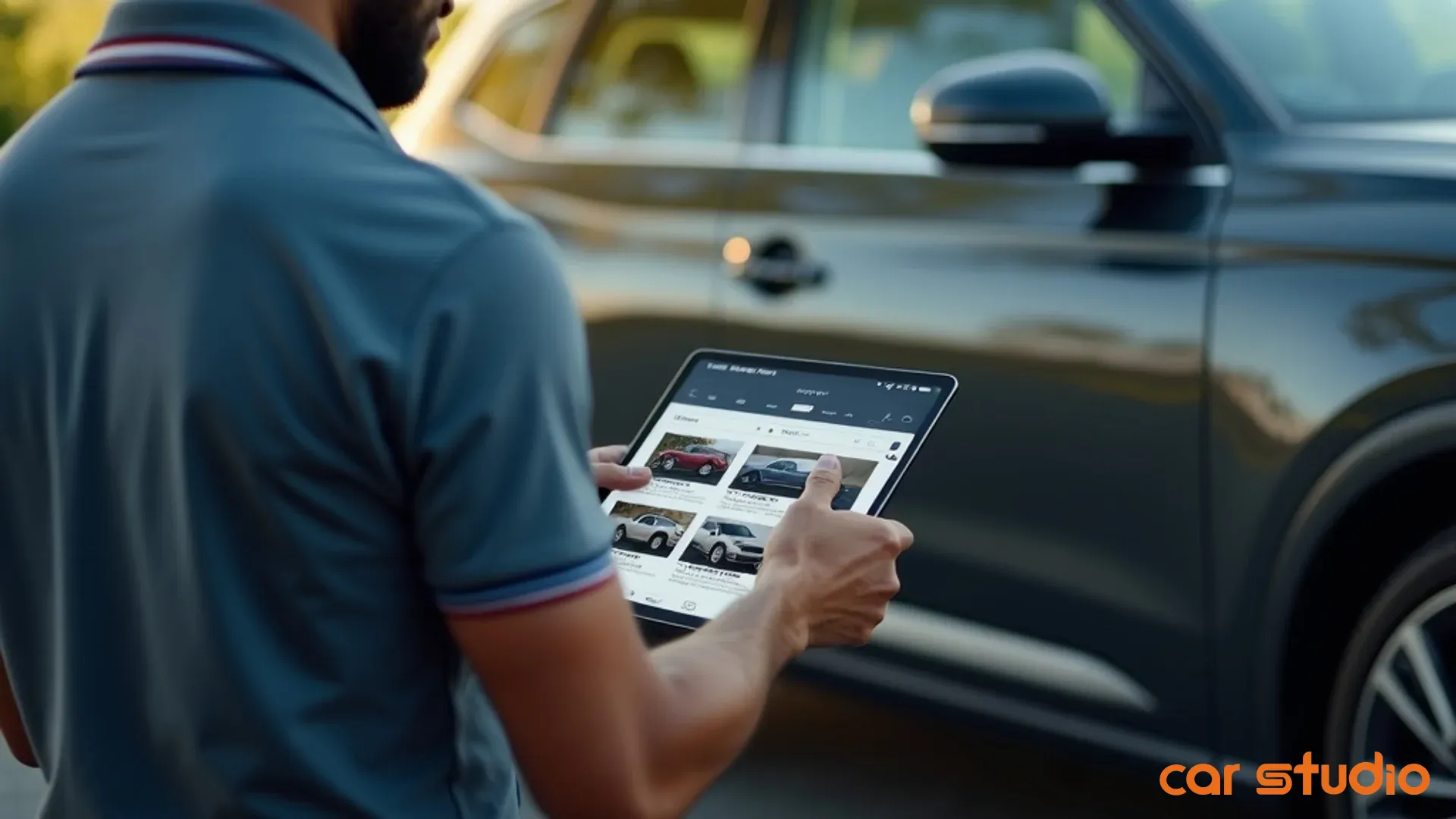
Use a mobile app or tablet to capture and organize photos in real time. Many dealer management systems and third-party tools let you shoot directly into the VIN record, eliminating the manual upload step and reducing errors.
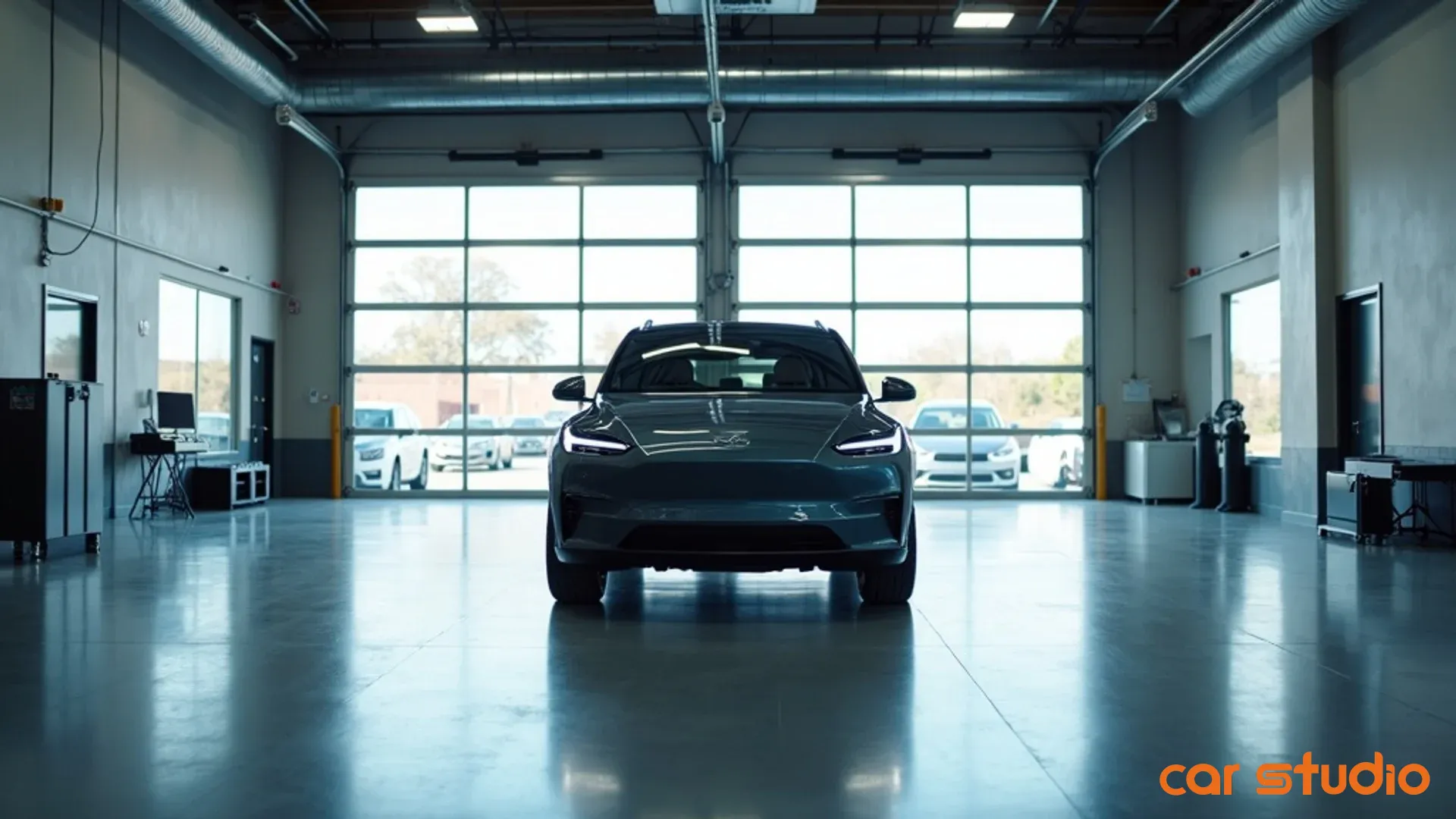
Stage vehicles in a dedicated photo area with a clean background and good lighting. If you don't have a controlled environment, shoot against a neutral backdrop like a building wall or an empty section of the lot. Consistency in background makes digital editing faster and cheaper.
Inspect the shots before moving to the next vehicle. Check for focus, framing, and lighting. Retaking a shot on the lot takes 30 seconds. Fixing it later takes 10 minutes.
Step 3: The Automated Digital Enhancement Workflow
Manual photo editing is the bottleneck that kills scalability. The top dealer groups have eliminated it by automating enhancement through AI-powered platforms.
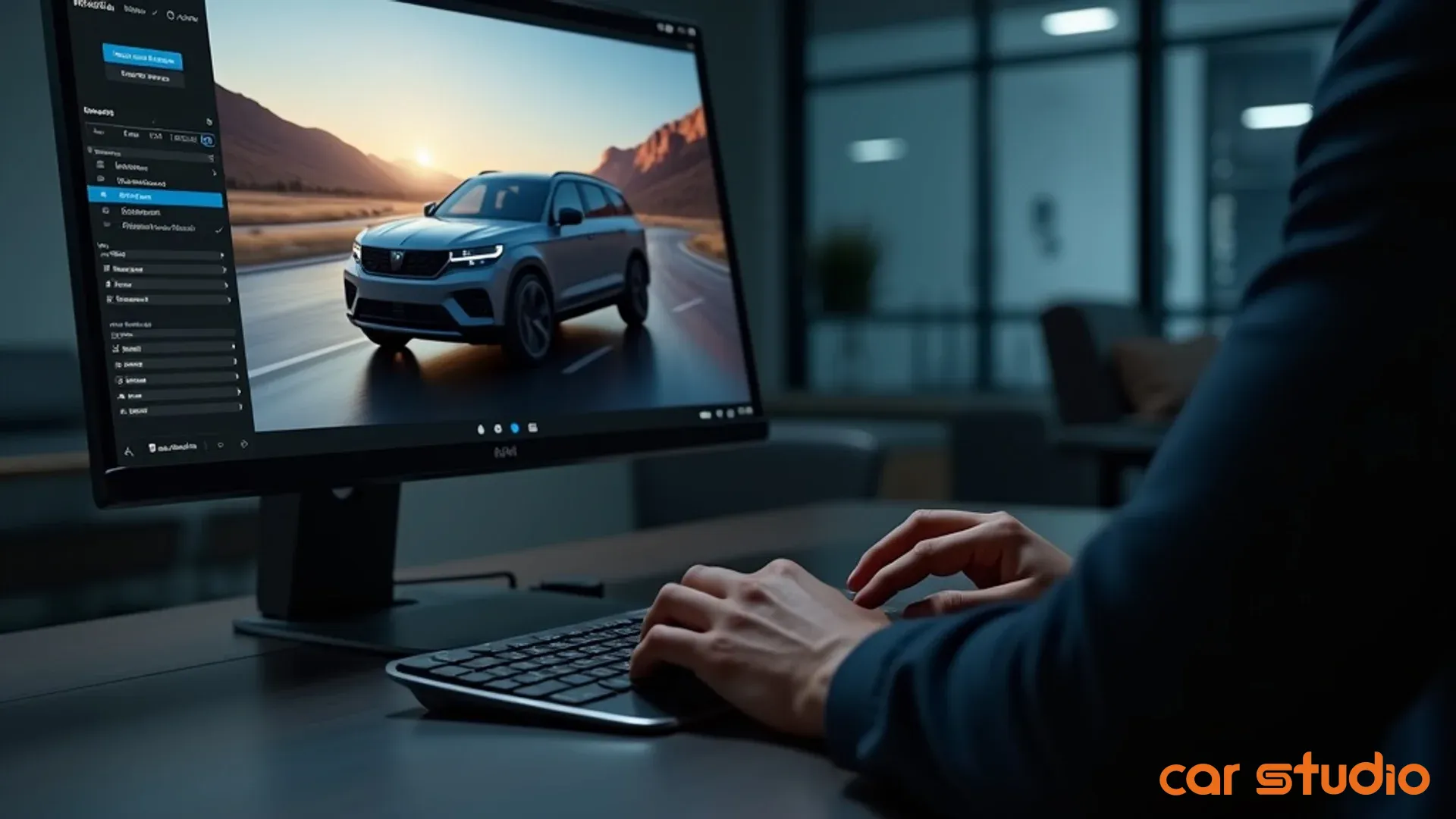
The workflow starts with uploading raw photos to an AI photo editor that handles background replacement, color correction, brightness adjustment, and image sharpening in seconds. Tools like magic eraser remove distracting elements. Features like upscale image ensure every photo meets resolution standards even if the original was slightly underexposed or soft.
Background replacement is the highest-impact enhancement. A clean, neutral background makes every vehicle look showroom-ready and eliminates visual clutter that distracts shoppers. AI tools can replace backgrounds automatically, applying the same branded backdrop to every unit for consistency.
Color correction ensures that reds look red, whites look white, and metallics pop. AI tools analyze the image and adjust color balance, saturation, and contrast to make the vehicle look its best without crossing into unrealistic territory.
Sharpening and noise reduction improve image clarity, especially for interior shots taken in lower light. AI tools can unblur image details and reduce grain without making the photo look over-processed.
The entire enhancement workflow should take less than two minutes per vehicle. If it's taking longer, you're either using the wrong tools or trying to fix problems that should have been caught during the on-lot capture process.
After enhancement, images are automatically resized and optimized for web delivery. This ensures fast load times on VDPs and syndication partners, which directly impacts engagement and SEO performance.
Step 4: VDP Syndication and Quality Control
Once images are enhanced, they need to get pushed to your website, third-party listing sites, and social media channels. The best groups automate this syndication to eliminate manual uploads and ensure consistency across platforms.
Most dealer management systems and inventory management platforms support automated syndication. You upload the enhanced images once, and they flow to your website, Autotrader, Cars.com, CarGurus, Facebook Marketplace, and anywhere else you list inventory.
Quality control happens at two points. First, the digital editor reviews a sample of enhanced images daily to ensure the AI tools are performing correctly and the output meets your brand standard. Second, the inventory manager audits live VDPs weekly to catch any issues that slipped through.
Common quality control checks include verifying that all required photos are present, confirming that backgrounds are consistent, ensuring that colors are accurate, and checking that images load quickly on mobile devices.
If you find recurring issues, trace them back to the root cause. Blurry images mean a training issue with the photographer. Inconsistent backgrounds mean the AI settings need adjustment. Missing photos mean a breakdown in the shot list checklist.
Quality control isn't about perfection. It's about maintaining a minimum standard that builds shopper trust and drives engagement.
The Digital-First Advantage: Leveraging AI and Automation
The dealer groups that are winning the merchandising game aren't doing it with bigger budgets or better photographers. They're doing it with AI and automation that eliminates manual work and ensures consistency at scale.
AI-powered tools have fundamentally changed what's possible in automotive visual merchandising. Tasks that used to require a skilled editor and 20 minutes per vehicle now happen automatically in under a minute.
Background replacement is the most visible example. AI tools analyze the vehicle in the photo, separate it from the background, and replace the background with a clean, branded backdrop. The result is a showroom-quality image that makes every unit look premium, regardless of where it was photographed.
This matters because most dealerships don't have a controlled photo studio. Vehicles get shot on the lot, in the service lane, or wherever there's space. AI background replacement eliminates the visual inconsistency that comes from shooting in different locations and lighting conditions.
Color correction and enhancement are the second major AI advantage. AI tools analyze the image, detect the vehicle's actual color, and adjust brightness, contrast, and saturation to make the color pop without looking fake. This is especially important for metallics, pearls, and darker colors that can look flat or muddy in raw photos.
AI tools can also upscale image resolution, which is critical when you're working with photos captured on mobile devices or older cameras. The upscale image feature uses machine learning to add detail and sharpness, turning a mediocre photo into a web-ready asset.
Magic eraser functionality lets you remove distracting elements like cones, other vehicles, or lot clutter without manually masking and cloning in Photoshop. The AI detects the object, removes it, and fills in the background intelligently.
These tools don't just save time. They ensure brand compliance. When every image goes through the same AI-powered workflow, you get consistent output regardless of who shot the photo or when it was taken. That consistency builds trust with shoppers and reinforces your brand identity.
Platforms like Car Studio AI consolidate these features into an end-to-end solution designed specifically for dealerships. Instead of stitching together multiple tools, you get a single workflow that handles capture, enhancement, and syndication. The platform learns your brand standards and applies them automatically, so your team can focus on speed and volume instead of manual editing.
The ROI is straightforward. If your team is currently spending 15 minutes per vehicle on manual editing, and you're merchandising 100 vehicles per month, that's 25 hours of labor. An AI platform cuts that to under two hours. The time savings alone pay for the technology, and the consistency improvement drives higher engagement and faster turn.
Objections & Pitfalls to Avoid
Every dealer group that's built a world-class merchandising system has faced the same objections and overcome the same pitfalls. Here's how to navigate them.
"My team doesn't have time for this."
This is the most common objection, and it's based on a false assumption: that building a merchandising system adds work.
The opposite is true. A system reduces work by eliminating rework, inconsistency, and bottlenecks. When you don't have a standard, your team wastes time figuring out what to shoot, reshooting vehicles because the first attempt didn't meet expectations, and manually editing photos that should have been captured correctly the first time.
The fix is to start small. Standardize your top five photos. Train one person. Automate one enhancement step. Measure the time savings. Then scale.
The groups that succeed treat merchandising as a core operational process, not an extra task. It's part of recon. It's part of inventory management. It's how vehicles get to market.
"The technology is too expensive."
AI-powered merchandising tools range from free mobile apps to enterprise platforms that cost thousands per month. The question isn't whether the technology is expensive. The question is whether the ROI justifies the cost.
Run the math. If an AI platform saves your team 20 hours per month and improves VDP engagement by 10%, what's that worth in faster turn and higher lead volume? For most dealer groups, the payback period is under 90 days.
The bigger cost is not investing in technology. Manual editing doesn't scale. Inconsistent photos hurt engagement. Slow lot-to-live time costs you floorplan interest and opportunity cost every single day.
Start with a pilot. Test one AI tool on a subset of your inventory. Measure the impact on VDP views, time on page, and lead conversion. If the data supports it, scale. If it doesn't, try a different tool.
"We get good enough results now."
Good enough is the enemy of great, and in a market where shoppers are comparing your VDPs to every other dealer in a 50-mile radius, good enough means you're losing deals.
The reality is that most dealers don't know how their merchandising stacks up because they're not measuring it. They assume their photos are fine because they're not getting complaints. Meanwhile, shoppers are bouncing to competitors with better visuals.
The fix is to benchmark. Pull up your VDPs next to your top three competitors. Compare the photo quality, the consistency, the load speed. Ask yourself honestly: if you were a shopper, which dealer would you trust more?
Then measure engagement. Track VDP views, time on page, and lead conversion by vehicle. If your metrics are below market averages, your merchandising is costing you deals.
The groups that win don't settle for good enough. They treat merchandising as a competitive advantage and invest in continuous improvement.
Quick Wins in 14 Days: A Mini-Plan for Immediate Impact
You don't need to overhaul your entire operation to see results from better merchandising. You can start small, test fast, and scale what works.
Here's a 14-day plan to get immediate impact on your VDPs.
Days 1 to 3: Standardize Your Top 5 Photos
Pick the five photos that matter most: front three-quarter, rear three-quarter, dashboard, front seats, and one key feature shot.
Define the exact angle, lighting, and framing for each shot. Create a visual guide with example photos. Train your photographer on the standard.
Shoot 10 vehicles using the new standard. Compare the consistency to your previous approach. If the photos look more uniform and professional, you've validated the concept.
Days 4 to 7: Test One Automated Enhancement Tool
Pick one AI-powered tool to test. Start with background replacement because it has the highest visual impact.
Upload the raw photos from your 10 test vehicles. Run them through the AI tool. Compare the enhanced images to your current manual editing process.
Measure two things: time savings and visual quality. If the AI tool saves time and produces comparable or better results, you've found a scalable solution.
Days 8 to 14: Measure VDP Lift on 10 Vehicles
Push the enhanced photos live on your VDPs. Track VDP views, time on page, and lead submissions for those 10 vehicles over the next week.
Compare the metrics to a control group of 10 similar vehicles with your old photos. If the enhanced VDPs are getting more views and more engagement, you've proven ROI.
Document the results. Calculate the time savings, the engagement lift, and the cost per vehicle. Use this data to build the business case for scaling the system across your entire inventory.
Bonus: Audit Your Lot-to-Live Time
While you're running the test, measure how long it takes to get a vehicle from arrival to live VDP with a complete photo set.
Track each step: lot prep, photography, editing, upload, and syndication. Identify the bottleneck. Is it waiting for detail? Is it manual editing? Is it uploading photos to multiple platforms?
Fix the biggest bottleneck first. If it's manual editing, automate it. If it's lot prep, tighten the checklist. If it's syndication, use a platform that automates the upload.
Cutting your lot-to-live time from five days to two days can increase your effective inventory turn by 10% or more. That's real money.
Build Your Merchandising Advantage
Visual merchandising isn't a creative project. It's a core operational process that directly impacts inventory turn, lead volume, and gross profit.
The dealer groups that dominate their markets have figured this out. They've built repeatable systems that standardize lot prep, automate photo enhancement, and measure performance with the same rigor they apply to service absorption or F&I penetration.
You can build the same system. Start with the four pillars: standardization, speed, quality, and data. Follow the implementation playbook to define your photo standard, streamline your on-lot process, automate digital enhancements, and syndicate with quality control.
Use AI and automation to eliminate the manual bottlenecks that prevent you from scaling. Test tools like background replacement, color correction, and image upscaling to see immediate improvements in consistency and efficiency.
Address the objections head-on. Your team has time when you eliminate rework. The technology pays for itself when you measure ROI. Good enough isn't good enough when shoppers are comparing you to every dealer in the market.
And if you want to see results fast, run the 14-day quick wins plan. Standardize your top five photos, test one AI tool, and measure the VDP lift. The data will tell you whether you're on the right track.
Ready to build your merchandising system? See how Car Studio AI automates your entire visual workflow from capture to syndication. The platform consolidates background replacement, enhancement, and quality control into a single solution designed for dealer groups that need speed and consistency at scale. Stop editing photos manually. Schedule a demo to see how our platform empowers top dealer groups to create perfect VDPs in minutes.
Your inventory is your biggest asset. Make sure your merchandising system does it justice.