

Which Background Sells a Car Best? White vs. Studio vs. Outdoor
Two sellers list the same car at the same price. One shoots it in a cluttered lot with another vehicle half in frame. The other drops it onto a clean, neutral background. The second listing gets the clicks, every time.
The background behind a car isn't decoration. It's a signal. It tells the buyer, in a fraction of a second, whether this is a serious listing worth a closer look or one to scroll past. And once you're using an AI tool to replace backgrounds, you have an actual choice to make. White, studio grey, showroom, or outdoor? Each one changes how the car is perceived, and the right pick depends on what you're selling and who's buying.
Here's how the main options compare, and how to choose the one that makes your specific vehicle look its best.
Why the Background Decides the First Impression
Buyers judge a listing before they read a word of it. A messy background does two things at once: it distracts attention away from the car, and it signals a seller who didn't take care with the presentation. Both push the buyer toward the back button.
A clean, intentional background does the opposite. It removes every distraction so the vehicle is the only thing worth looking at, and it signals professionalism, which buyers unconsciously read as "this car is probably well cared for too." That's the whole reason background replacement matters: you're not hiding anything about the car, you're removing the visual noise that was making a good car look worse than it is.
The question isn't whether to use a clean background. It's which clean background fits your vehicle.
White Background
A pure white background is the cleanest, most neutral option. The car floats on an empty field of white with nothing to compete for attention.
Best for: Volume inventory, everyday vehicles, and any listing where you want maximum consistency across a large catalog. White is the safe, universal choice that works for almost any car and makes a page of listings look uniform and professional.
Strengths: It's distraction-free, it makes colors pop, and it reads as clean and modern. It's also the easiest to keep perfectly consistent across hundreds of vehicles, which is why marketplaces and high-volume sellers lean on it.
Watch out for: Pure white can look slightly clinical or "cut-out" if the lighting and shadow aren't handled well. The car needs a realistic shadow beneath it, or it looks like it's floating. A vehicle-trained tool handles this automatically, while a generic one often doesn't.
Studio Grey / Gradient
A soft grey or subtle gradient background is the middle ground. Still clean and neutral, but with a bit more depth and warmth than stark white.
Best for: Mid-range and premium vehicles, and sellers who want a polished, showroom-adjacent look without committing to a literal showroom scene. This is often the most flattering all-purpose choice.
Strengths: The gentle gradient adds dimension, so the car sits in the frame rather than floating on it. It flatters both light and dark paint. Dark cars don't disappear the way they can against white, and light cars still stand out. It looks premium without looking staged.
Watch out for: It's less stark than white, so a catalog mixing grey and white backgrounds can look inconsistent. Pick one as your default and stick with it across your inventory.
Showroom

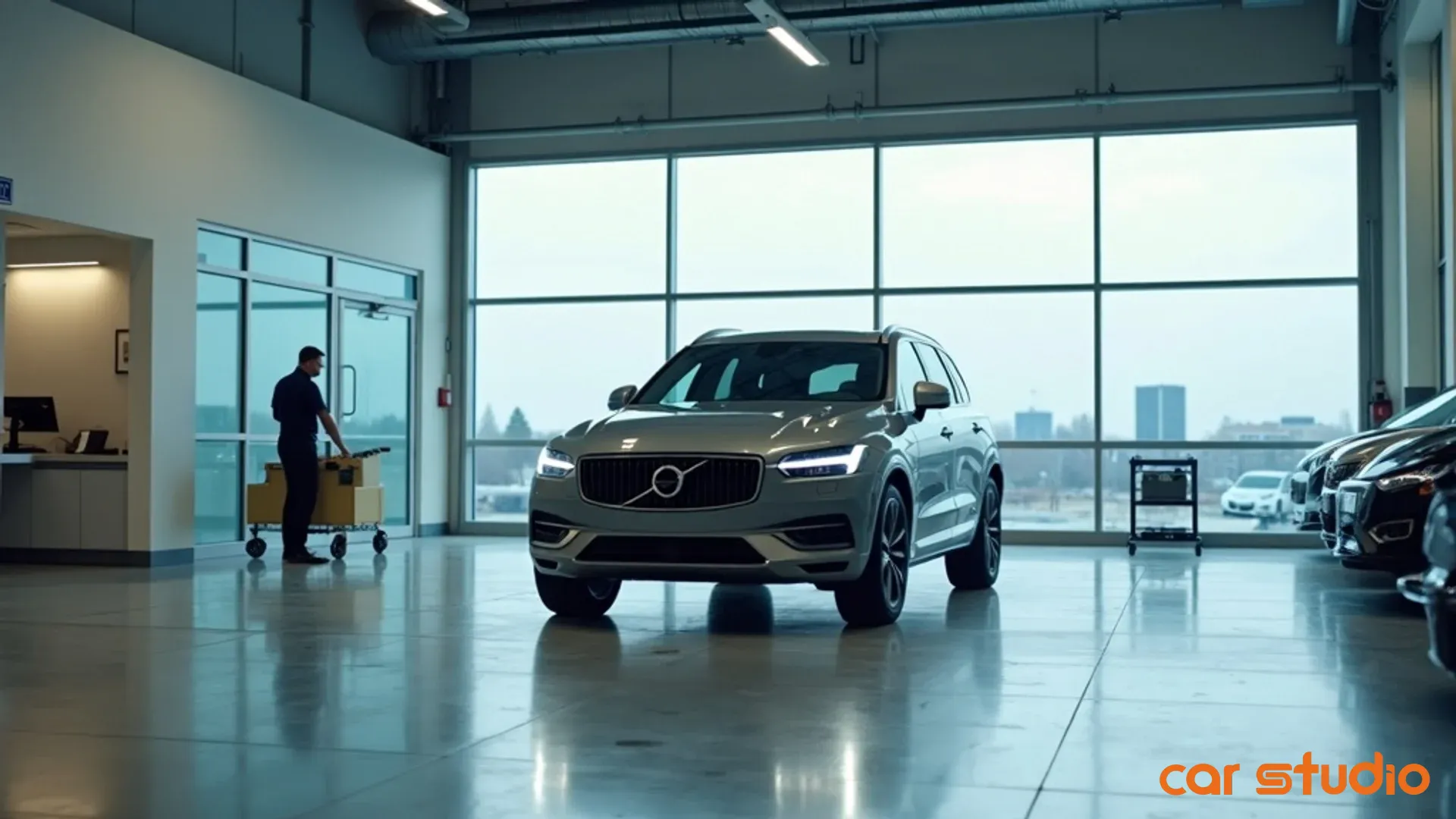
A realistic showroom or studio-floor background places the car in a professional environment: a polished floor, soft ambient light, the feel of a real dealership space.
Best for: Premium and luxury vehicles, certified pre-owned, and sellers whose brand is built on a high-end, professional image. A showroom backdrop reinforces the idea that this is a serious operation with quality inventory.
Strengths: It adds context and aspiration. A buyer sees the car the way they'd see it on a real showroom floor, which raises perceived value. It's the most "premium" feeling of the neutral options.
Watch out for: Realism is everything. A showroom background only works if the lighting on the car matches the scene and the perspective is right, otherwise the car looks pasted in, which hurts trust more than a plain background ever would. This is where a vehicle-specific AI tool matters most.
Outdoor / Lifestyle
An outdoor setting, whether an open road, a scenic backdrop, or a natural environment, puts the car in a context that suggests a lifestyle rather than a spec sheet.
Best for: Trucks, SUVs, off-road and adventure vehicles, and convertibles. These are vehicles whose appeal is tied to where they take you. A pickup on a mountain road or a convertible near the coast sells a feeling that a plain background can't.
Strengths: It creates an emotional connection. The buyer pictures themselves using the vehicle, not just owning it. For the right vehicle type, this is the most persuasive option of all.
Watch out for: Use it sparingly and only where it fits. An outdoor scene on a compact commuter car looks random and can undercut credibility. And like the showroom, it lives or dies on realism. Mismatched lighting or a scene that fights the car does more harm than good. Keep the setting subtle so it supports the vehicle instead of overwhelming it.
A Quick Guide: Which to Use
If you want a simple rule of thumb:
- Everyday and volume inventory: white or studio grey. Clean, consistent, universal.
- Mid-range and premium: studio grey or showroom. Adds depth and a polished feel.
- Luxury and certified: showroom. Reinforces a high-end image, if the realism holds up.
- Trucks, SUVs, adventure, convertibles: a subtle outdoor scene, where it genuinely fits.
Above all, pick a default and stay consistent. A catalog where every car shares the same clean background looks far more professional than one that jumps between styles, and consistency is itself a trust signal. Reserve the showroom and outdoor looks for the specific vehicles where they add real value, and let a neutral background carry the rest.
Getting It Right Without a Studio
You don't need a photo bay or a lighting rig to use any of these. That's the point of AI background replacement: you shoot the car wherever it happens to be (a driveway, a lot, a parking space) and swap the background for the one that suits it.
The one thing that separates a professional result from an obviously fake one is how the car is separated from its original background and lit in the new scene. This is where a tool built specifically for vehicles matters. Car Studio AI detects the car cleanly around the hard parts like wheels, mirrors, and grilles, keeps the shadow realistic so the vehicle sits in the scene instead of floating, and matches the lighting so the result looks shot, not pasted. The car itself stays exactly as it is; only the background changes.
Pick the background that fits the vehicle, keep it consistent across your listings, and let the car be the hero of every shot.
Try any background on your own car, start with Car Studio AI free. No credit card, no subscription.
For dealerships · marketplaces · OEMs · individual sellers