
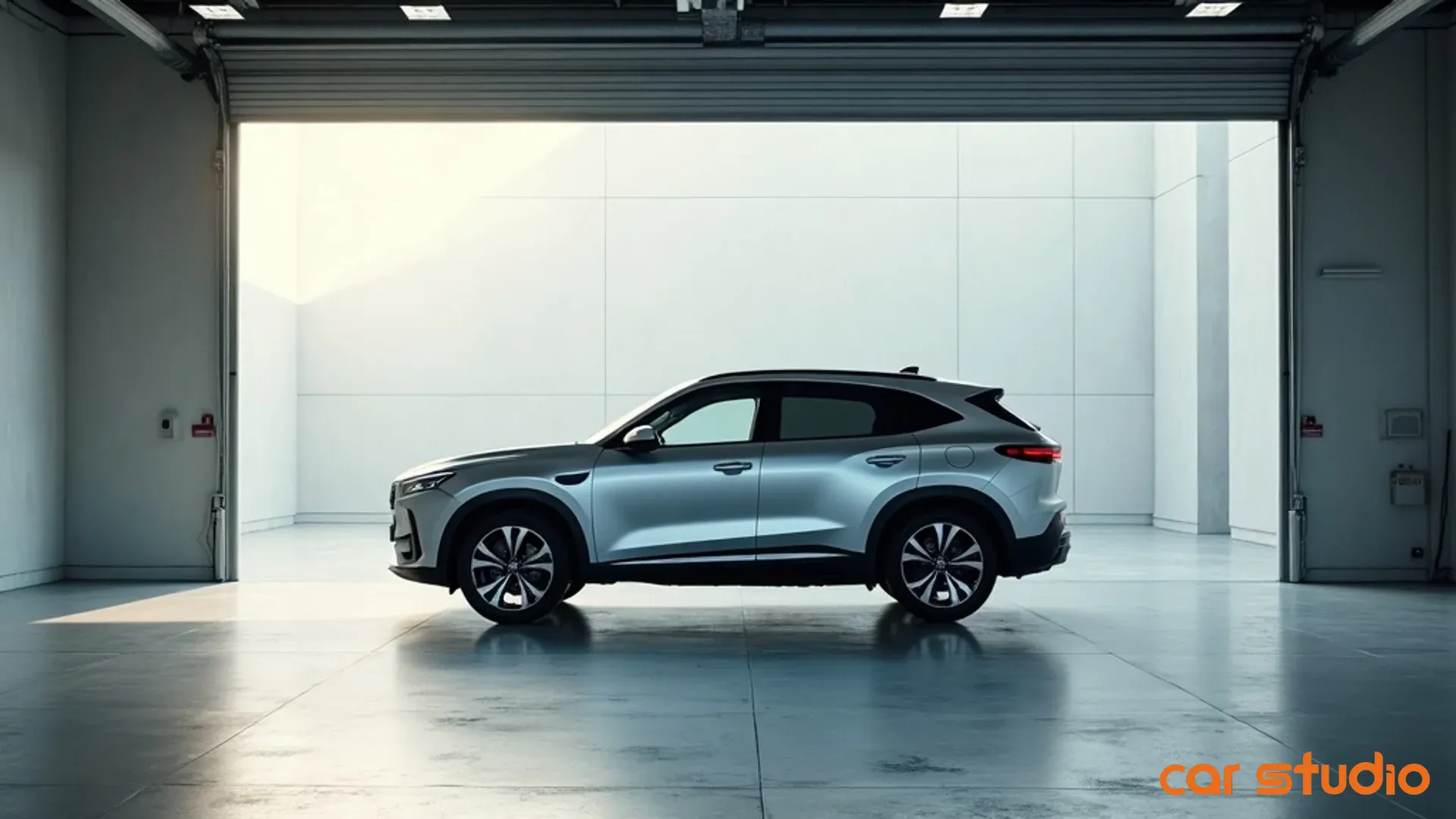
The AI Playbook: Better Used Car Visuals, Higher Profits
 Elena Aldridge
The AI Playbook: Better Used Car Visuals, Higher Profits
Beyond Gut Feel: Why Visuals Are Your New Data Frontier
The Anatomy of a High-Grossing Used Car Listing
The Implementation Playbook: A 4-Step Framework
Quick Wins: Boost Profits in the Next 14 Days
Objections & Pitfalls: Avoiding Common Mistakes
The Path Forward
Your inventory data is clean. Your pricing is sharp. Your CRM is firing on all cylinders. So why are your aged units still sitting while competitors move metal faster?
The answer isn't in your pricing algorithm or your marketing budget. It's staring you in the face every time a shopper opens a VDP. Your photos are costing you thousands per unit, and most dealers don't even know it's happening.
While the industry obsesses over market data and pricing intelligence, the biggest profit lever in used car retail remains almost completely ignored: visual merchandising. The difference between a vehicle that turns in 28 days at full gross and one that bleeds holding costs for 60 days often comes down to 30 seconds of scrolling through mediocre photos.
This isn't about making your lot look pretty. It's about engineering trust, accelerating decisions, and protecting margin through a systematic approach to vehicle presentation. And now, AI photo enhancement tools are making it possible to execute at scale without tripling your photo budget.
Most dealers treat photos like a necessary evil. Snap 12 shots, upload them, move on. But high-performing stores are starting to treat visual quality as a KPI, right alongside days to turn and price to market.
Here's why that shift matters.
Every VDP is a sales presentation you're not controlling. When a shopper lands on your listing, they're making three decisions in the first 10 seconds: Does this vehicle match what I'm looking for? Can I trust this dealer? Is it worth my time to visit or call?
Poor photos kill all three. Inconsistent lighting makes shoppers question what they're really getting. Cluttered backgrounds scream "we don't care about details." Blurry interior shots suggest the vehicle itself might be just as neglected.
The cost of bad visuals isn't abstract. Let's walk through the math on a single unit.
You acquire a 2021 Silverado High Country for $38,000. Market retail is $44,500. You're positioned at $43,995, right in the sweet spot. The truck is clean, reconditioned, ready to gross $4,200.
But your photos are inconsistent. Some were shot in harsh midday sun. Others are backlit. The interior shots are dark. There's a service van in the background of three angles.
The truck sits for 52 days instead of 32. You drop price twice, losing $800 in gross. Holding costs eat another $340. Your effective gross is now $3,060 instead of $4,200. That's $1,140 in lost profit on one vehicle because of photos.
Scale that across 80 used units per month, and you're leaving $91,200 on the table annually. Not from bad pricing. Not from poor reconditioning. From visuals.
Visuals set price perception before the visit. Shoppers don't just look at your asking price. They're mentally adjusting it based on how the vehicle is presented. Professional, consistent photos signal quality and justify your number. Poor photos make shoppers assume there's a reason you're hiding something, even when you're not.
Research from automotive listing platforms shows that vehicles with high-quality, consistent photo sets receive 2.3 times more VDP views and generate leads 40% faster than similar vehicles with inconsistent photography. The difference isn't the vehicle. It's the presentation.
This is where AI photo enhancement becomes a strategic weapon, not just a nice-to-have. An AI photo editor can standardize lighting, remove distractions, upscale image resolution, and even unblur image details that would otherwise require a reshoot. It's not about faking anything. It's about presenting every vehicle at its best, every time, without the variability that comes from weather, time of day, or photographer skill level.
Walk into any high-performing used car operation and you'll notice something immediately: every vehicle looks like it belongs in the same showroom. The backgrounds are clean. The lighting is consistent. The angles tell a story.
That's not luck. It's a system.
Start with shot count and coverage. The minimum standard for any used vehicle should be 25 photos. Not 12. Not "whatever the photographer felt like shooting." Twenty-five.
Here's the breakdown: eight exterior angles covering all four corners, front three-quarter, rear three-quarter, straight-on front, and straight-on rear. Six interior shots including dashboard, front seats, rear seats, cargo area, odometer, and infotainment screen. Four detail shots highlighting key features like wheels, badging, engine bay, and any premium options. Four under-hood and undercarriage shots if the vehicle justifies it. Three lifestyle or context shots if you're using AI background replacement.
Every shot has a job. The exterior angles prove condition and build confidence. The interior shots answer questions before they're asked. The detail shots justify price and highlight reconditioning value.
Consistency builds trust faster than perfection. Shoppers scroll through dozens of listings. When yours look like they were shot by three different people in three different locations, it creates cognitive friction. They start wondering what else is inconsistent about your operation.
Professional backgrounds matter more than most dealers realize. A clean, neutral backdrop removes distractions and puts the focus entirely on the vehicle. It also signals that you're serious about presentation, which translates to perceived quality.
This is where an artificial intelligence image editor earns its keep. You don't need to build a photo studio or wait for perfect weather. AI tools can replace messy backgrounds with clean, professional environments in seconds. The magic eraser functionality removes distractions like other vehicles, cones, or service equipment without leaving artifacts.
Use AI to highlight features, not hide flaws. There's a line between enhancement and deception, and crossing it will cost you more than bad photos ever could. The goal isn't to make a rough truck look pristine. It's to make sure every vehicle is presented in optimal lighting, with distractions removed and key features clearly visible.
An AI photo enhancer can correct exposure, balance colors, and sharpen details that got lost in compression or poor lighting. It can upscale image resolution so your photos look crisp on high-resolution displays. It can even adjust angles slightly to correct perspective distortion from wide-angle lenses.
What it shouldn't do is hide damage, misrepresent condition, or create an expectation that doesn't match reality. The goal is to present the vehicle as it would look in ideal conditions, not as a different vehicle entirely.
Showcase reconditioning value through visuals. You spent $1,200 getting that Tahoe retail-ready. Paint correction, interior detail, new tires, fresh brakes. But if your photos don't show that work, you're not getting credit for it.
High-quality photos make reconditioning visible. They show the depth of the paint, the condition of the leather, the tread on the tires. They prove you didn't just run it through the wash and slap a price on it.
This is especially critical on higher-margin inventory. A $55,000 luxury SUV with mediocre photos won't command the same gross as the same vehicle with professional visuals that highlight every detail. The vehicle is the same. The perceived value is not.
Knowing what good looks like is one thing. Building a repeatable system that delivers it on every vehicle is another. Here's how to operationalize visual merchandising without blowing up your workflow or your budget.
Step 1: Audit your current visual workflow. Before you change anything, you need to know where you're starting. Pull the last 30 vehicles you listed and evaluate them honestly.
How many photos per vehicle? Are the angles consistent? Is the lighting even across the set? Are backgrounds clean or cluttered? How long does it take from vehicle arrival to photos live on the VDP?
Identify the bottlenecks. Is it the photographer's availability? Weather delays? Slow editing and upload? Lack of standards?
Talk to your team. Ask your photographer what's slowing them down. Ask your internet manager what photo-related questions they're fielding from leads. Ask your sales team which listings get the most engagement and which ones sit.
This audit will reveal your biggest opportunities. Maybe you're already shooting enough photos but the quality is inconsistent. Maybe your backgrounds are killing you. Maybe you're spending hours editing when an AI tool could do it in minutes.
Step 2: Select the right AI photo enhancement tools. Not all AI photo editors are created equal, and choosing the wrong one can create more problems than it solves.
Start by defining your must-haves. Do you need background replacement? Automatic lighting correction? Batch processing for speed? Integration with your inventory management system?
Test before you commit. Most AI photo enhancement platforms offer trials or limited free tiers. Run 10 vehicles through each tool you're considering. Compare the output quality, the time savings, and how much manual cleanup is still required.
Watch for red flags. If the AI creates images that look fake or overly processed, shoppers will notice. If it struggles with reflections, shadows, or complex backgrounds, you'll spend more time fixing mistakes than you save. If it requires a steep learning curve, your team won't use it consistently.
Look for tools that offer control and flexibility. You want AI that assists your process, not a black box that spits out results you can't adjust. The best platforms let you set standards, apply them consistently, and override when needed.
Integration matters. If your AI tool lives in a separate workflow from your inventory system, adoption will suffer. Look for solutions that plug into your existing photo pipeline or, better yet, handle the entire process from upload to VDP.
Step 3: Train your team for consistency. The best AI photo editor in the world won't help if your photographer is still shooting 12 random angles in inconsistent lighting.
Create a shot list and make it non-negotiable. Print it, laminate it, and hand it to everyone who touches a camera. The goal is to eliminate variability at the source.
Train your photographer on the basics that AI can't fix. Shoot in open shade or overcast conditions when possible. Keep the camera level. Frame the vehicle consistently. Capture details that matter to buyers.
Train your internet team on how to use the AI tools. Show them how to batch process, how to adjust settings for different vehicle types, and how to QA the output before it goes live.
Set quality standards and enforce them. Spot-check listings weekly. Pull examples of great execution and share them. Pull examples of shortcuts and address them immediately.
Consistency is a system, not a goal. It requires standards, training, accountability, and feedback loops. But once it's in place, it becomes your competitive advantage.
Step 4: Measure impact on turn, VDP views, and gross. You can't manage what you don't measure. Set up tracking before you roll out any changes so you can prove ROI.
Track days to turn by photo quality tier. Segment your inventory into "AI-enhanced," "standard," and "needs improvement" and compare performance. Control for price, age, and vehicle type so you're measuring the visual impact, not confounding variables.
Track VDP engagement. Time on page, photo views, lead conversion rate. If your AI-enhanced listings are generating more engagement, that's proof the visuals are working.
Track gross profit per unit. This is the ultimate test. If better visuals are helping you hold gross and turn faster, the ROI is undeniable.
Run the numbers monthly and share them with your team. When your photographer sees that their work is directly contributing to faster turns and higher gross, they'll take pride in the process. When your sales team sees that better photos mean better leads, they'll stop complaining about the extra time it takes.
You don't need to overhaul your entire operation to see results. Start with these high-impact, low-effort moves and build momentum.
Triage your 10 most aged units with an AI enhancer. Right now, you have inventory that's been sitting too long. It's costing you money every day. Pull your 10 oldest units and run them through an AI photo editor.
Upscale image quality. Correct lighting. Remove background distractions. Replace cluttered environments with clean, professional backdrops. Re-upload the enhanced photos and watch what happens.
You'll likely see an immediate uptick in VDP views and engagement. Even if you only move two of those 10 units faster than you would have otherwise, the ROI on the AI tool pays for itself.
A/B test one vehicle's listing with AI-edited photos. Pick a vehicle that's priced right, reconditioned well, and getting decent traffic but not converting. Create two versions of the listing: one with your current photos, one with AI-enhanced visuals.
Run them simultaneously on different platforms or rotate them weekly on the same platform. Track which version generates more leads, more showroom visits, and ultimately, which one sells.
This single test will give you hard data on whether visual quality is moving the needle for your inventory. And when it does, you'll have the proof you need to scale the approach.
Standardize backgrounds on your highest-margin inventory segment. You don't have to fix everything at once. Start with the vehicles where gross profit matters most.
If you're a truck-heavy store, start with your lifted trucks and luxury pickups. If you're focused on luxury imports, start with your German inventory. Use an AI background replacement tool to give those vehicles clean, consistent presentation.
This focused approach delivers ROI faster because you're applying it where margin is highest. Once you see the impact, rolling it out to the rest of your inventory becomes an easy decision.
Audit your VDP photo order. This costs nothing and takes 20 minutes. Go through your top 20 listings and make sure the best photo is first. The hero shot should be a clean, well-lit, three-quarter front angle that shows the vehicle at its best.
Too many dealers default to whatever order the photos were uploaded. That means the first image might be a boring straight-on front shot or, worse, an interior detail. Shoppers decide whether to keep scrolling in seconds. Make sure that first impression is working for you, not against you.
Set a "no bad photos" rule starting today. This is cultural, not technical. Make it clear that blurry, poorly lit, or cluttered photos are no longer acceptable. If a vehicle's photos don't meet the standard, they get reshot or enhanced before the listing goes live.
This single policy change will force your team to take visual quality seriously. It will also reveal where your process is breaking down so you can fix it.
Every operational change comes with resistance and risk. Here's how to navigate the most common objections and avoid the mistakes that sink AI photo initiatives.
Over-automation vs. human oversight. The biggest mistake dealers make with AI tools is treating them like a magic button. Upload photos, hit enhance, publish. No QA, no oversight, no judgment.
AI is powerful, but it's not perfect. It can misread reflections, overcorrect colors, or create unnatural-looking results if the input photos are too far gone. You still need a human in the loop to review output, catch errors, and make judgment calls.
Set up a QA step in your workflow. Before any AI-enhanced photos go live, someone with a trained eye should review them. This takes 60 seconds per vehicle and prevents the kind of mistakes that erode trust.
The goal is to use AI to eliminate grunt work and inconsistency, not to eliminate judgment. Let AI handle lighting correction, background cleanup, and resolution enhancement. Let humans handle final approval and edge cases.
Choosing tools that create fake or untrustworthy images. Not all AI photo enhancement is created equal. Some tools cross the line from enhancement to fabrication, and that's a problem.
If your AI tool is adding features that aren't there, hiding damage, or making a vehicle look dramatically different than it is in person, you're setting yourself up for disappointed customers and lost trust. The short-term gain in engagement isn't worth the long-term cost to your reputation.
Test your AI tools with a critical eye. Do the enhanced photos look like a better version of reality, or do they look fake? Can you still see the vehicle's true condition, or has it been smoothed into something unrecognizable?
When in doubt, err on the side of authenticity. Shoppers are savvier than ever. They know when photos have been heavily manipulated, and it makes them skeptical of everything else you're saying.
Ignoring team buy-in and process change. You can buy the best AI photo editor on the market, but if your team doesn't use it, it's worthless. Implementation is a people problem, not a technology problem.
Start by explaining the why. Show your team the data on how visuals impact turn time and gross. Make it clear that this isn't about making their jobs harder. It's about making the dealership more competitive and protecting everyone's income.
Involve your team in the selection process. Let your photographer test tools and give feedback. Let your internet manager weigh in on what features matter most. When people feel ownership, adoption is easier.
Provide training and support. Don't just hand someone a new tool and expect them to figure it out. Invest the time to train properly, answer questions, and troubleshoot issues as they come up.
Celebrate wins. When a vehicle with AI-enhanced photos sells faster or at higher gross, share that with the team. Recognition reinforces behavior.
Miscalculating the true ROI of visual AI. Some dealers look at the cost of an AI photo enhancement tool and compare it to the cost of their current photographer. That's the wrong calculation.
The ROI isn't in replacing labor. It's in faster turns, higher gross, and reduced holding costs. A tool that costs $500 per month but helps you turn inventory four days faster is worth thousands in saved floor plan interest and freed-up capital.
Run the math on your specific operation. Calculate your average holding cost per day. Multiply that by the number of units you carry. Even a small improvement in turn time delivers massive ROI.
Don't forget the opportunity cost. Every day a vehicle sits is a day you could have sold it and acquired something else. Faster turns mean more opportunities to make gross, not just on the current unit but on the next one too.
Scaling visual standards across auto groups. If you're running multiple rooftops, inconsistency across locations becomes a brand problem. Shoppers who visit your website expect the same level of quality whether they're looking at inventory from your main store or your satellite location 50 miles away.
AI tools make it easier to standardize because they remove the variability of individual photographers and local conditions. But you still need to set group-wide standards and enforce them.
Create a visual merchandising playbook that applies to all locations. Define the shot list, the quality standards, and the AI enhancement settings. Make it clear that this is non-negotiable.
Use technology to enforce consistency. Platforms like Car Studio AI allow you to set brand standards at the group level and apply them automatically across all inventory, regardless of where it was photographed. This eliminates the need to police every location manually.
Audit regularly. Spot-check listings from each location monthly. Pull examples of great execution and share them across the group. Pull examples of shortcuts and address them immediately.
Consistency at scale is your competitive advantage. When every vehicle in your inventory looks like it belongs to the same premium brand, you're building trust and commanding higher prices across the board.
The used car business has always been about speed and margin. The faster you turn inventory, the more opportunities you have to make gross. The better you protect margin, the more profit you keep.
For decades, dealers optimized pricing, reconditioning, and marketing to move those levers. But visual merchandising remained an afterthought, treated as a cost center rather than a profit driver.
That's changing. The dealers who recognize that every VDP is a sales presentation, and who invest in making those presentations world-class, are pulling ahead. They're turning inventory faster, holding gross longer, and building trust that translates to repeat business and referrals.
AI photo enhancement tools are making it possible to execute at scale without the cost and complexity of traditional professional photography. An AI photo editor can standardize lighting, remove distractions, upscale image quality, and present every vehicle at its best. An artificial intelligence image editor can do in seconds what used car to take hours of manual editing.
But the technology is just the enabler. The real opportunity is in building a system that treats visual quality as a KPI, holds your team accountable to standards, and measures the impact on the metrics that matter: turn time, VDP engagement, and gross profit per unit.
Start small. Pick your highest-margin inventory segment and prove the ROI. Use the quick wins to build momentum. Then scale the approach across your entire operation.
The dealers who move first will build a competitive advantage that's hard to catch. The ones who wait will spend the next two years wondering why their inventory sits longer and grosses less than the store down the street.
Ready to see what AI-enhanced visuals can do for your bottom line? Download our free VDP Optimization Checklist and audit your current listings against the 30-point standard that high-performing stores use to maximize engagement and profit.
Stop leaving money on the table with inconsistent, low-quality vehicle photos. Car Studio AI creates professional, high-gross VDPs in minutes, with automated background replacement, lighting correction, and brand-consistent enhancement across your entire inventory. Schedule a demo and see how the platform transforms your visual merchandising without adding headcount or complexity to your workflow.